+
Operations of construction waste plant in Rajarhat to begin operations
WATER & WASTE

Operations of construction waste plant in Rajarhat to begin operations

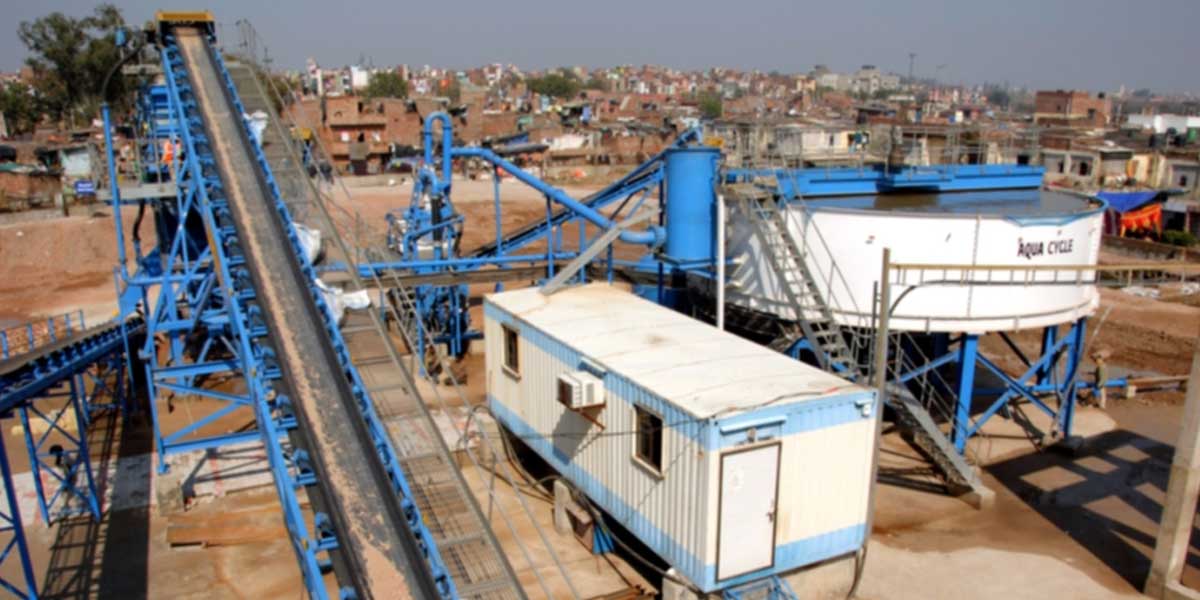
The Rajarhat construction and demolition waste recovery plant will finally begin operating. Construction trash will be crushed at the factory to create "aggregates" that can be used with concrete to pave roads. Concrete blocks, pile caps, and broken tiles are examples of non- biodegradable construction trash. They can be utilised for driveway paving. A 5-acre parcel of land was given to a private company for the building of a mechanical unit for construction waste recovery, a source in the KMC solid waste management department said.

According to the official, the civic organisation will remove rubbish from smaller housing complexes and transport it to the crusher facility in Rajarhat rather than disposing of it in landfills. A factory will need to be established up at the building site for larger projects, each of which will produce 20 tonnes or more of garbage every day, according to the local official.

After receiving a 5-acre parcel of land from HIDCO, the KMC's solid waste management department decided to build the facility at Rajarhat. Sources at the KMC claim that a contract was signed with a private company to establish and run a building waste recovery plant for ten years.

"We are counting on this project to help solve Kolkata's building waste issues. Rapid construction has been taking place in the city. If this concept works, we could need to consider setting up a comparable plant to handle a larger volume of construction waste. For this goal, we have already begun looking for suitable land, said the KMC official.

The Rajarhat construction and demolition waste recovery plant will finally begin operating. Construction trash will be crushed at the factory to create aggregates that can be used with concrete to pave roads. Concrete blocks, pile caps, and broken tiles are examples of non- biodegradable construction trash. They can be utilised for driveway paving. A 5-acre parcel of land was given to a private company for the building of a mechanical unit for construction waste recovery, a source in the KMC solid waste management department said. According to the official, the civic organisation will remove rubbish from smaller housing complexes and transport it to the crusher facility in Rajarhat rather than disposing of it in landfills. A factory will need to be established up at the building site for larger projects, each of which will produce 20 tonnes or more of garbage every day, according to the local official. After receiving a 5-acre parcel of land from HIDCO, the KMC's solid waste management department decided to build the facility at Rajarhat. Sources at the KMC claim that a contract was signed with a private company to establish and run a building waste recovery plant for ten years. We are counting on this project to help solve Kolkata's building waste issues. Rapid construction has been taking place in the city. If this concept works, we could need to consider setting up a comparable plant to handle a larger volume of construction waste. For this goal, we have already begun looking for suitable land, said the KMC official.

Next Story
Infrastructure Urban

Implementation Status of Jal Jeevan Mission

Since August 2019 the Government has implemented Jal Jeevan Mission to provide assured potable water through household tap connections in rural India. At the start of the mission only 32.3 million (mn) rural households, representing 16.7 per cent, were reported to have tap water connections. States and union territories have reported that 125.8 mn additional rural households have since been provided with tap connections. As a result, of about 193.6 mn rural households roughly 158.2 mn, or 81.71 per cent, are reported to have tap water supply at home.\n\nThe State, district and village level st..

Next Story
Infrastructure Urban

Jal Jeevan Mission Reaches Eighty One Per Cent Rural Coverage

The Government reported substantial progress under the Jal Jeevan Mission, launched in August 2019 to provide tap water to every rural household. At launch only 32.3 million (mn) rural households had tap connections and states and Union territories reported provision of 125.8 mn additional households by March 2026. Consequently, out of about 193.6 mn rural households around 158.2 mn, or 81.71 per cent, are reported to have tap water at home. The Finance Minister announced extension of the mission until 2028 in the 2025-26 budget speech. The Swachh Bharat Mission Grameen, launched in October 20..

Next Story
Infrastructure Urban

Empowering Local Governance for Sustainable Rural Water Supply

The Ministry of Jal Shakti has aligned the Jal Jeevan Mission (JJM) with the 73rd Amendment to strengthen village level planning and community ownership of water supply. Gram Panchayats, village water and sanitation committees and Pani Samitis are to plan, implement, manage and maintain piped water systems, with gram sabha processes formalising handover and oversight. Implementation support agencies including non government organisations, community based organisations and self help groups have been empanelled to train local committees and promote women participation. Under JJM, the department ..

Advertisement

Subscribe to Our Newsletter

Get daily newsletters around different themes from Construction world.

STAY CONNECTED

Advertisement

Advertisement

Advertisement