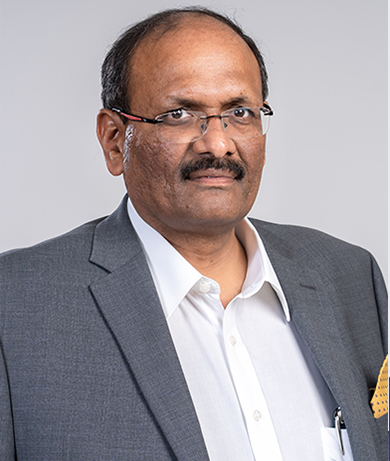
Reusing construction-demolition waste, the technology way: Goutham Reddy
23 Nov 2020
8 Min Read
Editorial Team
Share
Currently, only 1% of C&D waste in India is processed, but that is changing. REEL is one of the largest
waste-to-energy companies in Asia, with over 50% market share of India’s 87 MW installed capacity,
generated by processing 6 million tonnes of waste every year, with waste-to-energy plants in Delhi (24
MW) and Hyderabad. In November 2020, the company partnered with Greater Hyderabad Municipal
Corporation (GHMC) in building a new construction-and-demolition (C&D) waste recycling plant. The
new C&D plant converts 95% of waste back into building material
CW: Today I have the pleasure of Mr Goutham Reddy’s company in a videochat with CW. Hyderabad has
particularly gained a lot from REEL’s expertise. We are hearing more and more about C&D now. What is
a C&D plant?
Goutham Reddy: There are different kinds of waste in the society—municipal or domestic, biomedical,
hazardous, electronic, nuclear, and so on. One of the other kinds of waste that has historically been
neglected is construction-demolition waste. In the process of both construction and demolition, a lot of
excavation waste from construction and debris from demolition are generated. All this waste gets
dumped in available open spaces like parks and playgrounds, and essentially comes in a motorists’ or
pedestrians’ pathway. Such waste may not smell, nor is it hazardous. But it is public nuisance, occupying
large amounts of space and distracting traffic.
The hierarchy and the three pillars of environment management are Reduce – Reuse – Recycle. If
reduction is not possible, we reuse, and where reuse is not possible, we must recycle. Disposal happens
if none of the three processes are possible. Can we get C&D waste into this circular economy? That was
our research. The government, with whom we had discussions, wanted us to help them, and the result
of an agreement between us is this 500 tonne per day C&D plant in Hyderabad. That’s about 25% of the
approximately 2,000 tonnes of C&D waste that Hyderabad generates.
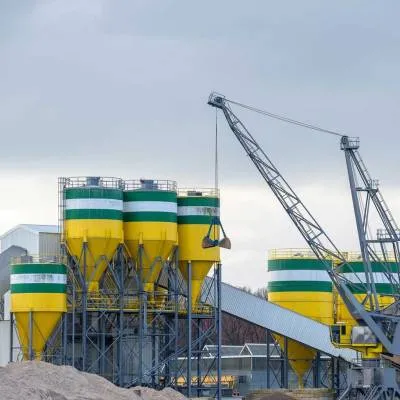
Once we process this waste, it is converted back into building materials. The beauty of this project is that
we can recover up to 95% of the waste—so, this plant gives back 470 tonnes of construction material, in
the form of sand, aggregates, or building blocks.
That is one of the most satisfying parts of this project.
We have now been awarded another 500 tonne plant in Hyderabad, which will be commissioned by
January [2021]. Together, then, these plants will solve half of the city’s C&D waste problem.
CW: Only 1% of C&D waste in India gets recycled. Does that figure surprise you—especially in relation to
how it works internationally, in your observation?
GR: You are right. In many countries abroad such as Singapore, Australia, the United States, and so on,
construction material is of a different nature. There is a lot of wood and fibrous material. In India, 90%
of the waste is cement aggregates.
This means that the technology [for waste processing in India] had to be developed indigenously. We
had to invest a lot of time and research into understanding what the right solution is. We have brought
in seeps, shredders, ballistic separation, liquid separation, and grinding. In combination, we are able to
recover 95% of the waste. I don’t believe that they have achieved this [degree of recovery] in any part of
the world. This is a wonderful achievement for the country.
The 1% rate of recovery of C&D waste is not surprising, because the research is recent. I’d actually say
the research is ongoing as we execute the project, and we will have better-quality products. But the
quality of sand we’re generating is already better than river sand. So is the case with aggregates and
tiles—the product quality is better than virgin products.
CW: In general, what is the difference you find that makes your [waste processing] more efficient
internationally?
GR: For sure, developed economies are more efficient. The collection, transport and disposal
mechanism has become extremely streamlined. Every resident knows the schedule of collection, for
example. This has become a culture and a systematic process that has developed over a period of time.
India has not developed [this culture]. But apart from being systematic, educated and aware, it is a
function of paying capacity.
In the US, the average net cost per tonne that the government or the resident pays is about $250 per
tonne. In India, whether it is municipalities or residents or commercial establishments, even a payment of
Rs 2,000 is considered extremely high. That is why 90% of the municipalities in India don’t pay. And in
turn, that is why we are not getting as many projects as we should. So the change in mindset to a
“polluter pays” principle—and paying for better quality—hasn’t sunk in.
CW: You operate on public-private partnership (PPP). Do you find it necessary to go that route because
many cities still don’t find it profitable [to pay]? What is your revenue model?
GR: The revenue model is two-pronged. First, we charge the municipalities for collection, transport and
disposal. The charge, called tipping fee, varies, typically between Rs 500 and Rs 800 per tonne. Second,
through proceeds of the sale of finished products generated from the waste recycling. We sell the sand,
aggregates and building blocks at market prices. To promote these products, we sell them at prices that
is 10%-15% lower than those of the virgin counterparts of those products—although the quality is
better.
CW: What top lines and bottom lines are you generating?
GR: REEL operates about 65 different plants, of which 20 are biomedical or hospital waste management
facilities, 18 are industrial hazardous waste management plants, another 20 are municipal solid waste
facilities, and about 10-12 recycling plants across different technologies like C&D, plastic, paper, solvent,
and electronics, handling about 6 million tonnes of waste every year—by far the largest in India and one
of the largest in Asia. We generate revenues of about Rs 3,000 crore.
CW: What is the overall recovery rate from waste (since your revenues in a PPP model would largely
depend on that rate)?
Yesterday, we inaugurated another waste-to-energy (WTE) plant in Hyderabad. With this, the total
installed capacity in India is about 87 MW, of which 44 MW is built and operated by us. These are high-
capex plants—up to Rs 25 crore per MW on average. China has 500 WTE plants that generate 4,000-
5,000 MW. India, currently at less than 100 MW, will have no choice but to reach that level. WTE as a
technology has emerged quite well, with good reciprocating grid and gas-cleaning technologies.
The tipping fee for waste management in India is between Rs 2,000 and Rs 3,000 per tonne, depending
on the size of the municipality. Once the waste is received, multiple products including organic manure
(compost), plastic, paper, refuse-derived fuel (sold to cement factories used in boilers as fuel). The
offtake of fuel is not commensurate with its generation—we are not able to get adequate offtake of the
generated fuel from cement industries or boilers.
Therefore, we have started establishing our own WTE plants. These plants are high on capex but good on
technology, probably state-of-the-art. About 400-500 such plants are sure to come up in the country.
They reduce volume by 10% and convert it into energy. That technology is simple—you burn the waste
at high temperature through boiler tubes, inside which water gets converted into steam, after which the
steam turbine converts it into electrical energy. The residual gases are cleaned. But because we are
handling heterogeneous material, the engineering is challenging—hence the high capex.
CW: Are logistics a challenge, both upstream and downstream? Dealing with local contractors, that sort
of thing—do you work in collaboration?
GR: BY virtue of handling 6 mt of collection and transport of waste, we have also emerged as one of the
large transport contractors in the country. We ourselves own a fleet of about 2,000 trucks in different
parts of India. So logistics is a big challenge in India, and as you would notice, we operate in compliance
with the laws—closed containers, compacted waste transport, and ensuring that no spillage happens.
But in India even today, most of the waste happens in very unhygienic open tippers, spilling waste and
releasing stench throughout the drive. Our intention is to change the process to a modern transport
system with tailgate compactors as you would see in the US, UK, and Europe. There waste lies in
completely closed containers—you can walk right next to a garbage truck.
Currently, only 1% of C&D waste in India is processed, but that is changing. REEL is one of the largest
waste-to-energy companies in Asia, with over 50% market share of India’s 87 MW installed capacity,
generated by processing 6 million tonnes of waste every year, with waste-to-energy plants in Delhi (24
MW) and Hyderabad. In November 2020, the company partnered with Greater Hyderabad Municipal
Corporation (GHMC) in building a new construction-and-demolition (C&D) waste recycling plant. The
new C&D plant converts 95% of waste back into building material
CW: Today I have the pleasure of Mr Goutham Reddy’s company in a videochat with CW. Hyderabad has
particularly gained a lot from REEL’s expertise. We are hearing more and more about C&D now. What is
a C&D plant?
Goutham Reddy: There are different kinds of waste in the society—municipal or domestic, biomedical,
hazardous, electronic, nuclear, and so on. One of the other kinds of waste that has historically been
neglected is construction-demolition waste. In the process of both construction and demolition, a lot of
excavation waste from construction and debris from demolition are generated. All this waste gets
dumped in available open spaces like parks and playgrounds, and essentially comes in a motorists’ or
pedestrians’ pathway. Such waste may not smell, nor is it hazardous. But it is public nuisance, occupying
large amounts of space and distracting traffic.
The hierarchy and the three pillars of environment management are Reduce – Reuse – Recycle. If
reduction is not possible, we reuse, and where reuse is not possible, we must recycle. Disposal happens
if none of the three processes are possible. Can we get C&D waste into this circular economy? That was
our research. The government, with whom we had discussions, wanted us to help them, and the result
of an agreement between us is this 500 tonne per day C&D plant in Hyderabad. That’s about 25% of the
approximately 2,000 tonnes of C&D waste that Hyderabad generates.
Once we process this waste, it is converted back into building materials. The beauty of this project is that
we can recover up to 95% of the waste—so, this plant gives back 470 tonnes of construction material, in
the form of sand, aggregates, or building blocks.
That is one of the most satisfying parts of this project.
We have now been awarded another 500 tonne plant in Hyderabad, which will be commissioned by
January [2021]. Together, then, these plants will solve half of the city’s C&D waste problem.
CW: Only 1% of C&D waste in India gets recycled. Does that figure surprise you—especially in relation to
how it works internationally, in your observation?
GR: You are right. In many countries abroad such as Singapore, Australia, the United States, and so on,
construction material is of a different nature. There is a lot of wood and fibrous material. In India, 90%
of the waste is cement aggregates.
This means that the technology [for waste processing in India] had to be developed indigenously. We
had to invest a lot of time and research into understanding what the right solution is. We have brought
in seeps, shredders, ballistic separation, liquid separation, and grinding. In combination, we are able to
recover 95% of the waste. I don’t believe that they have achieved this [degree of recovery] in any part of
the world. This is a wonderful achievement for the country.
The 1% rate of recovery of C&D waste is not surprising, because the research is recent. I’d actually say
the research is ongoing as we execute the project, and we will have better-quality products. But the
quality of sand we’re generating is already better than river sand. So is the case with aggregates and
tiles—the product quality is better than virgin products.
CW: In general, what is the difference you find that makes your [waste processing] more efficient
internationally?
GR: For sure, developed economies are more efficient. The collection, transport and disposal
mechanism has become extremely streamlined. Every resident knows the schedule of collection, for
example. This has become a culture and a systematic process that has developed over a period of time.
India has not developed [this culture]. But apart from being systematic, educated and aware, it is a
function of paying capacity.
In the US, the average net cost per tonne that the government or the resident pays is about $250 per
tonne. In India, whether it is municipalities or residents or commercial establishments, even a payment of
Rs 2,000 is considered extremely high. That is why 90% of the municipalities in India don’t pay. And in
turn, that is why we are not getting as many projects as we should. So the change in mindset to a
“polluter pays” principle—and paying for better quality—hasn’t sunk in.
CW: You operate on public-private partnership (PPP). Do you find it necessary to go that route because
many cities still don’t find it profitable [to pay]? What is your revenue model?
GR: The revenue model is two-pronged. First, we charge the municipalities for collection, transport and
disposal. The charge, called tipping fee, varies, typically between Rs 500 and Rs 800 per tonne. Second,
through proceeds of the sale of finished products generated from the waste recycling. We sell the sand,
aggregates and building blocks at market prices. To promote these products, we sell them at prices that
is 10%-15% lower than those of the virgin counterparts of those products—although the quality is
better.
CW: What top lines and bottom lines are you generating?
GR: REEL operates about 65 different plants, of which 20 are biomedical or hospital waste management
facilities, 18 are industrial hazardous waste management plants, another 20 are municipal solid waste
facilities, and about 10-12 recycling plants across different technologies like C&D, plastic, paper, solvent,
and electronics, handling about 6 million tonnes of waste every year—by far the largest in India and one
of the largest in Asia. We generate revenues of about Rs 3,000 crore.
CW: What is the overall recovery rate from waste (since your revenues in a PPP model would largely
depend on that rate)?
Yesterday, we inaugurated another waste-to-energy (WTE) plant in Hyderabad. With this, the total
installed capacity in India is about 87 MW, of which 44 MW is built and operated by us. These are high-
capex plants—up to Rs 25 crore per MW on average. China has 500 WTE plants that generate 4,000-
5,000 MW. India, currently at less than 100 MW, will have no choice but to reach that level. WTE as a
technology has emerged quite well, with good reciprocating grid and gas-cleaning technologies.
The tipping fee for waste management in India is between Rs 2,000 and Rs 3,000 per tonne, depending
on the size of the municipality. Once the waste is received, multiple products including organic manure
(compost), plastic, paper, refuse-derived fuel (sold to cement factories used in boilers as fuel). The
offtake of fuel is not commensurate with its generation—we are not able to get adequate offtake of the
generated fuel from cement industries or boilers.
Therefore, we have started establishing our own WTE plants. These plants are high on capex but good on
technology, probably state-of-the-art. About 400-500 such plants are sure to come up in the country.
They reduce volume by 10% and convert it into energy. That technology is simple—you burn the waste
at high temperature through boiler tubes, inside which water gets converted into steam, after which the
steam turbine converts it into electrical energy. The residual gases are cleaned. But because we are
handling heterogeneous material, the engineering is challenging—hence the high capex.
CW: Are logistics a challenge, both upstream and downstream? Dealing with local contractors, that sort
of thing—do you work in collaboration?
GR: BY virtue of handling 6 mt of collection and transport of waste, we have also emerged as one of the
large transport contractors in the country. We ourselves own a fleet of about 2,000 trucks in different
parts of India. So logistics is a big challenge in India, and as you would notice, we operate in compliance
with the laws—closed containers, compacted waste transport, and ensuring that no spillage happens.
But in India even today, most of the waste happens in very unhygienic open tippers, spilling waste and
releasing stench throughout the drive. Our intention is to change the process to a modern transport
system with tailgate compactors as you would see in the US, UK, and Europe. There waste lies in
completely closed containers—you can walk right next to a garbage truck.Also read: Urgent need for painstaking management of C&D waste
KONE Opens India's First Digital Experience Centre in Pune
KONE, a global elevator and escalator manufacturer, has inaugurated its first Digital Experience Centre (DEC) in India, located in Pune. The facility aims to showcase how artificial intelligence (AI), connectivity and data-driven technologies can enhance customer experiences and improve building operations.The centre was inaugurated by Jussi Herlin, Executive Vice Chair, KONE Corporation; Philippe Delorme, President and CEO, KONE; and Nandan Nilekani, Co-founder and Chairman of the Board, Infosys.Designed as an interactive customer environment, the facility demonstrates digital solutions cover..
CII GreenCo Launches Circularity Guidelines for Indian Industry
The Confederation of Indian Industry (CII) GreenCo Council has launched the CII GreenCo Circularity Guidelines – Pilot Version at the 17th CII GreenCo Waste & Resource Management Summit 2026 in Chennai. The initiative aims to strengthen resource efficiency, waste reduction and circular economy practices across Indian manufacturing and process industries.The guidelines introduce a structured framework with circularity indices covering raw materials, consumables, packaging and other resource inputs. These indicators will help industries assess existing practices, identify opportunities to ..
Global Electronics Association Launches IPC-1783-CO2E Standard
The Global Electronics Association has introduced IPC-1783-CO2E, a new international standard aimed at improving consistency, transparency and comparability in product carbon footprint reporting across the electronics manufacturing industry.The standard, titled International Standard for Data Collection and Reporting of CO2 Equivalent (CO2e) Emissions for the Electronics Manufacturing Supply Chain, provides industry-specific guidance for collecting, estimating and reporting carbon emissions data.With increasing regulatory requirements and customer expectations, electronics manufacturers face c..