
World Cement Association Names Philippe Richart as CEO
Cement

World Cement Association Names Philippe Richart as CEO

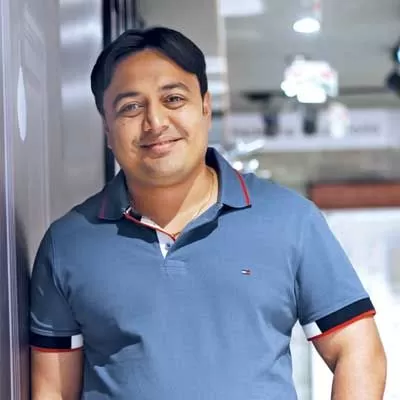
The World Cement Association (WCA) has announced the appointment of Philippe Richart as its new Chief Executive Officer, marking a leadership transition at a time of significant change for the global cement industry. Richart succeeds Ian Riley, who joined the Association in 2019 and played a key role in strengthening WCA’s position as an independent and credible voice for cement producers worldwide.

Richart brings more than 30 years of international leadership experience in the cement sector, with extensive exposure across Asia, Africa and Europe. He began his professional career as a construction engineer before moving into the cement industry in the mid-1990s. Over the years, he held senior roles at Lafarge, later Holcim, spanning project development, operations, market entry and regional executive management.

His career includes leading cement and concrete businesses at both country and regional levels, managing acquisitions and joint ventures, and working closely with governments, financial institutions and local partners. Having operated across high-growth as well as volatile markets, Richart brings a deep understanding of the diverse economic, regulatory and competitive environments in which cement companies operate.

Welcoming the appointment, Rong Yakun, Secretary General, World Cement Association, said, “I wish to extend my welcome to Philippe Richart as the new CEO of WCA, and I am looking forward to working together with him towards the growth of WCA and continuing to provide services to the global cement industry.”

Commenting on his new role, Philippe Richart, CEO, World Cement Association, said, “The cement industry is rapidly changing to respond to challenges such as carbon emission reductions, global overcapacity and rising energy costs. In this context, WCA is an important platform for collaboration, sharing best practices and advancing the interests of the global cement industry.”

As CEO, Richart plans to strengthen member engagement and ensure the Association continues to represent the full diversity of the global cement sector. He has identified sustainability and decarbonisation, alongside innovation, digitalisation and advanced technologies, as central priorities for the industry’s future.

The World Cement Association (WCA) has announced the appointment of Philippe Richart as its new Chief Executive Officer, marking a leadership transition at a time of significant change for the global cement industry. Richart succeeds Ian Riley, who joined the Association in 2019 and played a key role in strengthening WCA’s position as an independent and credible voice for cement producers worldwide.Richart brings more than 30 years of international leadership experience in the cement sector, with extensive exposure across Asia, Africa and Europe. He began his professional career as a construction engineer before moving into the cement industry in the mid-1990s. Over the years, he held senior roles at Lafarge, later Holcim, spanning project development, operations, market entry and regional executive management.His career includes leading cement and concrete businesses at both country and regional levels, managing acquisitions and joint ventures, and working closely with governments, financial institutions and local partners. Having operated across high-growth as well as volatile markets, Richart brings a deep understanding of the diverse economic, regulatory and competitive environments in which cement companies operate.Welcoming the appointment, Rong Yakun, Secretary General, World Cement Association, said, “I wish to extend my welcome to Philippe Richart as the new CEO of WCA, and I am looking forward to working together with him towards the growth of WCA and continuing to provide services to the global cement industry.”Commenting on his new role, Philippe Richart, CEO, World Cement Association, said, “The cement industry is rapidly changing to respond to challenges such as carbon emission reductions, global overcapacity and rising energy costs. In this context, WCA is an important platform for collaboration, sharing best practices and advancing the interests of the global cement industry.”As CEO, Richart plans to strengthen member engagement and ensure the Association continues to represent the full diversity of the global cement sector. He has identified sustainability and decarbonisation, alongside innovation, digitalisation and advanced technologies, as central priorities for the industry’s future.

Next Story
Infrastructure Transport

MMRDA: Engineering Mumbai’s Underground Future

Somewhere beneath Mumbai’s restless surface, a second city is being built into existence.In the late afternoon, as the day leaned towards evening, Dr Sanjay Mukherjee, Metropolitan Commissioner (MMRDA), led us into a realm that very few ever enter—the active heart of one of Mumbai’s most ambitious underground road projects. While the city surges forward in familiar chaos above the ground, another Mumbai is taking shape below: quietly, methodically, irrevocably. The metal lift doors clo..

Next Story
Building Material

Steel: Shielded or Strengthened?

Going forward, domestic steel mills are targeting capacity expansion of nearly 40 per cent through till FY31, adding 80-85 mt, translating into an investment pipeline of $ 45-50 billion. So, Jhunjhunwala points out that continuing the safeguard duty will be vital to prevent a surge in imports and protect domestic prices from external shocks. While in FY26, the industry operating profit per tonne is expected to hold at around $ 108, similar to last year, the industry’s earnings must meaningfully improve from hereon to sustain large-scale investments. Else, domestic mills could..

Next Story
Infrastructure Transport

Metro Moves: From Expansion to System Integration

India’s metro rail programme has entered a new phase—one where the focus is no longer only on adding kilometres, but on building integrated, reliable and financially sustainable urban transit systems. With more than 1,000 km of metro lines already operational and daily ridership exceeding 10 million, the challenge now lies in execution quality, underground risk management, multimodal integration, viable funding structures, and large-scale digital adoption. These themes framed deliber..

Advertisement

Subscribe to Our Newsletter

Get daily newsletters around different themes from Construction world.

STAY CONNECTED

Advertisement

Advertisement

Advertisement

Advertisement

Open In App