


+
BPCL Leads Nationwide PNG Drive 2.0 Campaign
OIL & GAS

BPCL Leads Nationwide PNG Drive 2.0 Campaign

Bharat Petroleum Corporation Ltd (BPCL) is leading PNG Drive 2.0, a nationwide industry initiative aimed at accelerating the adoption of Piped Natural Gas (PNG) and Compressed Natural Gas (CNG) across households, vehicles and industrial and commercial users.

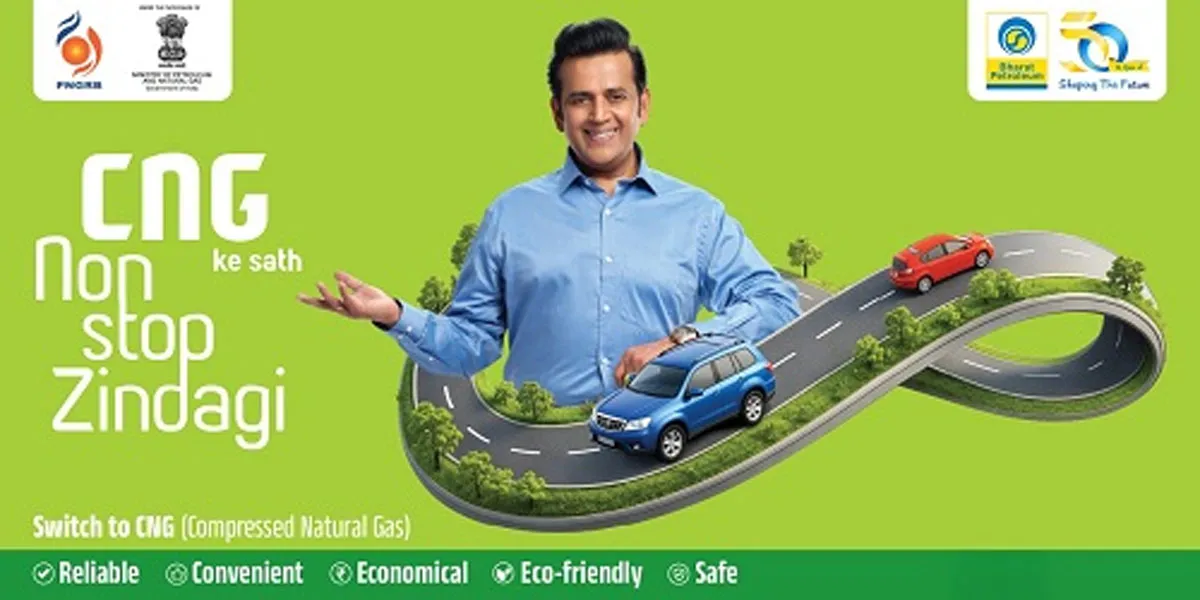
The campaign is being rolled out under a unified industry theme — “Har Ghar PNG, Har Gaadi CNG – Jiyo Non-Stop Zindagi” — and reflects the collective efforts of City Gas Distribution (CGD) companies under the guidance of the Petroleum and Natural Gas Regulatory Board (PNGRB). The initiative follows a common outreach strategy to improve awareness and drive last-mile adoption of natural gas across urban India.

PNG Drive 2.0 has been designed as a collaborative, pan-India programme bringing CGD players together through harmonised messaging and coordinated consumer engagement. The campaign highlights the everyday advantages of PNG and CNG, including uninterrupted supply, lower emissions, cost efficiency and operational convenience across residential, mobility and commercial applications.

BPCL has been entrusted to steer the initiative on behalf of the CGD industry, leveraging its structured execution capabilities while ensuring message consistency with flexibility for local adaptation. To widen outreach, prominent public personalities have also been engaged at the national level, complementing ground-level awareness activities led by CGD operators across cities through community programmes, digital outreach and field activations.

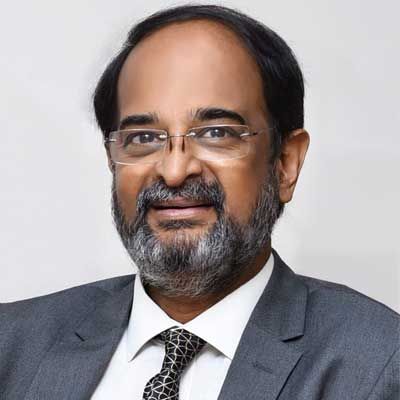
Director (Marketing) Subhankar Sen said the campaign showcases the power of unified industry collaboration in simplifying consumer choice and positioning natural gas as a reliable and affordable clean energy alternative. He added that coordinated efforts such as PNG Drive 2.0 will play a catalytic role in scaling adoption and supporting India’s target to raise the share of natural gas in the energy mix.

The initiative aligns with India’s clean energy roadmap, which aims to increase natural gas’ share in the national energy basket from about 6.5 per cent at present to 15 per cent by 2030. Greater PNG and CNG penetration is expected to reduce emissions, improve urban air quality and enhance energy efficiency across key consumption sectors.

Bharat Petroleum Corporation Ltd (BPCL) is leading PNG Drive 2.0, a nationwide industry initiative aimed at accelerating the adoption of Piped Natural Gas (PNG) and Compressed Natural Gas (CNG) across households, vehicles and industrial and commercial users. The campaign is being rolled out under a unified industry theme — “Har Ghar PNG, Har Gaadi CNG – Jiyo Non-Stop Zindagi” — and reflects the collective efforts of City Gas Distribution (CGD) companies under the guidance of the Petroleum and Natural Gas Regulatory Board (PNGRB). The initiative follows a common outreach strategy to improve awareness and drive last-mile adoption of natural gas across urban India. PNG Drive 2.0 has been designed as a collaborative, pan-India programme bringing CGD players together through harmonised messaging and coordinated consumer engagement. The campaign highlights the everyday advantages of PNG and CNG, including uninterrupted supply, lower emissions, cost efficiency and operational convenience across residential, mobility and commercial applications. BPCL has been entrusted to steer the initiative on behalf of the CGD industry, leveraging its structured execution capabilities while ensuring message consistency with flexibility for local adaptation. To widen outreach, prominent public personalities have also been engaged at the national level, complementing ground-level awareness activities led by CGD operators across cities through community programmes, digital outreach and field activations. Director (Marketing) Subhankar Sen said the campaign showcases the power of unified industry collaboration in simplifying consumer choice and positioning natural gas as a reliable and affordable clean energy alternative. He added that coordinated efforts such as PNG Drive 2.0 will play a catalytic role in scaling adoption and supporting India’s target to raise the share of natural gas in the energy mix. The initiative aligns with India’s clean energy roadmap, which aims to increase natural gas’ share in the national energy basket from about 6.5 per cent at present to 15 per cent by 2030. Greater PNG and CNG penetration is expected to reduce emissions, improve urban air quality and enhance energy efficiency across key consumption sectors.

Next Story
Infrastructure Urban

Implementation Status of Jal Jeevan Mission

Since August 2019 the Government has implemented Jal Jeevan Mission to provide assured potable water through household tap connections in rural India. At the start of the mission only 32.3 million (mn) rural households, representing 16.7 per cent, were reported to have tap water connections. States and union territories have reported that 125.8 mn additional rural households have since been provided with tap connections. As a result, of about 193.6 mn rural households roughly 158.2 mn, or 81.71 per cent, are reported to have tap water supply at home.\n\nThe State, district and village level st..

Next Story
Infrastructure Urban

Jal Jeevan Mission Reaches Eighty One Per Cent Rural Coverage

The Government reported substantial progress under the Jal Jeevan Mission, launched in August 2019 to provide tap water to every rural household. At launch only 32.3 million (mn) rural households had tap connections and states and Union territories reported provision of 125.8 mn additional households by March 2026. Consequently, out of about 193.6 mn rural households around 158.2 mn, or 81.71 per cent, are reported to have tap water at home. The Finance Minister announced extension of the mission until 2028 in the 2025-26 budget speech. The Swachh Bharat Mission Grameen, launched in October 20..

Next Story
Infrastructure Urban

Empowering Local Governance for Sustainable Rural Water Supply

The Ministry of Jal Shakti has aligned the Jal Jeevan Mission (JJM) with the 73rd Amendment to strengthen village level planning and community ownership of water supply. Gram Panchayats, village water and sanitation committees and Pani Samitis are to plan, implement, manage and maintain piped water systems, with gram sabha processes formalising handover and oversight. Implementation support agencies including non government organisations, community based organisations and self help groups have been empanelled to train local committees and promote women participation. Under JJM, the department ..

Advertisement

Subscribe to Our Newsletter

Get daily newsletters around different themes from Construction world.

STAY CONNECTED

Advertisement

Advertisement

Advertisement