


INOX India Supplies LNG Systems For First Dual-Fuel DEMU
OIL & GAS

INOX India Supplies LNG Systems For First Dual-Fuel DEMU

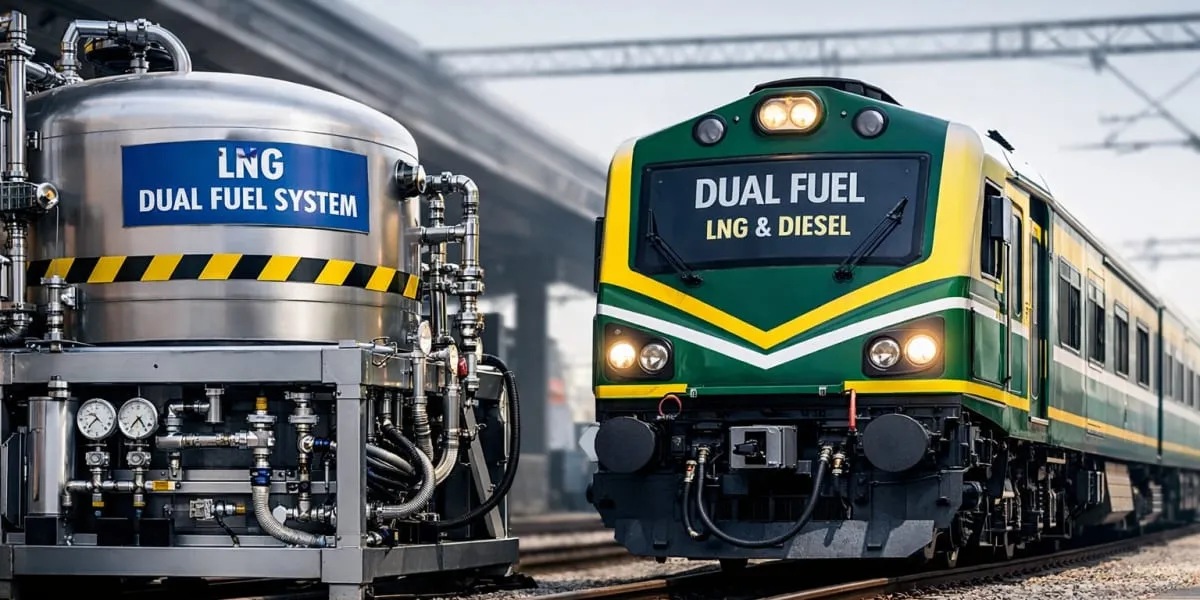
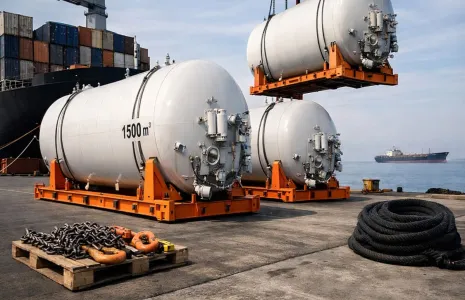
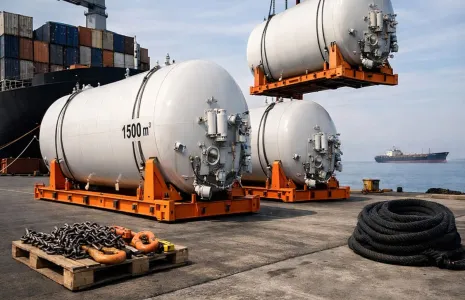
Indian Railways has operationalised the nation's first LNG-diesel dual-fuel diesel electric multiple unit (DEMU) train at Sabarmati, Ahmedabad, following supply of 2,200-litre LNG receiving, storage and regasification systems by INOX India for integration with 1,400 HP driving power cars (DPUs).

The systems are engineered to enable seamless dual-fuel operations using LNG and diesel and to substitute up to 40 per cent of diesel consumption. This deployment is presented as a major step in advancing energy-efficient and low-emission rail mobility.

The dual-fuel initiative was developed by the Alternative Fuels Division to convert an initial batch of 10 DPUs from conventional diesel to a dual-fuel hybrid model. INOX had previously delivered two units that underwent extensive trials and certifications by Indian Railways at the Sabarmati Division and the company is reported to be ready to deliver additional units under its contract.

Delivery to Indian Railways was effected through CLH Gaseous Fuel Applications Pvt. Ltd., which carried out engine conversion from standalone diesel to dual-fuel operation. INOX is described as the only technology provider in India to have delivered, tested and validated cryogenic LNG systems for rail applications and the company is pursuing plans to double on-board LNG capacity to enable longer distances beyond the current shorter hauls.

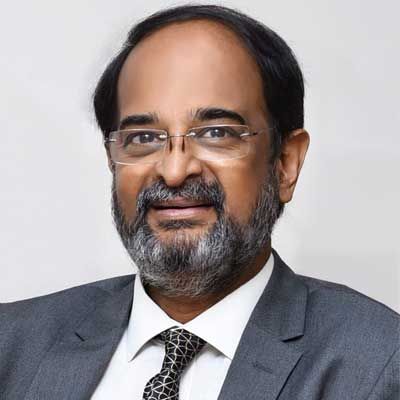
INOX India Limited is a leading manufacturer of cryogenic storage, re-gas and distribution systems with operations in India, Brazil and Europe and an extensive user base in more than 100 countries supported by after-sales associates in 25 countries. The chief executive indicated that the company regards LNG as a transition fuel and liquid hydrogen as the next frontier for zero-emission rail, and that sustained R&D and cryogenic expertise underpin its aim to support India's clean mobility and energy security objectives.

Indian Railways has operationalised the nation's first LNG-diesel dual-fuel diesel electric multiple unit (DEMU) train at Sabarmati, Ahmedabad, following supply of 2,200-litre LNG receiving, storage and regasification systems by INOX India for integration with 1,400 HP driving power cars (DPUs). The systems are engineered to enable seamless dual-fuel operations using LNG and diesel and to substitute up to 40 per cent of diesel consumption. This deployment is presented as a major step in advancing energy-efficient and low-emission rail mobility. The dual-fuel initiative was developed by the Alternative Fuels Division to convert an initial batch of 10 DPUs from conventional diesel to a dual-fuel hybrid model. INOX had previously delivered two units that underwent extensive trials and certifications by Indian Railways at the Sabarmati Division and the company is reported to be ready to deliver additional units under its contract. Delivery to Indian Railways was effected through CLH Gaseous Fuel Applications Pvt. Ltd., which carried out engine conversion from standalone diesel to dual-fuel operation. INOX is described as the only technology provider in India to have delivered, tested and validated cryogenic LNG systems for rail applications and the company is pursuing plans to double on-board LNG capacity to enable longer distances beyond the current shorter hauls. INOX India Limited is a leading manufacturer of cryogenic storage, re-gas and distribution systems with operations in India, Brazil and Europe and an extensive user base in more than 100 countries supported by after-sales associates in 25 countries. The chief executive indicated that the company regards LNG as a transition fuel and liquid hydrogen as the next frontier for zero-emission rail, and that sustained R&D and cryogenic expertise underpin its aim to support India's clean mobility and energy security objectives.

Related Stories

Gold Stories
Next Story
Products

Koemmerling opens Navi Mumbai experience centre

Koemmerling, a brand of the profine Group, has expanded its presence in the Mumbai metropolitan region with the opening of a new experience centre in Navi Mumbai and launched its Allure S46 minimal sliding door system for the Indian market.Located in CBD Belapur, the facility was inaugurated by Peter Mrosik, Owner and CEO, profine Group, along with Farid Khan, Chairman and Managing Director, profine India, and Kamal Bajaj, CEO, profine India.The company said the new centre will showcase its portfolio of uPVC and aluminium window and door systems to architects, developers and homeowners.The ina..

Next Story
Products

India's waterproofing market nears Rs 150 bn milestone

India's waterproofing industry is approaching a market size of Rs 150 billion and is expected to surpass the $2 billion milestone, according to speakers at the 2nd India International Waterproofers Conference & Expo 2026 organised by the Waterproofers Association of India (WAI) in New Delhi.The two-day event brought together more than 20 speakers, 55 international delegates and 53 exhibition booths, with discussions focusing on climate-resilient construction, advanced waterproofing technologies and international collaboration.Inaugurating the event, Durga Shanker Mishra, former Secretary, ..

Next Story
Real Estate

Dilip Buildcon Q1 FY27 Revenue at Rs 23.78 billion

Dilip Buildcon Limited reported consolidated revenue from operations of Rs 2,378 crore in Q1 FY27, along with EBITDA of Rs 429 crore and profit after tax of Rs 128 crore.Consolidated EBITDA margin stood at 18.1%, improving from 17.1% in Q4 FY26. On a standalone basis, revenue from operations was Rs 1,930 crore, EBITDA stood at Rs 199 crore and PAT was Rs 39 crore, with an EBITDA margin of 10.3%.The company’s order book stood at Rs 27,691 crore as of 30 June 2026, compared with Rs 28,830 crore as of 31 March 2026. Roads and highways accounted for 17.1% of the order book, irrigation and water ..

Advertisement

Subscribe to Our Newsletter

Get daily newsletters around different themes from Construction world.

STAY CONNECTED

Advertisement