+
NLC India And Reliance To Assess Lignite Gasification In Gujarat
OIL & GAS

NLC India And Reliance To Assess Lignite Gasification In Gujarat

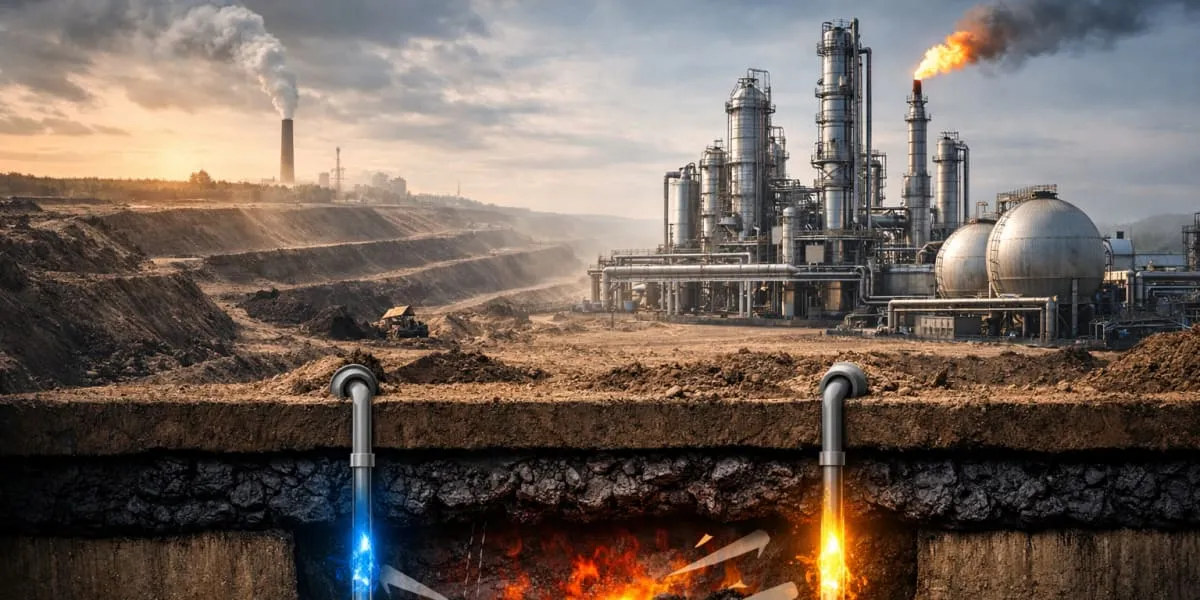
NLC India Ltd and Reliance Industries Ltd will jointly assess an underground lignite gasification project in Gujarat to boost domestic gasified fuel supplies and reduce import dependence. They have signed an agreement to evaluate the feasibility and technical viability of converting lignite reserves into synthesis gas through underground gasification. The study will cover two lignite blocks held by NLCIL and preliminary technical work is underway.

Reliance has been engaged for its expertise in gasification technologies and downstream gas handling and the partners envisage the project supplying additional domestic synthesis gas for industrial use. The initiative is intended to strengthen energy security by lowering reliance on imported liquefied natural gas. Underground lignite gasification converts in situ lignite into synthesis gas, a mixture of hydrogen, carbon monoxide and other gases that can be used as industrial fuel or as feedstock for chemicals and fertilisers.

The development aligns with NLCIL's broader diversification strategy and complements other projects at the company. NLCIL is also constructing a Rs 43.94 billion (bn) lignite to methanol plant at Neyveli, Tamil Nadu, which is expected to be completed next year. The partners said the Gujarat assessment will inform technical design, environmental safeguards and potential downstream integration.

The proposed project is consistent with the Union Cabinet's coal gasification push and with a Rs 375 billion (bn) scheme approved to promote coal and lignite gasification projects. That scheme targets the gasification of around 75 million (mn) tonnes (t) of coal and supports India’s broader target of 100 million (mn) tonnes (t) by 2030. NLCIL, a public sector enterprise engaged in lignite mining and power generation, has been expanding into renewable energy and coal mining as part of its long term diversification efforts.

If the assessment demonstrates technical and commercial viability the partners would consider project development and downstream offtake arrangements to supply industry. The studies will also consider environmental management, water use and subsurface risks as part of standard feasibility evaluation.

NLC India Ltd and Reliance Industries Ltd will jointly assess an underground lignite gasification project in Gujarat to boost domestic gasified fuel supplies and reduce import dependence. They have signed an agreement to evaluate the feasibility and technical viability of converting lignite reserves into synthesis gas through underground gasification. The study will cover two lignite blocks held by NLCIL and preliminary technical work is underway. Reliance has been engaged for its expertise in gasification technologies and downstream gas handling and the partners envisage the project supplying additional domestic synthesis gas for industrial use. The initiative is intended to strengthen energy security by lowering reliance on imported liquefied natural gas. Underground lignite gasification converts in situ lignite into synthesis gas, a mixture of hydrogen, carbon monoxide and other gases that can be used as industrial fuel or as feedstock for chemicals and fertilisers. The development aligns with NLCIL's broader diversification strategy and complements other projects at the company. NLCIL is also constructing a Rs 43.94 billion (bn) lignite to methanol plant at Neyveli, Tamil Nadu, which is expected to be completed next year. The partners said the Gujarat assessment will inform technical design, environmental safeguards and potential downstream integration. The proposed project is consistent with the Union Cabinet's coal gasification push and with a Rs 375 billion (bn) scheme approved to promote coal and lignite gasification projects. That scheme targets the gasification of around 75 million (mn) tonnes (t) of coal and supports India’s broader target of 100 million (mn) tonnes (t) by 2030. NLCIL, a public sector enterprise engaged in lignite mining and power generation, has been expanding into renewable energy and coal mining as part of its long term diversification efforts. If the assessment demonstrates technical and commercial viability the partners would consider project development and downstream offtake arrangements to supply industry. The studies will also consider environmental management, water use and subsurface risks as part of standard feasibility evaluation.

Related Stories

Gold Stories

Next Story
Infrastructure Urban

KONE Opens India's First Digital Experience Centre in Pune

KONE, a global elevator and escalator manufacturer, has inaugurated its first Digital Experience Centre (DEC) in India, located in Pune. The facility aims to showcase how artificial intelligence (AI), connectivity and data-driven technologies can enhance customer experiences and improve building operations.The centre was inaugurated by Jussi Herlin, Executive Vice Chair, KONE Corporation; Philippe Delorme, President and CEO, KONE; and Nandan Nilekani, Co-founder and Chairman of the Board, Infosys.Designed as an interactive customer environment, the facility demonstrates digital solutions cover..

Next Story
Infrastructure Urban

CII GreenCo Launches Circularity Guidelines for Indian Industry

The Confederation of Indian Industry (CII) GreenCo Council has launched the CII GreenCo Circularity Guidelines – Pilot Version at the 17th CII GreenCo Waste & Resource Management Summit 2026 in Chennai. The initiative aims to strengthen resource efficiency, waste reduction and circular economy practices across Indian manufacturing and process industries.The guidelines introduce a structured framework with circularity indices covering raw materials, consumables, packaging and other resource inputs. These indicators will help industries assess existing practices, identify opportunities to ..

Next Story
Infrastructure Energy

Global Electronics Association Launches IPC-1783-CO2E Standard

The Global Electronics Association has introduced IPC-1783-CO2E, a new international standard aimed at improving consistency, transparency and comparability in product carbon footprint reporting across the electronics manufacturing industry.The standard, titled International Standard for Data Collection and Reporting of CO2 Equivalent (CO2e) Emissions for the Electronics Manufacturing Supply Chain, provides industry-specific guidance for collecting, estimating and reporting carbon emissions data.With increasing regulatory requirements and customer expectations, electronics manufacturers face c..

Advertisement

Subscribe to Our Newsletter

Get daily newsletters around different themes from Construction world.

STAY CONNECTED

Advertisement

SPECIAL OFFER
QR Code