

Strengthening India Greenhouse Gas Inventory Systems
OIL & GAS

Strengthening India Greenhouse Gas Inventory Systems

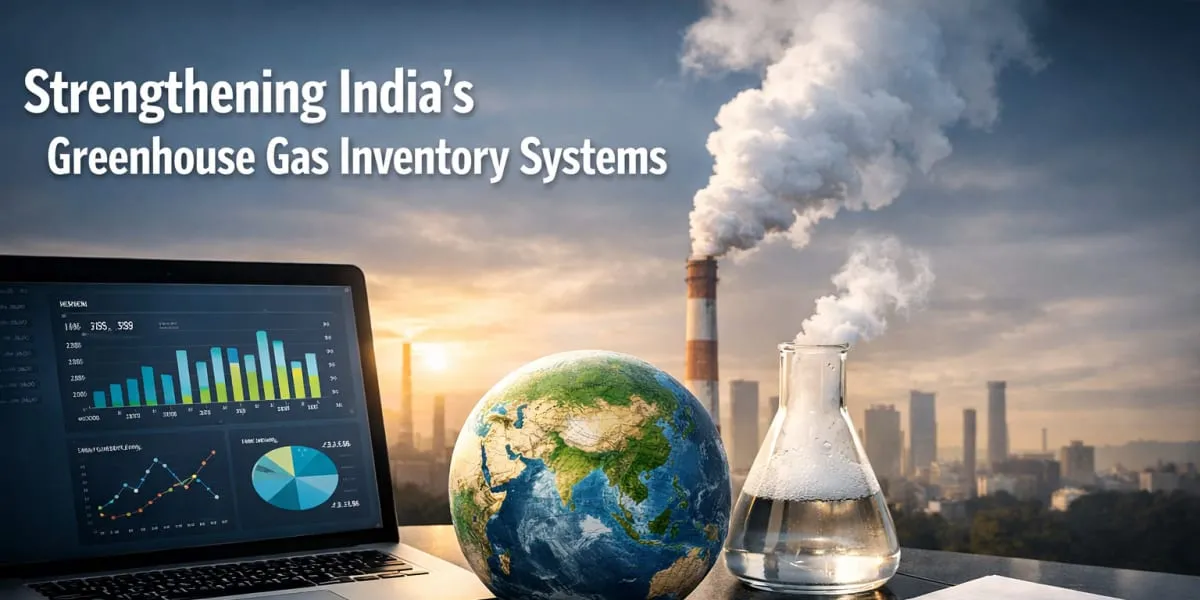
India is strengthening its national greenhouse gas inventory systems and improving emissions accounting as part of its contribution to global climate action. The country has recently submitted its first Biennial Transparency Report (BTR-1) to the United Nations Framework Convention on Climate Change (UNFCCC). Following that submission, a three-day knowledge sharing workshop on the national greenhouse gas inventory was jointly organised by the CSIR-Indian Institute of Petroleum (CSIR-IIP) and the Ministry of Environment, Forest and Climate Change (MoEFCC) at CSIR-IIP in Dehradun from 20th to 22nd May 2026. The event assembled technical experts and policymakers to review methodologies and reporting requirements.

Participants included specialists from the CSIR-Central Institute of Mining and Fuel Research (CSIR-CIMFR), Central Mine Planning and Design Institute Limited, the Confederation of Indian Industry, IIT-Indian School of Mines Dhanbad, the National Institute of Advanced Studies, the Alliance for an Energy Efficient Economy and Jadavpur University. Sessions were chaired by senior officials and academics including advisers and additional directors from the MoEFCC, a professor from IIM Ahmedabad and senior scientists from CSIR-IIP. The agenda prioritised sectoral approaches and harmonised methods for inventory compilation.

The programme featured technical and brainstorming sessions on preparation of the Second Biennial Transparency Report (BTR-2) and on development of country specific emission factors for India. Discussions addressed emissions accounting for the Energy and Industrial Processes and Product Use (IPPU) sectors, with attention to iron and steel, road transport, pipeline transportation, fugitive emissions and industrial process emissions. Delegates also examined reporting of key categories and the role of ethanol blending in transportation fuels and its projected contribution to reducing fuel imports under the Government of India vision of Viksit Bharat by 2047.

The workshop concluded with deliberations on the planned submission of BTR-2 by the end of 2026 and BTR-3 by 2028. A newly constructed selfie point at CSIR-IIP was inaugurated after the event. Organisers indicated that continued collaboration between research institutes and industry will support enhanced transparency and methodological rigour in national inventory preparation ahead of forthcoming reporting milestones.

India is strengthening its national greenhouse gas inventory systems and improving emissions accounting as part of its contribution to global climate action. The country has recently submitted its first Biennial Transparency Report (BTR-1) to the United Nations Framework Convention on Climate Change (UNFCCC). Following that submission, a three-day knowledge sharing workshop on the national greenhouse gas inventory was jointly organised by the CSIR-Indian Institute of Petroleum (CSIR-IIP) and the Ministry of Environment, Forest and Climate Change (MoEFCC) at CSIR-IIP in Dehradun from 20th to 22nd May 2026. The event assembled technical experts and policymakers to review methodologies and reporting requirements. Participants included specialists from the CSIR-Central Institute of Mining and Fuel Research (CSIR-CIMFR), Central Mine Planning and Design Institute Limited, the Confederation of Indian Industry, IIT-Indian School of Mines Dhanbad, the National Institute of Advanced Studies, the Alliance for an Energy Efficient Economy and Jadavpur University. Sessions were chaired by senior officials and academics including advisers and additional directors from the MoEFCC, a professor from IIM Ahmedabad and senior scientists from CSIR-IIP. The agenda prioritised sectoral approaches and harmonised methods for inventory compilation. The programme featured technical and brainstorming sessions on preparation of the Second Biennial Transparency Report (BTR-2) and on development of country specific emission factors for India. Discussions addressed emissions accounting for the Energy and Industrial Processes and Product Use (IPPU) sectors, with attention to iron and steel, road transport, pipeline transportation, fugitive emissions and industrial process emissions. Delegates also examined reporting of key categories and the role of ethanol blending in transportation fuels and its projected contribution to reducing fuel imports under the Government of India vision of Viksit Bharat by 2047. The workshop concluded with deliberations on the planned submission of BTR-2 by the end of 2026 and BTR-3 by 2028. A newly constructed selfie point at CSIR-IIP was inaugurated after the event. Organisers indicated that continued collaboration between research institutes and industry will support enhanced transparency and methodological rigour in national inventory preparation ahead of forthcoming reporting milestones.

Next Story
Building Material

Dalmia Cement to Acquire 5.2 MnTPA Capacity

Dalmia Cement (Bharat), a wholly owned subsidiary of Dalmia Bharat, has executed a Business Transfer Agreement with Jaiprakash Associates and Adani Infra (India) to acquire cement assets with 5.2 MnTPA capacity in the Central region.The acquisition covers cement plants located at Rewa in Madhya Pradesh, and Churk, Chunar and Sadwa in Uttar Pradesh. The assets include 5.2 MnTPA cement capacity, 3.3 MnTPA clinker capacity, 99 MW thermal power capacity, railway sidings at Rewa and Chunar, and a common railway siding at Churk. The enterprise value of the transaction is Rs 28.5 billion.Following co..

Next Story
Infrastructure Urban

Rampura Agucha Becomes Zinc Mark Certified Mine

Hindustan Zinc’s Rampura Agucha Mine has become India’s first Zinc Mark certified mine, marking a major milestone in responsible zinc production. The mine is the world’s largest underground zinc-lead mine and is operated by Hindustan Zinc, the world’s largest integrated zinc producer.Zinc Mark is a globally recognised assurance framework that validates responsible zinc production against international Environmental, Social and Governance standards, responsible sourcing practices and value chain transparency. The certification strengthens Hindustan Zinc’s ability to offer responsibly ..

Next Story
Infrastructure Urban

Headsup B2B Targets Rs 4 bn Revenue This Fiscal

Headsup B2B, a pan-India procurement and supply chain platform serving the infrastructure, industrial and renewable energy sectors, is targeting Rs 4 billion in revenue for the current fiscal year. The company executed over 2,200 transactions worth Rs 2.5 billion in the previous financial year.Allied infrastructure services contributed nearly 80 per cent of revenue during the period, while renewable energy, industrial automation and road safety solutions emerged as the fastest-growing categories. The company is now expanding its role beyond procurement to support installation, deployment and p..

Advertisement

Subscribe to Our Newsletter

Get daily newsletters around different themes from Construction world.

STAY CONNECTED

Advertisement

Advertisement

Advertisement

-->