AI Data Centres' Volatile Power Demand Strains Equipment and Grids
POWER & RENEWABLE ENERGY

AI Data Centres' Volatile Power Demand Strains Equipment and Grids

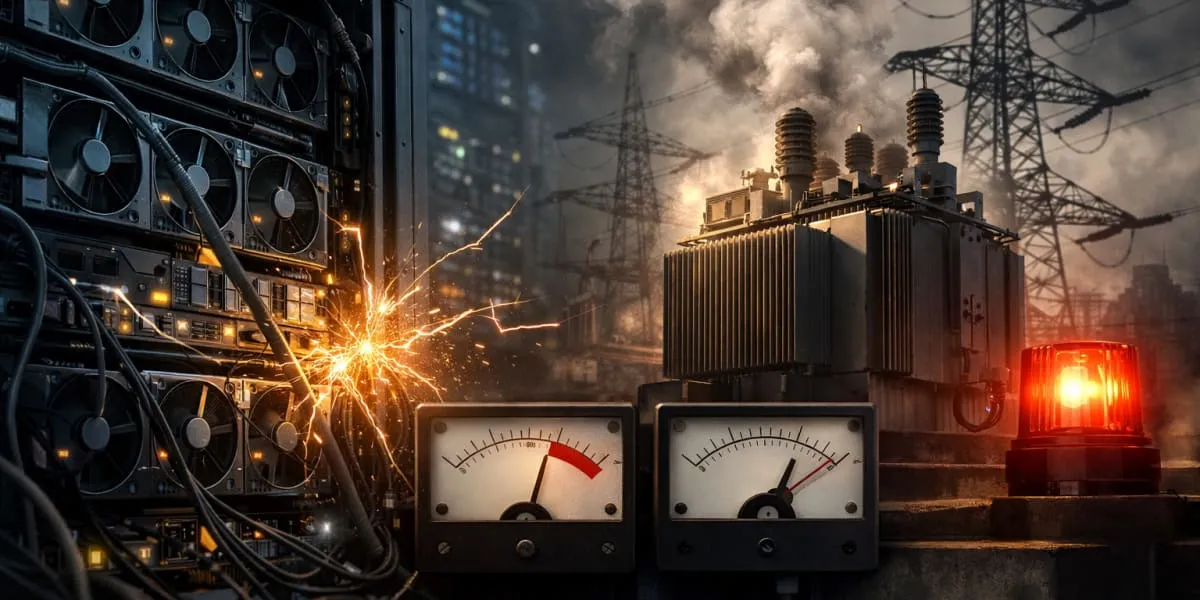
Artificial intelligence (AI) data centres are imposing new stresses on power systems as rapid swings in demand resemble the loads of factories and towns.

Training large models mobilises thousands of graphics processing units in unison, causing power draw to surge within milliseconds and at times to rise by one point five times design capacity.

Mechanical failures have been reported as rotating equipment and small combustion engines suffer repeated shocks, and turbines at one US facility developed cracks with similar damage observed at smaller sites in the UK; crankshafts and other parts have broken under cyclical strain.

Batteries, capacitors and flywheels are being deployed to smooth flows but some battery systems have required replacement within weeks, and operators warn that insufficient stabilising technology at some new builds is compounding risks.

Reliability problems are delaying projects and cutting revenue at some AI campuses, with a planned two point six seven-gigawatt site pushed back by a year for engineering and power delivery.

The cost of downtime is driven chiefly by lost compute revenue rather than the price of replacing pumps or breakers, and some facilities report uptime closer to 80 per cent.

Regulators and grid operators have warned that many data centre load models do not capture dynamic behaviour and that greater coordination between load, generation, storage and controls is required.

One agency evaluated more than 33 gigawatts of operational centres and issued a level three alert asking large centres to address risks and submit responses by an August third deadline.

Chipmakers and equipment vendors are working with power experts and operators are using techniques to keep processors running steadily, though some have criticised side computations as wasteful.

Test beds combining GPUs, on site generation and storage are being used to trial batteries, software and other systems intended to smooth oscillations between facilities and the grid.

Stakeholders say there remains an opportunity to avoid long term instability if planning for load, generation, storage, controls and grid connection is integrated during design.

Artificial intelligence (AI) data centres are imposing new stresses on power systems as rapid swings in demand resemble the loads of factories and towns. Training large models mobilises thousands of graphics processing units in unison, causing power draw to surge within milliseconds and at times to rise by one point five times design capacity. Mechanical failures have been reported as rotating equipment and small combustion engines suffer repeated shocks, and turbines at one US facility developed cracks with similar damage observed at smaller sites in the UK; crankshafts and other parts have broken under cyclical strain. Batteries, capacitors and flywheels are being deployed to smooth flows but some battery systems have required replacement within weeks, and operators warn that insufficient stabilising technology at some new builds is compounding risks. Reliability problems are delaying projects and cutting revenue at some AI campuses, with a planned two point six seven-gigawatt site pushed back by a year for engineering and power delivery. The cost of downtime is driven chiefly by lost compute revenue rather than the price of replacing pumps or breakers, and some facilities report uptime closer to 80 per cent. Regulators and grid operators have warned that many data centre load models do not capture dynamic behaviour and that greater coordination between load, generation, storage and controls is required. One agency evaluated more than 33 gigawatts of operational centres and issued a level three alert asking large centres to address risks and submit responses by an August third deadline. Chipmakers and equipment vendors are working with power experts and operators are using techniques to keep processors running steadily, though some have criticised side computations as wasteful. Test beds combining GPUs, on site generation and storage are being used to trial batteries, software and other systems intended to smooth oscillations between facilities and the grid. Stakeholders say there remains an opportunity to avoid long term instability if planning for load, generation, storage, controls and grid connection is integrated during design.

Related Stories

Gold Stories

Next Story
Infrastructure Transport

Innovision Wins NHAI Toll Collection Contract at Aashpur Fee Plaza

Innovision Limited has informed stock exchanges that it has been awarded a user fee collection and facility maintenance contract by the National Highways Authority of India (NHAI). The letter of award was issued on 10 August 2026 for operations at Aashpur Fee Plaza at design kilometre 231.100 on National Highway number 91 between Aligarh and Kanpur in Uttar Pradesh. The engagement covers collection of user fees for four and more lane sections and the upkeep and maintenance of adjacent toilet blocks including replenishment of consumable items. The contract was secured through a competitive e-te..

Next Story
Infrastructure Urban

Bharat Electronics Secures Rs.5,410 mn In Orders

Bharat Electronics Limited (BEL), a Navratna Defence Public Sector Undertaking, has secured additional orders worth Rs.5,410 million (mn) since the last disclosure on 31 July 2026. The fresh awards raise the company's recently reported intake and were announced by way of a regulatory filing on 10 August 2026. The orders span multiple business verticals and are incremental to contracts already under execution. The update follows the company's routine disclosure obligations to the stock exchanges. Major orders received include communication equipment, electro optics, ammunition fuzes, Chemical B..

Next Story
Infrastructure Urban

United Drilling Tools Receives US Order For Gas Lift Mandrel

United Drilling Tools Limited said it has received an order from Tri Lift Services Inc of the United States for the supply of a gas lift mandrel to be used in the oil and gas industry. The company said the disclosure was made to listing authorities under the Securities and Exchange Board of India listing rules and the SEBI master circular of November 2024. The notice set out the nature of the contract as commercial and awarded by an international entity. The order is to be executed in the ordinary course of business and carries an estimated contract value of Rs four point eight three million (..

Advertisement

Subscribe to Our Newsletter

Get daily newsletters around different themes from Construction world.

STAY CONNECTED

Advertisement

Advertisement

Advertisement