Andhra Pradesh Adds 3,865 Megawatts Renewable Energy Capacity in FY26
POWER & RENEWABLE ENERGY

Andhra Pradesh Adds 3,865 Megawatts Renewable Energy Capacity in FY26

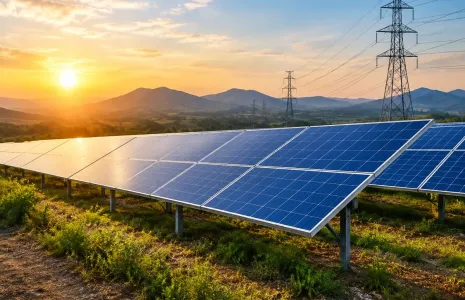
Andhra Pradesh added 3,865 megawatt (MW) of renewable energy capacity in fiscal 2026, a fourfold jump from the previous year. The acceleration represents one of the sharper year-on-year increases recorded by the state in recent times. The additions were announced by state authorities as part of a broader push to expand low-carbon generation.

The expansion compares with roughly 966 MW added in the prior fiscal period, indicating a near quadrupling of annual capacity additions. The scale of the increase reflects a step change in project commissioning and grid connection activity across the state. Developers and system operators have been handling larger volumes of capacity through expedited approvals and infrastructure upgrades.

The new capacity strengthens the state's renewable generation portfolio and improves diversity of supply. It also reduces reliance on fossil fuel sources for incremental demand and supports grid flexibility initiatives undertaken by the state. Transmission and distribution networks have been adapted to accommodate the higher variable generation.

Solar and wind projects accounted for the bulk of capacity additions, with distributed generation and utility-scale plants contributing to the total. Energy storage and hybrid systems are increasingly incorporated into project designs to manage variability and provide ancillary services. Policy measures and state-level procurement helped accelerate project timelines without altering long-term procurement objectives.

Going forward, monitoring of actual generation, capacity utilisation and system stability will determine how the additional capacity translates into energy security and emissions outcomes. The state will need to continue investments in balancing resources and grid modernisation to fully realise the benefits of the recent additions.

Stakeholders will monitor tariff impacts, procurement schedules and grid performance to assess economic and operational outcomes of the build-out. Continued coordination between state agencies, central authorities and private firms remains critical to maintain momentum. Periodic reporting on capacity utilisation and curtailment will provide transparency and inform future planning.

Andhra Pradesh added 3,865 megawatt (MW) of renewable energy capacity in fiscal 2026, a fourfold jump from the previous year. The acceleration represents one of the sharper year-on-year increases recorded by the state in recent times. The additions were announced by state authorities as part of a broader push to expand low-carbon generation. The expansion compares with roughly 966 MW added in the prior fiscal period, indicating a near quadrupling of annual capacity additions. The scale of the increase reflects a step change in project commissioning and grid connection activity across the state. Developers and system operators have been handling larger volumes of capacity through expedited approvals and infrastructure upgrades. The new capacity strengthens the state's renewable generation portfolio and improves diversity of supply. It also reduces reliance on fossil fuel sources for incremental demand and supports grid flexibility initiatives undertaken by the state. Transmission and distribution networks have been adapted to accommodate the higher variable generation. Solar and wind projects accounted for the bulk of capacity additions, with distributed generation and utility-scale plants contributing to the total. Energy storage and hybrid systems are increasingly incorporated into project designs to manage variability and provide ancillary services. Policy measures and state-level procurement helped accelerate project timelines without altering long-term procurement objectives. Going forward, monitoring of actual generation, capacity utilisation and system stability will determine how the additional capacity translates into energy security and emissions outcomes. The state will need to continue investments in balancing resources and grid modernisation to fully realise the benefits of the recent additions. Stakeholders will monitor tariff impacts, procurement schedules and grid performance to assess economic and operational outcomes of the build-out. Continued coordination between state agencies, central authorities and private firms remains critical to maintain momentum. Periodic reporting on capacity utilisation and curtailment will provide transparency and inform future planning.

Next Story
Infrastructure Urban

Centre Clears Power Distribution Upgrade for Uttar Pradesh

The Central Government has approved power distribution projects worth Rs 407.39 billion for Uttar Pradesh under the Revamped Distribution Sector Scheme (RDSS). The investment will be used to modernise the state's electricity distribution infrastructure and strengthen network capacity across urban and rural areas. The package targets one of the country's largest distribution networks as the state experiences rapid urbanisation and rising electricity consumption. Planned interventions include the strengthening of distribution lines, modernisation of substations, replacement of ageing electrical ..

Next Story
Infrastructure Energy

India Data Centres To Consume 191 TWh By 2040 Driving Renewables

A Wood Mackenzie report says India's operational data centre capacity is projected to increase more than fivefold to 12 gigawatt (GW) by 2030 from 2.2 GW in 2025 as artificial intelligence (AI) and cloud computing drive demand. It projects electricity consumption to rise from 10 terawatt-hour (TWh) in 2025 to 191 TWh by 2040. The study forecasts a compound annual growth rate of around 40 per cent and notes AI-dedicated capacity will surge nearly 24-fold from 275 megawatt (MW) in 2025 to 6,546 MW by 2030. The report places India's digital economy at Rs 32 trillion (tn) in 2025 and says it contr..

Next Story
Infrastructure Transport

Hydrogen Train Completes 1,200 Kilometres Of Trials

India's first hydrogen train was flagged off between Jind and Sonipat on July 17 and has travelled over 1,200 kilometres in trials, saving diesel consumption of more than 3,200 litres, a Railway Ministry press release said. The deployment marks the introduction of a zero-emission fuel cell train into route testing and represents a milestone in domestic rail innovation. The train generates electricity onboard through a chemical reaction between hydrogen and oxygen, producing electricity to propel the vehicle while emitting only water vapour as a by-product. There is no smoke and no tailpipe car..

Advertisement

Subscribe to Our Newsletter

Get daily newsletters around different themes from Construction world.

STAY CONNECTED

Advertisement

Advertisement

Advertisement