Delhi Peak Power Demand Reaches 8,748 MW Record
POWER & RENEWABLE ENERGY

Delhi Peak Power Demand Reaches 8,748 MW Record

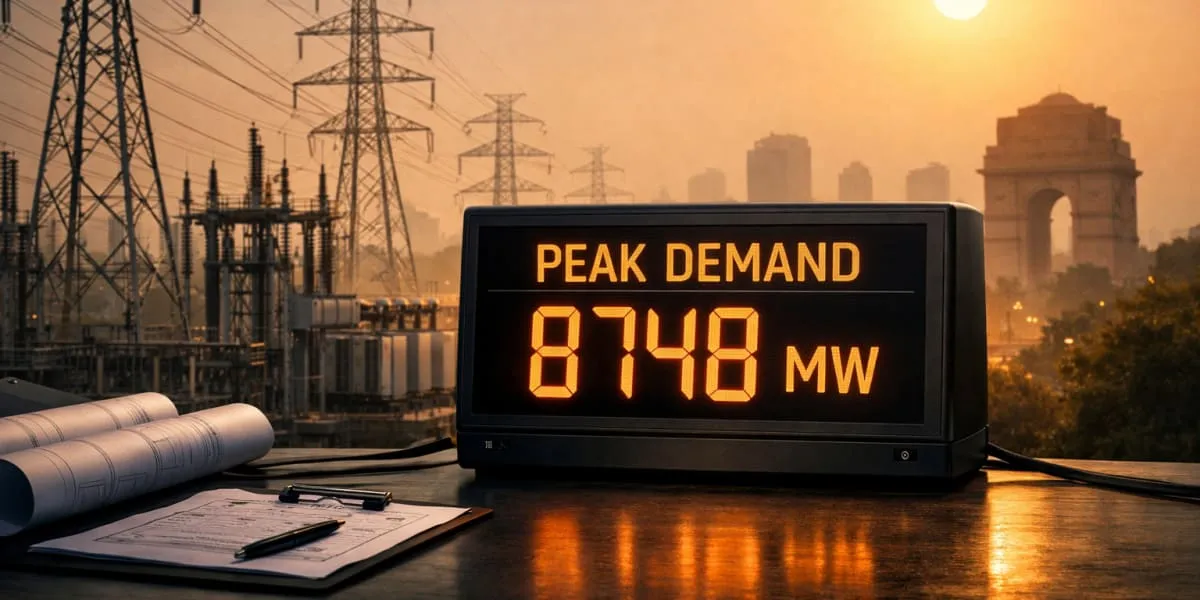
Delhi’s peak electricity demand reached a record 8,748 megawatt (MW) at 3.17 pm on June 29, 2026 as the national capital endured intense heat. The figure surpassed the previous high of 8,656 MW set on June 19, 2024 by 92 MW and was met without major breakdowns or infrastructure failure. The power minister credited a government power master plan and sustained investments in strengthening transmission and distribution.

State Load Dispatch Centre data showed the peak was 306 MW above the 8,442 MW recorded on June 12, 2025. Delhi crossed the 8,000 MW mark three times in June 2026, registering 8,434 MW on June 10 and 8,296 MW on June 11 before the record. Officials noted that between June 1 and 29 the city’s peaks exceeded corresponding days in 2025 on 22 of 29 occasions.

The upward trend began early, with the peak crossing the 7,000 MW threshold on April 27 at 7,078 MW, the first April occurrence. Previously the 7,000 MW level had been reached only in May during 2024 and 2025. The city recorded its highest-ever May demand at 8,439 MW on May 25, 2026, and successive annual peaks reflect a post-pandemic recovery in consumption.

Distribution companies reported meeting the peak without disruption, with BSES Rajdhani supplying 3,906 MW in South and West Delhi and BSES Yamuna meeting 1,876 MW in East and Central Delhi. Officials said long-term power purchase agreements, bilateral arrangements, banking with other states and AI-based forecasting helped maintain supply, and about 2,670 MW of green power contributed. Tata Power Delhi Distribution Limited reported a highest-ever peak of 2,497 MW between 3.15 pm and 3.30 pm while maintaining uninterrupted supply across North and North-West Delhi. The State Load Dispatch Centre projected peak demand to cross 9,000 MW later this summer and indicated it could exceed 10,000 MW by 2028-29.

Delhi’s peak electricity demand reached a record 8,748 megawatt (MW) at 3.17 pm on June 29, 2026 as the national capital endured intense heat. The figure surpassed the previous high of 8,656 MW set on June 19, 2024 by 92 MW and was met without major breakdowns or infrastructure failure. The power minister credited a government power master plan and sustained investments in strengthening transmission and distribution. State Load Dispatch Centre data showed the peak was 306 MW above the 8,442 MW recorded on June 12, 2025. Delhi crossed the 8,000 MW mark three times in June 2026, registering 8,434 MW on June 10 and 8,296 MW on June 11 before the record. Officials noted that between June 1 and 29 the city’s peaks exceeded corresponding days in 2025 on 22 of 29 occasions. The upward trend began early, with the peak crossing the 7,000 MW threshold on April 27 at 7,078 MW, the first April occurrence. Previously the 7,000 MW level had been reached only in May during 2024 and 2025. The city recorded its highest-ever May demand at 8,439 MW on May 25, 2026, and successive annual peaks reflect a post-pandemic recovery in consumption. Distribution companies reported meeting the peak without disruption, with BSES Rajdhani supplying 3,906 MW in South and West Delhi and BSES Yamuna meeting 1,876 MW in East and Central Delhi. Officials said long-term power purchase agreements, bilateral arrangements, banking with other states and AI-based forecasting helped maintain supply, and about 2,670 MW of green power contributed. Tata Power Delhi Distribution Limited reported a highest-ever peak of 2,497 MW between 3.15 pm and 3.30 pm while maintaining uninterrupted supply across North and North-West Delhi. The State Load Dispatch Centre projected peak demand to cross 9,000 MW later this summer and indicated it could exceed 10,000 MW by 2028-29.

Related Stories

Gold Stories

Next Story
Infrastructure Urban

Hindalco Baphlimali Mine Secures ASI Certification

Hindalco Industries has announced that Utkal Alumina International Limited’s Baphlimali Bauxite Mine in Rayagada district, Odisha, has achieved Aluminium Stewardship Initiative (ASI) Performance Standard V3.1 certification.With this achievement, Baphlimali has become the first bauxite mining operation in India to secure ASI Performance Standard V3.1 certification.The certification covers planning, mining, onsite crushing and conveyor transportation of bauxite from the mine, which has an annual production capacity of 8.5 million tonnes. The mine supplies bauxite to Utkal Alumina’s refinery ..

Next Story
Infrastructure Urban

Hindustan Zinc Builds Young Leadership Pipeline

Hindustan Zinc is strengthening its next-generation leadership pipeline, with 10% of the company’s leaders now under the age of 35.The company said more than 62% of its workforce is under 35, while its gender diversity ratio stands at 26.3%. Young professionals are taking on roles across mining, manufacturing, technology, sustainability and business leadership.Over the past two fiscal years, Hindustan Zinc has hired nearly 700 young professionals. This includes 335 campus recruits in FY26 through its VLDP, GET, PGET and MT programmes from leading institutions across India.Amarendu Prakash, C..

Next Story
Infrastructure Urban

Vedanta Metal Bazaar Expands to International Markets

Vedanta Aluminium Metal Limited has expanded its flagship digital e-commerce platform, Vedanta Metal Bazaar (VMB), to international markets, enabling overseas customers to order and buy aluminium products online.The platform will now serve customers across Asia, Europe, Africa and the Americas. International buyers will gain access to more than 1,000 aluminium product variants along with simplified price booking, live LME-linked hedging and digital transaction management.Vedanta Metal Bazaar processed transactions worth nearly $4.1 billion, or over Rs 38,000 crore, in FY26 and fulfilled more t..

Advertisement

Subscribe to Our Newsletter

Get daily newsletters around different themes from Construction world.

STAY CONNECTED

Advertisement

Advertisement

Advertisement