Fujiyama Commissions 2,000 MW Solar Panel Plant at Ratlam
POWER & RENEWABLE ENERGY

Fujiyama Commissions 2,000 MW Solar Panel Plant at Ratlam

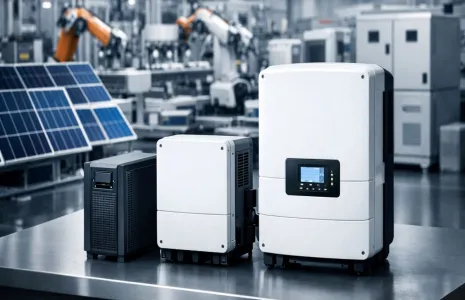
On 14 May 2026 Fujiyama Power Systems Limited (Fujiyama) commissioned a 2,000 megawatt (MW) solar panel manufacturing facility at Ratlam in Madhya Pradesh. The company, one of India’s leading providers of rooftop solar solutions, has an extensive portfolio that includes solar panels, inverters, lithium and tubular batteries, chargers and power?electronics systems. The Ratlam plant forms part of a large greenfield manufacturing expansion intended to strengthen the group's integrated solar manufacturing capabilities.

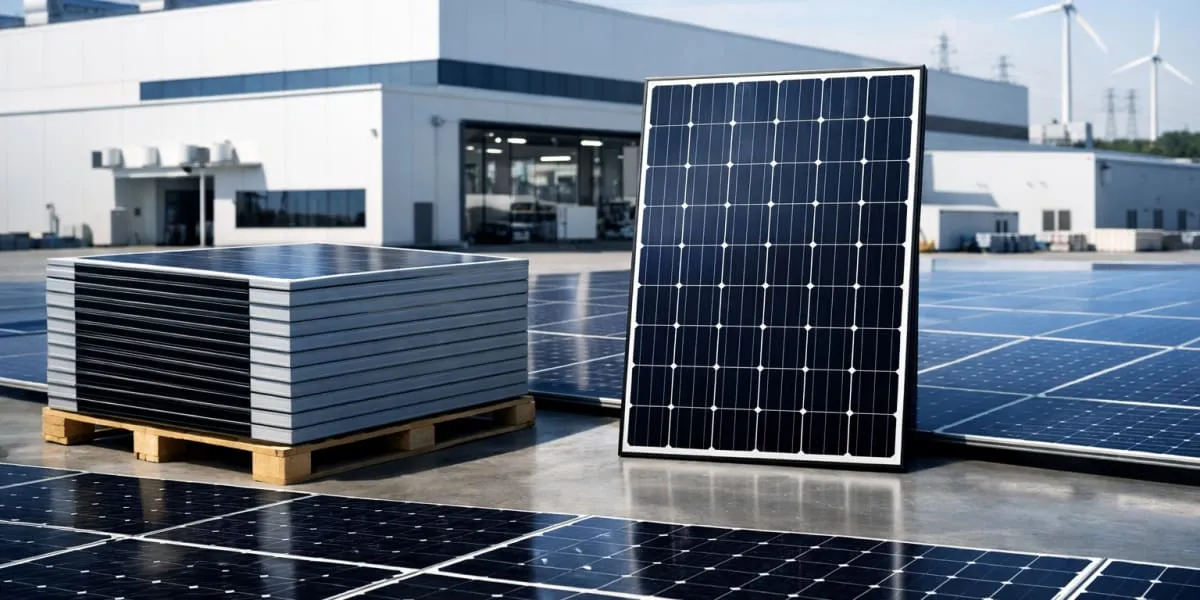
The facility has been developed with a planned manufacturing capacity of 2,000 MW each for solar panels, batteries and inverters and will initially operate at an annualised capacity of approximately 1,000 MW under a single?shift operation. The company stated that a gradual ramp?up is planned in phases and that double?shift operations are intended to deliver full capacity utilisation by the fourth quarter of FY27. With the Ratlam panel line coming online, Fujiyama’s total solar panel manufacturing capacity has increased to 3,568 MW.

The commissioning timelines for the power?electronics and battery manufacturing capacities experienced delays as the company incorporated recent advancements in lithium?ion battery technology and managed supply impacts arising from geopolitical developments during execution. The inverter manufacturing line is expected to be commissioned in the first quarter of FY27 and the requisite machinery has already been received at the Ratlam facility. Machinery orders for the battery manufacturing line have been placed and commissioning is expected in the second quarter of FY27.

The Ratlam expansion reinforces Fujiyama’s manufacturing footprint and supports the long?term strategy of increasing backward integration, improving supply?chain efficiencies and expanding manufacturing scale to serve the domestic rooftop solar market. The company serves Indian households through a distribution and service network of more than 8,900 channel partners and combines engineering capabilities with an integrated manufacturing model across multiple states. Fujiyama has commissioned one gigawatt of mono PERC solar cell capacity and is expanding an additional 1.2 gigawatt TOPCon solar cell capacity, positioning it to capture demand under government supported domestic content requirements.

"Join industry leaders at RAHSTA Expo, India's premier platform for roads, highways and traffic infrastructure. Register now to explore innovations, network with experts and shape the future of mobility."

On 14 May 2026 Fujiyama Power Systems Limited (Fujiyama) commissioned a 2,000 megawatt (MW) solar panel manufacturing facility at Ratlam in Madhya Pradesh. The company, one of India’s leading providers of rooftop solar solutions, has an extensive portfolio that includes solar panels, inverters, lithium and tubular batteries, chargers and power?electronics systems. The Ratlam plant forms part of a large greenfield manufacturing expansion intended to strengthen the group's integrated solar manufacturing capabilities. The facility has been developed with a planned manufacturing capacity of 2,000 MW each for solar panels, batteries and inverters and will initially operate at an annualised capacity of approximately 1,000 MW under a single?shift operation. The company stated that a gradual ramp?up is planned in phases and that double?shift operations are intended to deliver full capacity utilisation by the fourth quarter of FY27. With the Ratlam panel line coming online, Fujiyama’s total solar panel manufacturing capacity has increased to 3,568 MW. The commissioning timelines for the power?electronics and battery manufacturing capacities experienced delays as the company incorporated recent advancements in lithium?ion battery technology and managed supply impacts arising from geopolitical developments during execution. The inverter manufacturing line is expected to be commissioned in the first quarter of FY27 and the requisite machinery has already been received at the Ratlam facility. Machinery orders for the battery manufacturing line have been placed and commissioning is expected in the second quarter of FY27. The Ratlam expansion reinforces Fujiyama’s manufacturing footprint and supports the long?term strategy of increasing backward integration, improving supply?chain efficiencies and expanding manufacturing scale to serve the domestic rooftop solar market. The company serves Indian households through a distribution and service network of more than 8,900 channel partners and combines engineering capabilities with an integrated manufacturing model across multiple states. Fujiyama has commissioned one gigawatt of mono PERC solar cell capacity and is expanding an additional 1.2 gigawatt TOPCon solar cell capacity, positioning it to capture demand under government supported domestic content requirements.

Next Story
Infrastructure Energy

Beyond Backup Power

For decades, diesel gensets occupied a largely functional role in buildings: a mandatory backup system specified to meet statutory requirements and activated only during grid outages. Today, however, this perception is undergoing a profound shift. Across residential, commercial and mission-critical developments, developers, consultants and operators are increasingly viewing gensets as integral to a broader energy resilience strategy. Rising occupant expectations, growing dependence on digital systems and the proliferation of smart technologies mean that uninterrupted power has become essential..

Next Story
Infrastructure Transport

Mumbai-Pune Connecting Link is designed to ensure reliable all-weather, high-speed transport.

Infrastructure connectivity will be one of the keys to achieve Viksit Bharat. And the Mumbai-Pune Connecting Link has been developed as a long-term infrastructure solution for Western India. Dr Anilkumar Gaikwad, Vice Chairman & Managing Director, Maharashtra State Road Development Corporation (MSRDC), a speaker at the RAHSTA Expo 2026, elaborates upon the project and its significance.The Mumbai-Pune Connecting Link has largely been discussed as a travel-time reduction project. From MSRDC’s perspective, what larger infrastructure and mobility problem was this project actually designed to..

Next Story
Infrastructure Transport

Noida International Airport

Noida International Airport (NIA) is not just another capacity addition to India’s aviation map. It is a test case in whether India can build airport infrastructure that is scalable from Day 1, operationally efficient at launch, and resilient enough to grow without the familiar pain points of brownfield expansion.Its significance lies not merely in the first phase but in the way the airport has been planned for its fourth. Scheduled to begin commercial operations on 15 June 2026, NIA’s first phase comprises one runway and one passenger terminal designed to handle 12 million passengers annu..

Advertisement

Subscribe to Our Newsletter

Get daily newsletters around different themes from Construction world.

STAY CONNECTED

Advertisement

Advertisement

Advertisement