Gujarat Crosses 500,000 Rooftop Solar Installations
POWER & RENEWABLE ENERGY

Gujarat Crosses 500,000 Rooftop Solar Installations

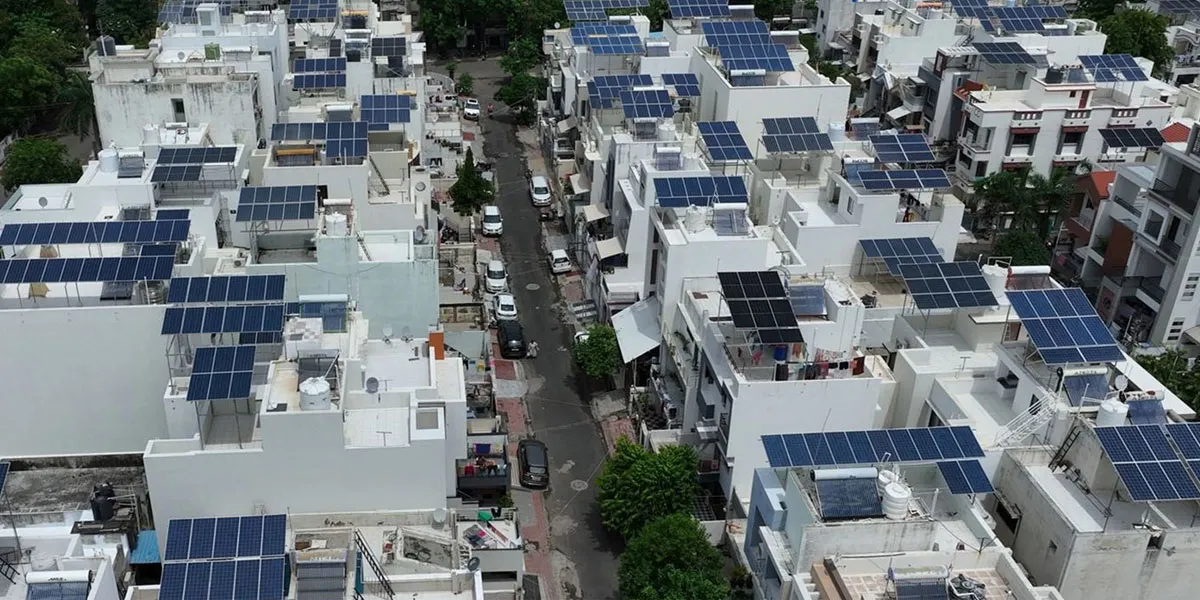
Gujarat has achieved a major renewable energy milestone by installing more than 500,000 rooftop solar systems, delivering an aggregate installed capacity of 1,879 megawatts under the PM Surya Ghar: Muft Bijli Yojana. The achievement reinforces the state’s leadership in rooftop solar adoption and will be a central highlight at the upcoming Vibrant Gujarat Regional Conference in Rajkot, according to an official release.

Beyond the flagship scheme, Gujarat has cumulatively installed over 1.1 million rooftop solar systems across various programmes, further cementing its position as India’s renewable energy frontrunner. The progress reflects the vision of Prime Minister Narendra Modi and the policy focus of Chief Minister Bhupendra Patel, with proactive, citizen-centric measures driving large-scale adoption.

The state continues to rank number one nationally in rooftop solar installations and has already achieved 50 per cent of its target to install 1 million residential rooftop systems by March 2027. Residential consumers have so far availed subsidies worth Rs 37.78 billion under the scheme, making rooftop solar more accessible and affordable while accelerating Gujarat’s clean energy transition.

To simplify adoption, Gujarat has rolled out several citizen-friendly measures. These include assistance of Rs 2,950 towards regulatory charges for systems up to 6 kW, waiver of network strengthening charges for the same category, and exemption from net metering agreements. There is no load limit for residential installations, households can sell surplus electricity to the grid, and no banking charges are levied on residential consumers.

The state also offers attractive subsidies, including Rs 30,000 per kW for systems up to 2 kW, Rs 18,000 per kW for systems above 2 kW and up to 3 kW, and a maximum subsidy of Rs 78,000 for systems exceeding 3 kW capacity. These incentives have significantly lowered entry barriers and boosted household participation across urban and rural areas.

Chief Minister Bhupendra Patel said the current era is defined by solar, wind and hybrid renewable energy, alongside green growth driven by green hydrogen. Gujarat, he said, has long prepared for this transition and today contributes a significant share to India’s overall renewable energy capacity, setting national benchmarks in rooftop solar deployment.

At the Vibrant Gujarat Regional Conference scheduled in Rajkot from January 10, the state will showcase rooftop solar success stories, ranging from households that have cut electricity costs to communities supplying surplus power to the grid, highlighting how the PM Surya Ghar Muft Bijli Yojana is transforming lives and empowering citizens.

Gujarat has achieved a major renewable energy milestone by installing more than 500,000 rooftop solar systems, delivering an aggregate installed capacity of 1,879 megawatts under the PM Surya Ghar: Muft Bijli Yojana. The achievement reinforces the state’s leadership in rooftop solar adoption and will be a central highlight at the upcoming Vibrant Gujarat Regional Conference in Rajkot, according to an official release. Beyond the flagship scheme, Gujarat has cumulatively installed over 1.1 million rooftop solar systems across various programmes, further cementing its position as India’s renewable energy frontrunner. The progress reflects the vision of Prime Minister Narendra Modi and the policy focus of Chief Minister Bhupendra Patel, with proactive, citizen-centric measures driving large-scale adoption. The state continues to rank number one nationally in rooftop solar installations and has already achieved 50 per cent of its target to install 1 million residential rooftop systems by March 2027. Residential consumers have so far availed subsidies worth Rs 37.78 billion under the scheme, making rooftop solar more accessible and affordable while accelerating Gujarat’s clean energy transition. To simplify adoption, Gujarat has rolled out several citizen-friendly measures. These include assistance of Rs 2,950 towards regulatory charges for systems up to 6 kW, waiver of network strengthening charges for the same category, and exemption from net metering agreements. There is no load limit for residential installations, households can sell surplus electricity to the grid, and no banking charges are levied on residential consumers. The state also offers attractive subsidies, including Rs 30,000 per kW for systems up to 2 kW, Rs 18,000 per kW for systems above 2 kW and up to 3 kW, and a maximum subsidy of Rs 78,000 for systems exceeding 3 kW capacity. These incentives have significantly lowered entry barriers and boosted household participation across urban and rural areas. Chief Minister Bhupendra Patel said the current era is defined by solar, wind and hybrid renewable energy, alongside green growth driven by green hydrogen. Gujarat, he said, has long prepared for this transition and today contributes a significant share to India’s overall renewable energy capacity, setting national benchmarks in rooftop solar deployment. At the Vibrant Gujarat Regional Conference scheduled in Rajkot from January 10, the state will showcase rooftop solar success stories, ranging from households that have cut electricity costs to communities supplying surplus power to the grid, highlighting how the PM Surya Ghar Muft Bijli Yojana is transforming lives and empowering citizens.

Next Story
Real Estate

India Industrial And Logistics Leasing Hits Record High

Demand for industrial and logistics spaces in India reached an all-time high in 2025, with leasing volumes rising nearly 19 per cent year-on-year to 76.5 million square feet across 24 major cities, according to data from Savills. The real estate consultancy said the sector continued its strong post-pandemic growth trajectory, recording its highest-ever annual absorption during the year, compared with 64.5 million square feet leased in the 2024 calendar year. Manufacturing emerged as the largest occupier, accounting for 29 per cent of total leasing activity, followed closely by third-party log..

Next Story
Infrastructure Transport

Jewar Airport Set For January 2026 Inauguration

Uttar Pradesh Chief Minister Yogi Adityanath has announced that the Noida International Airport at Jewar will be inaugurated in January 2026, marking a major milestone in the state’s aviation expansion. The announcement was made on the concluding day of the Winter Session of the state legislature. Once operational, the facility will become Uttar Pradesh’s fifth international airport and a key aviation hub for northern India. Addressing the House, the chief minister highlighted the rapid expansion of aviation infrastructure in the state since 2017. He noted that prior to this period, Uttar..

Next Story
Infrastructure Transport

Adani Plans Rs 1 Trillion Push In Airport Expansion

Adani Enterprises plans to invest around Rs 1 trillion, or about $11 billion, in its airports infrastructure business over the next five years as it looks to significantly expand its footprint across India. Jeet Adani, Director at Adani Airport Holdings Limited (AAHL), said the group will bid for all 11 airports that the central government plans to lease out to private operators as part of its broader airport privatisation programme. India is accelerating airport privatisation in line with its long-term goal of expanding the country’s airport network to 350–400 facilities by 2047, up from..

Advertisement

Subscribe to Our Newsletter

Get daily newsletters around different themes from Construction world.

STAY CONNECTED

Advertisement

Advertisement

Advertisement

Advertisement

Open In App