+
Jammu and Kashmir Emerges as Rising Solar Market
POWER & RENEWABLE ENERGY

Jammu and Kashmir Emerges as Rising Solar Market

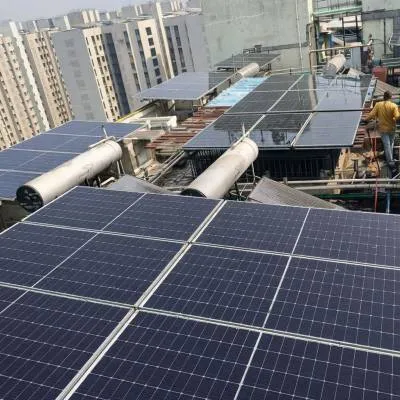
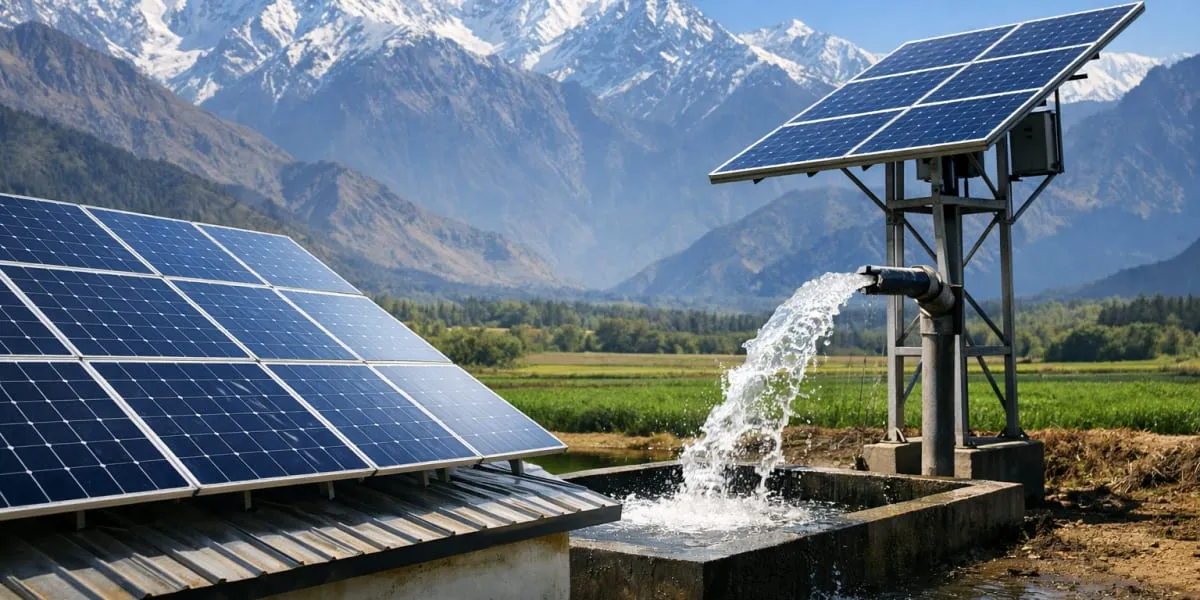
Jammu and Kashmir has emerged as a rising solar market with 39,160 rooftop solar systems and 4,876 solar pumps commissioned under central schemes, the Union government told the Rajya Sabha. The figures were provided by the Minister of State for New and Renewable Energy and Power Shripad Yesso Naik in a written reply to an unstarred question by Ghulam Ali. The ministry said it reviews scheme implementation regularly to support timely execution and wider adoption of clean energy technologies.\n\nPM Surya Ghar has been under implementation since February 2024 aiming to install ten million (mn) households by 2026-27. The demand-driven scheme depends on applications and timely completion by consumers, empanelled vendors, DISCOMs and financiers. District data as of July 28, 2026 show 85,908 applications and 39,160 installations, with Srinagar at 10,332 applications and 6,518 installations and Jammu at 8,755 applications and 5,520 installations.\n\nPM-KUSUM has operated since March 2019 and is extended to March 2027 for projects with PPAs signed by December 31, 2025. J&K was sanctioned 20 megawatt (MW) under Component A and 4,000 irrigation pumps under Component C with no progress under those components. Under Component B, 5,000 standalone agricultural pumps were allocated and 4,876 installed, Pulwama 1,542 and Anantnag 1,189.\n\nCentral assistance of Rs 2,785.5 million (mn) was released for rooftop solar and Rs 341.1 million (mn) under PM-KUSUM, taking total central support to about Rs 3,126.6 million (mn). The ministry said the schemes are expected to reduce electricity bills, provide reliable daytime power for agriculture, lower diesel use, ease subsidy burdens and create employment while improving access in remote areas. The government said no projects were sanctioned under the National Green Hydrogen Mission or the Bioenergy Programme in J&K in the past five years and that no central support scheme for small hydro was operational nationwide in that period.

Jammu and Kashmir has emerged as a rising solar market with 39,160 rooftop solar systems and 4,876 solar pumps commissioned under central schemes, the Union government told the Rajya Sabha. The figures were provided by the Minister of State for New and Renewable Energy and Power Shripad Yesso Naik in a written reply to an unstarred question by Ghulam Ali. The ministry said it reviews scheme implementation regularly to support timely execution and wider adoption of clean energy technologies.\n\nPM Surya Ghar has been under implementation since February 2024 aiming to install ten million (mn) households by 2026-27. The demand-driven scheme depends on applications and timely completion by consumers, empanelled vendors, DISCOMs and financiers. District data as of July 28, 2026 show 85,908 applications and 39,160 installations, with Srinagar at 10,332 applications and 6,518 installations and Jammu at 8,755 applications and 5,520 installations.\n\nPM-KUSUM has operated since March 2019 and is extended to March 2027 for projects with PPAs signed by December 31, 2025. J&K was sanctioned 20 megawatt (MW) under Component A and 4,000 irrigation pumps under Component C with no progress under those components. Under Component B, 5,000 standalone agricultural pumps were allocated and 4,876 installed, Pulwama 1,542 and Anantnag 1,189.\n\nCentral assistance of Rs 2,785.5 million (mn) was released for rooftop solar and Rs 341.1 million (mn) under PM-KUSUM, taking total central support to about Rs 3,126.6 million (mn). The ministry said the schemes are expected to reduce electricity bills, provide reliable daytime power for agriculture, lower diesel use, ease subsidy burdens and create employment while improving access in remote areas. The government said no projects were sanctioned under the National Green Hydrogen Mission or the Bioenergy Programme in J&K in the past five years and that no central support scheme for small hydro was operational nationwide in that period.

Related Stories

Gold Stories

Next Story
Real Estate

BMC OC Amnesty Scheme Requires Key Approvals from Mumbai Societies

The Brihanmumbai Municipal Corporation (BMC) has clarified that housing societies applying under its Occupation Certificate (OC) amnesty scheme must possess key approvals linked to the original construction. The requirements include a valid Intimation of Disapproval (IOD), an approved building plan and a Commencement Certificate (CC), along with a No Objection Certificate (NOC) from the developer or original construction applicant. The Standard Operating Procedure (SOP) makes clear that the absence of an OC alone will not qualify a building for relief. Societies must establish that their build..

Next Story
Real Estate

Gurugram Emerges as Luxury Senior Living Hub

Gurugram is emerging as a potential hub for luxury senior living, supported by available land, healthcare infrastructure, connectivity and a concentration of affluent professionals, high-net-worth individuals and non-resident Indians. These factors could give the city an advantage over land-constrained metros such as Mumbai. A report by the Association of Senior Living India (ASLI) and JLL estimates that India’s organised senior living market could represent a $10.1 bn opportunity by 2030. The sector had about 25,050 organised units as of June 2026, while penetration stood at only 1.5 per ce..

Next Story
Real Estate

Corrosion Costs India’s Infrastructure Rs. 142 bn Annually

Corrosion costs India an estimated Rs. 1.42 tn annually, equivalent to 4.3 per cent of gross domestic product, according to a report by the Confederation of Indian Industry and the National Research Institute. Infrastructure accounts for Rs. 142 bn of the annual burden, making it the sector with the largest absolute cost among those examined. The report, presented at the CII Annual Infrastructure Summit 2026, said the infrastructure-sector cost equals about 2.9 per cent of the sector’s gross domestic product. It estimated that effective measures could generate maximum savings of Rs. 495.8 bn..

Advertisement

Subscribe to Our Newsletter

Get daily newsletters around different themes from Construction world.

STAY CONNECTED

Advertisement

SPECIAL OFFER
QR Code