Kerala and Maharashtra to allot funds to promote renewable energy
POWER & RENEWABLE ENERGY

Kerala and Maharashtra to allot funds to promote renewable energy

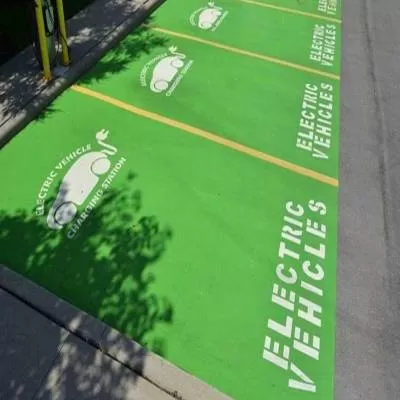
In the recent state budget notifications, Kerala and Maharashtra took the lead to assign finances to boost renewable energy and electric vehicle (EV) progress in the state.

While the budget included several state development factors, the renewable energy-related reports have followed the trend the recent union budget has set to encourage the improvement of the non-conventional energy source at state levels.

Kerala Finance Minister KN Balagopal said that as part of eco-friendly transport initiatives, a sum of Rs 500 million would be rendered for the conversion of compressed natural gas (CNG), high speed diesel, and liquefied natural gas (LNG) buses into electric buses.

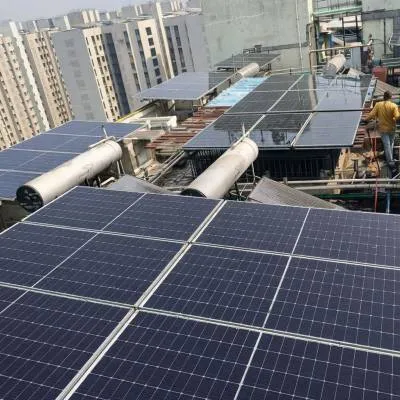
A viability gap fund (VGF) of Rs 320 million will be rolled out to enhance household non-conventional green energy production, comprising solar power.

A total of Rs 330 million is allocated for the Kerala Institute of Local Administration (KILA) to complete projects comprising survey works related to decentralisation, which began in 2020-21.

A sum of Rs 240 million is set apart for the State Water Transport Department to improve the ferry 82 system and purchase passenger-cum-tourist vessels, solar vessels, and new passenger vessels with adequate safety standards. Additionally, 50% of ferry boats will be transformed to run on solar power in the coming five years. An interest subsidy will be provided to loans availed by consumers for establishing residential rooftop solar in Kerala.

An amount of Rs 150 million is allocated for giving interest subsidy for a total loan amount of Rs 5 billion. The minister declared that a 25 kW capacity hydrokinetic turbine project would be established in Moolathara left bank canal under the Chittoor Irrigation Project. The capacity of this will be improved to 3 MW in the future. For the activities including this, an allocation of Rs 91.4 million is set apart for EMC.

Maharashtra Finance Minister Ajit Pawar announced an outlay proposal of Rs 2.53 billion for program expenditure for the Environment and Climate Change Department. The minister also declared that 577 MW of solar power projects would be set up in Maharashtra.

Apart from this 2.5 GW capacity solar energy park will be established in the state. Solar Energy Fencing Program would be implemented in all sensitive villages to avoid the loss of crops by wild animals, said Pawar.

The Government’s Draft EV Policy, 2021, aims to support sustainable and clean mobility solutions in Maharashtra.

Image Source

Also read: India adds record 1.7 GW solar rooftop capacity in 2021

In the recent state budget notifications, Kerala and Maharashtra took the lead to assign finances to boost renewable energy and electric vehicle (EV) progress in the state. While the budget included several state development factors, the renewable energy-related reports have followed the trend the recent union budget has set to encourage the improvement of the non-conventional energy source at state levels. Kerala Finance Minister KN Balagopal said that as part of eco-friendly transport initiatives, a sum of Rs 500 million would be rendered for the conversion of compressed natural gas (CNG), high speed diesel, and liquefied natural gas (LNG) buses into electric buses. A viability gap fund (VGF) of Rs 320 million will be rolled out to enhance household non-conventional green energy production, comprising solar power. A total of Rs 330 million is allocated for the Kerala Institute of Local Administration (KILA) to complete projects comprising survey works related to decentralisation, which began in 2020-21. A sum of Rs 240 million is set apart for the State Water Transport Department to improve the ferry 82 system and purchase passenger-cum-tourist vessels, solar vessels, and new passenger vessels with adequate safety standards. Additionally, 50% of ferry boats will be transformed to run on solar power in the coming five years. An interest subsidy will be provided to loans availed by consumers for establishing residential rooftop solar in Kerala. An amount of Rs 150 million is allocated for giving interest subsidy for a total loan amount of Rs 5 billion. The minister declared that a 25 kW capacity hydrokinetic turbine project would be established in Moolathara left bank canal under the Chittoor Irrigation Project. The capacity of this will be improved to 3 MW in the future. For the activities including this, an allocation of Rs 91.4 million is set apart for EMC. Maharashtra Finance Minister Ajit Pawar announced an outlay proposal of Rs 2.53 billion for program expenditure for the Environment and Climate Change Department. The minister also declared that 577 MW of solar power projects would be set up in Maharashtra. Apart from this 2.5 GW capacity solar energy park will be established in the state. Solar Energy Fencing Program would be implemented in all sensitive villages to avoid the loss of crops by wild animals, said Pawar. The Government’s Draft EV Policy, 2021, aims to support sustainable and clean mobility solutions in Maharashtra. Image Source Also read: India adds record 1.7 GW solar rooftop capacity in 2021

Related Stories

Gold Stories

Next Story
Infrastructure Urban

KONE Opens India's First Digital Experience Centre in Pune

KONE, a global elevator and escalator manufacturer, has inaugurated its first Digital Experience Centre (DEC) in India, located in Pune. The facility aims to showcase how artificial intelligence (AI), connectivity and data-driven technologies can enhance customer experiences and improve building operations.The centre was inaugurated by Jussi Herlin, Executive Vice Chair, KONE Corporation; Philippe Delorme, President and CEO, KONE; and Nandan Nilekani, Co-founder and Chairman of the Board, Infosys.Designed as an interactive customer environment, the facility demonstrates digital solutions cover..

Next Story
Infrastructure Urban

CII GreenCo Launches Circularity Guidelines for Indian Industry

The Confederation of Indian Industry (CII) GreenCo Council has launched the CII GreenCo Circularity Guidelines – Pilot Version at the 17th CII GreenCo Waste & Resource Management Summit 2026 in Chennai. The initiative aims to strengthen resource efficiency, waste reduction and circular economy practices across Indian manufacturing and process industries.The guidelines introduce a structured framework with circularity indices covering raw materials, consumables, packaging and other resource inputs. These indicators will help industries assess existing practices, identify opportunities to ..

Next Story
Infrastructure Energy

Global Electronics Association Launches IPC-1783-CO2E Standard

The Global Electronics Association has introduced IPC-1783-CO2E, a new international standard aimed at improving consistency, transparency and comparability in product carbon footprint reporting across the electronics manufacturing industry.The standard, titled International Standard for Data Collection and Reporting of CO2 Equivalent (CO2e) Emissions for the Electronics Manufacturing Supply Chain, provides industry-specific guidance for collecting, estimating and reporting carbon emissions data.With increasing regulatory requirements and customer expectations, electronics manufacturers face c..

Advertisement

Subscribe to Our Newsletter

Get daily newsletters around different themes from Construction world.

STAY CONNECTED

Advertisement

SPECIAL OFFER
QR Code