+
Maharashtra To Audit Thermal Power Plants Over Fly Ash Disposal
POWER & RENEWABLE ENERGY

Maharashtra To Audit Thermal Power Plants Over Fly Ash Disposal

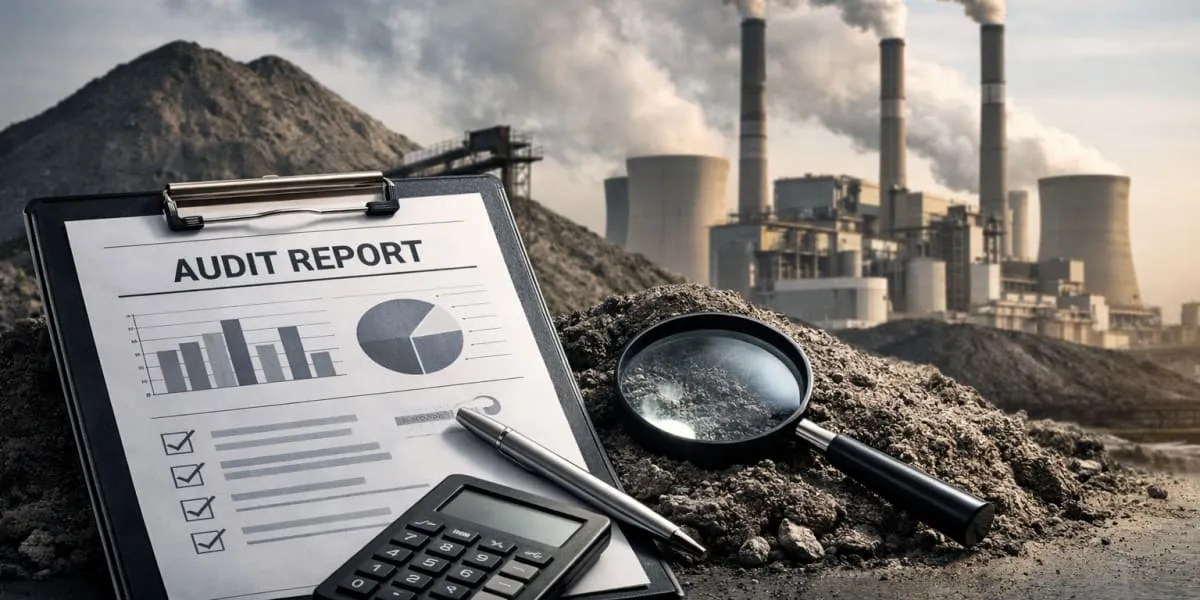
The Maharashtra government has accepted a legislative demand for an audit of thermal power plants following concerns in the state assembly about fly ash disposal and environmental impacts in Chandrapur district. The demand was placed in a calling attention notice moved by BJP MLA Sudhir Mungantiwar and the Environment Minister, Pankaja Munde, agreed that a review was necessary. The government will examine whether fly ash management practices comply with environmental norms and take corrective measures where required.

Mungantiwar argued that fly ash can be utilised in road construction, cement concrete and brick manufacturing but alleged that much of it was being dumped in an unscientific manner, creating environmental and health concerns. He pointed to instances of large scale accumulation and urged strict monitoring of power plants in the Chandrapur region. Shiv Sena (UBT) MLA Aaditya Thackeray reported that ponds of fly ash had been created without adequate safeguards and claimed that visits to local villages revealed hundreds of acres covered with deposits.

The minister accepted the demand for a comprehensive audit to assess storage, transport and utilisation practices and to verify adherence to statutory requirements. Munde met local stakeholders during inspections in Chandrapur and Ballarpur amid extreme heat to better understand ground realities and reviewed coal mines, cement factories and other units in the industrial belt. She advised that the district collector had constituted a committee to monitor the situation and that directions had been issued to concerned industries to undertake corrective steps.

The government indicated that it was committed to scientific disposal and increased utilisation of fly ash as part of pollution reduction and public health protection efforts. Officials said short term, medium term and long term measures were being considered to address environmental pressures arising from coal based industries, cement plants and rail infrastructure in the region. The ministry stated that monitoring would continue and that action would follow if audits found non compliance with prescribed norms, with an emphasis on collaboration between government and industry.

The Maharashtra government has accepted a legislative demand for an audit of thermal power plants following concerns in the state assembly about fly ash disposal and environmental impacts in Chandrapur district. The demand was placed in a calling attention notice moved by BJP MLA Sudhir Mungantiwar and the Environment Minister, Pankaja Munde, agreed that a review was necessary. The government will examine whether fly ash management practices comply with environmental norms and take corrective measures where required. Mungantiwar argued that fly ash can be utilised in road construction, cement concrete and brick manufacturing but alleged that much of it was being dumped in an unscientific manner, creating environmental and health concerns. He pointed to instances of large scale accumulation and urged strict monitoring of power plants in the Chandrapur region. Shiv Sena (UBT) MLA Aaditya Thackeray reported that ponds of fly ash had been created without adequate safeguards and claimed that visits to local villages revealed hundreds of acres covered with deposits. The minister accepted the demand for a comprehensive audit to assess storage, transport and utilisation practices and to verify adherence to statutory requirements. Munde met local stakeholders during inspections in Chandrapur and Ballarpur amid extreme heat to better understand ground realities and reviewed coal mines, cement factories and other units in the industrial belt. She advised that the district collector had constituted a committee to monitor the situation and that directions had been issued to concerned industries to undertake corrective steps. The government indicated that it was committed to scientific disposal and increased utilisation of fly ash as part of pollution reduction and public health protection efforts. Officials said short term, medium term and long term measures were being considered to address environmental pressures arising from coal based industries, cement plants and rail infrastructure in the region. The ministry stated that monitoring would continue and that action would follow if audits found non compliance with prescribed norms, with an emphasis on collaboration between government and industry.

Related Stories

Gold Stories

Next Story
Infrastructure Urban

KONE Opens India's First Digital Experience Centre in Pune

KONE, a global elevator and escalator manufacturer, has inaugurated its first Digital Experience Centre (DEC) in India, located in Pune. The facility aims to showcase how artificial intelligence (AI), connectivity and data-driven technologies can enhance customer experiences and improve building operations.The centre was inaugurated by Jussi Herlin, Executive Vice Chair, KONE Corporation; Philippe Delorme, President and CEO, KONE; and Nandan Nilekani, Co-founder and Chairman of the Board, Infosys.Designed as an interactive customer environment, the facility demonstrates digital solutions cover..

Next Story
Infrastructure Urban

CII GreenCo Launches Circularity Guidelines for Indian Industry

The Confederation of Indian Industry (CII) GreenCo Council has launched the CII GreenCo Circularity Guidelines – Pilot Version at the 17th CII GreenCo Waste & Resource Management Summit 2026 in Chennai. The initiative aims to strengthen resource efficiency, waste reduction and circular economy practices across Indian manufacturing and process industries.The guidelines introduce a structured framework with circularity indices covering raw materials, consumables, packaging and other resource inputs. These indicators will help industries assess existing practices, identify opportunities to ..

Next Story
Infrastructure Energy

Global Electronics Association Launches IPC-1783-CO2E Standard

The Global Electronics Association has introduced IPC-1783-CO2E, a new international standard aimed at improving consistency, transparency and comparability in product carbon footprint reporting across the electronics manufacturing industry.The standard, titled International Standard for Data Collection and Reporting of CO2 Equivalent (CO2e) Emissions for the Electronics Manufacturing Supply Chain, provides industry-specific guidance for collecting, estimating and reporting carbon emissions data.With increasing regulatory requirements and customer expectations, electronics manufacturers face c..

Advertisement

Subscribe to Our Newsletter

Get daily newsletters around different themes from Construction world.

STAY CONNECTED

Advertisement

SPECIAL OFFER
QR Code