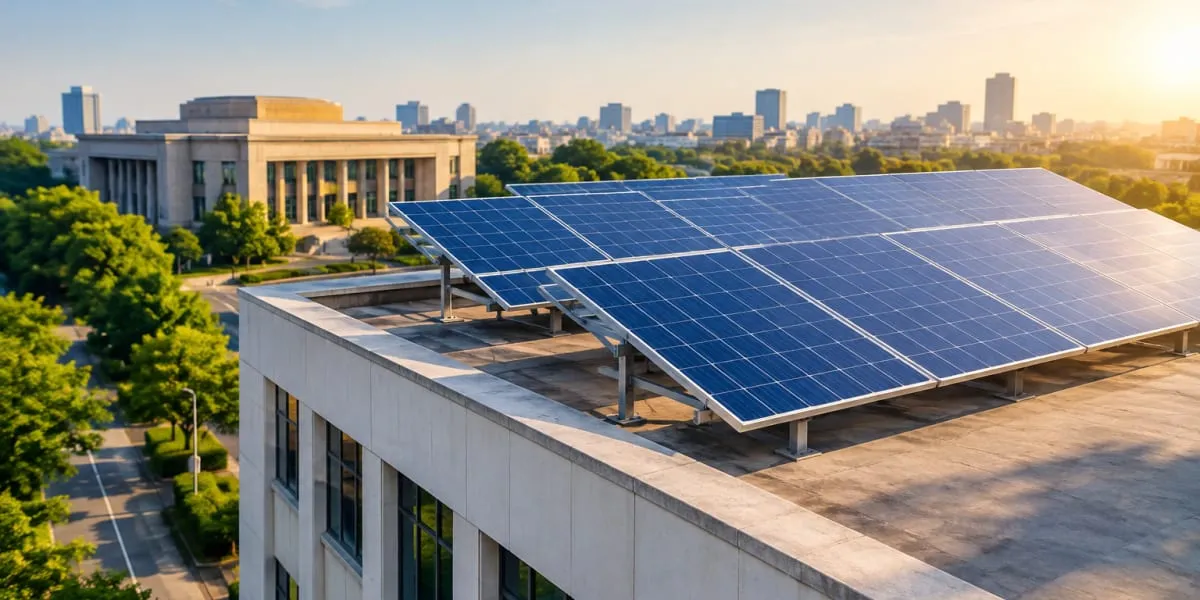
MCD Approves Rooftop Solar Plan for 1,100 Civic Buildings
POWER & RENEWABLE ENERGY

MCD Approves Rooftop Solar Plan for 1,100 Civic Buildings

The Delhi Municipal Corporation (MCD) has approved a unified plan to install rooftop solar systems at approximately 1,100 civic buildings without direct capital expenditure by the civic body. The proposal was cleared at the MCD House meeting on Tuesday, allowing Indraprastha Power Generation Company (IPGCL) to conduct feasibility assessments and install systems at eligible properties under the Delhi Solar Energy Policy, 2023.

The decision means the MCD will abandon its earlier plan to issue a separate tender for rooftop solar projects and instead adopt the framework established by the Delhi Government’s power department. IPGCL has already awarded tenders covering nearly 2,600 Government buildings, including around 1,100 MCD properties.

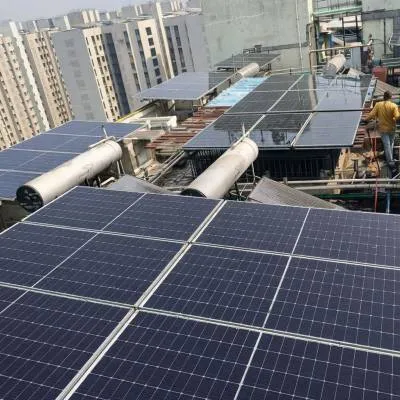
Official documents show that the MCD has installed 574 rooftop solar photovoltaic plants with a combined capacity of 13.25 MWp. These include 399 systems at properties of the erstwhile South Delhi Municipal Corporation, 164 on schools of the former North Delhi Municipal Corporation and 10 at properties of the erstwhile East Delhi Municipal Corporation. Structural and feasibility assessments have identified another 800 to 900 municipal buildings that may host grid-connected systems.

Under the arrangement, the Delhi Government will bear capital expenditure or long-term operational costs through IPGCL under the Renewable Energy Service Company (RESCO) model. A third-party service provider will finance, install, operate and maintain the systems, while the MCD will buy the electricity at a pre-agreed tariff rather than own the plants. IPGCL will install systems of up to 25 kW under the capital expenditure model and provide five years of free maintenance, while larger systems will be developed under the RESCO model.

The MCD will remain responsible for routine roof repairs and provide access for installation work. The plan also enables Group Net Metering, allowing surplus electricity generated at one municipal building to offset consumption at another. Annual surplus power may be carried forward or credited at an average purchase cost of around Rs. 5 per unit, which could help reduce the civic body’s electricity expenditure.

The Delhi Municipal Corporation (MCD) has approved a unified plan to install rooftop solar systems at approximately 1,100 civic buildings without direct capital expenditure by the civic body. The proposal was cleared at the MCD House meeting on Tuesday, allowing Indraprastha Power Generation Company (IPGCL) to conduct feasibility assessments and install systems at eligible properties under the Delhi Solar Energy Policy, 2023. The decision means the MCD will abandon its earlier plan to issue a separate tender for rooftop solar projects and instead adopt the framework established by the Delhi Government’s power department. IPGCL has already awarded tenders covering nearly 2,600 Government buildings, including around 1,100 MCD properties. Official documents show that the MCD has installed 574 rooftop solar photovoltaic plants with a combined capacity of 13.25 MWp. These include 399 systems at properties of the erstwhile South Delhi Municipal Corporation, 164 on schools of the former North Delhi Municipal Corporation and 10 at properties of the erstwhile East Delhi Municipal Corporation. Structural and feasibility assessments have identified another 800 to 900 municipal buildings that may host grid-connected systems. Under the arrangement, the Delhi Government will bear capital expenditure or long-term operational costs through IPGCL under the Renewable Energy Service Company (RESCO) model. A third-party service provider will finance, install, operate and maintain the systems, while the MCD will buy the electricity at a pre-agreed tariff rather than own the plants. IPGCL will install systems of up to 25 kW under the capital expenditure model and provide five years of free maintenance, while larger systems will be developed under the RESCO model. The MCD will remain responsible for routine roof repairs and provide access for installation work. The plan also enables Group Net Metering, allowing surplus electricity generated at one municipal building to offset consumption at another. Annual surplus power may be carried forward or credited at an average purchase cost of around Rs. 5 per unit, which could help reduce the civic body’s electricity expenditure.

Related Stories

Gold Stories

Next Story
Resources

Kalpataru Projects International elevates Amit Uplenchwar as Joint MD and CEO

Kalpataru Projects International (KPIL) has elevated Amit Uplenchwar as Joint Managing Director and CEO (designate), following approval by its board on 5 November 2026. He will take charge as Additional Director, Joint Managing Director and CEO from 1 January 2027 for a five-year term ending 31 December 2031, subject to shareholders' approval.Uplenchwar brings over three decades of experience in corporate strategy, business operations, business development, mergers and acquisitions, and international business management. His experience spans transportation, power, water, oil and gas, aerospace..
Next Story
Resources

HCC appoints Vivek Singhal as CEO

Hindustan Construction Company (HCC) has appointed Vivek Singhal as Chief Executive Officer, effective 5 November 2026. He brings over four decades of experience in infrastructure and engineering, procurement and construction (EPC), covering project execution, business leadership, business development and profit and loss management.Singhal has spent 16 years in international markets, delivering projects and managing assets worth approximately Rs 285 billion across five countries. His experience spans airports, metro rail, urban transport, hydropower, bridges and other infrastructure sectors.He..

Next Story
Infrastructure Energy

Essar Signs PPA for 300 MW Hybrid Renewable Energy Project

Essar Renewables, the renewable energy arm of Essar Power, has signed a Power Purchase Agreement (PPA) with NHPC for a 300 MW renewable energy project in Andhra Pradesh. The agreement follows the company’s successful bid for the project two years ago. Essar Power will invest approximately Rs. 45 bn in the development. The project will combine solar and wind generation with Battery Energy Storage Systems (BESS), enabling the supply of reliable and dispatchable renewable power. It forms part of Essar Power’s plan to build a diversified energy portfolio of approximately 5 GW across renewable,..

Advertisement

Subscribe to Our Newsletter

Get daily newsletters around different themes from Construction world.

STAY CONNECTED

Advertisement

SPECIAL OFFER
QR Code