Nagpur Second In India For Rooftop Solar Installations
POWER & RENEWABLE ENERGY

Nagpur Second In India For Rooftop Solar Installations

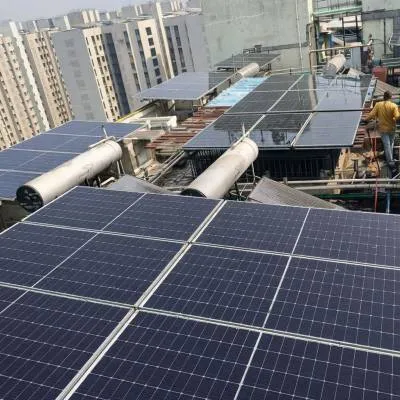
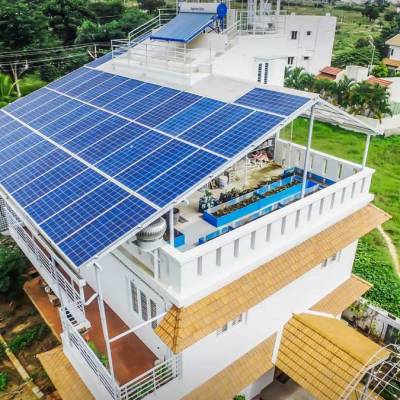
Nagpur district has ranked second nationally for rooftop solar installations under the PM Surya Ghar: Muft Bijli Yojana, with 89,255 systems installed to date. The figure places the district among the top performers in the national programme which has reached four million (mn) households since its launch in February 2024. The achievement contributes to a rapid scaling of residential solar adoption across India.

The scheme aims to provide households with up to three hundred units of free electricity per month through subsidised rooftop systems and to accelerate uptake via central financial assistance. Monthly installations have risen from around 7,000 before the scheme to over 0.316 mn currently, showing a marked increase in deployment rates. The government has set a target of seven point five mn rooftop installations by December 2026.

In May 2026 the programme recorded 316,000 installations nationwide, the highest monthly addition so far, with more than 15,000 households connected in a single day. Central subsidy disbursements have exceeded Rs 227.5 billion (bn) to date, including Rs 27.43 billion in May 2026. More than 1.7 mn households have reported zero electricity bills after installation of rooftop systems.

Households installing systems up to two kilowatt (kW) are eligible for Rs 30,000 per kW, capped at Rs 60,000, while additional capacity between two kW and three kW attracts Rs 18,000 per kW. Systems of three kW and above qualify for a maximum subsidy of Rs 78,000. A one kW rooftop system typically generates around 100 units per month, with two kW and three kW systems producing approximately 200 and 300 units respectively.

Nagpur's strong showing has been attributed to favourable solar irradiance, targeted awareness campaigns and an active installation ecosystem. The district receives between five point five and six kilowatt-hours per square metre per day, enabling higher generation from rooftop systems. Local electricity distribution company officials and vendor networks have been credited with facilitating comparisons and accelerating completions, contributing to the district's leading role in national expansion.

"Join industry leaders at RAHSTA Expo, India's premier platform for roads, highways and traffic infrastructure. Register now to explore innovations, network with experts and shape the future of mobility."

Nagpur district has ranked second nationally for rooftop solar installations under the PM Surya Ghar: Muft Bijli Yojana, with 89,255 systems installed to date. The figure places the district among the top performers in the national programme which has reached four million (mn) households since its launch in February 2024. The achievement contributes to a rapid scaling of residential solar adoption across India. The scheme aims to provide households with up to three hundred units of free electricity per month through subsidised rooftop systems and to accelerate uptake via central financial assistance. Monthly installations have risen from around 7,000 before the scheme to over 0.316 mn currently, showing a marked increase in deployment rates. The government has set a target of seven point five mn rooftop installations by December 2026. In May 2026 the programme recorded 316,000 installations nationwide, the highest monthly addition so far, with more than 15,000 households connected in a single day. Central subsidy disbursements have exceeded Rs 227.5 billion (bn) to date, including Rs 27.43 billion in May 2026. More than 1.7 mn households have reported zero electricity bills after installation of rooftop systems. Households installing systems up to two kilowatt (kW) are eligible for Rs 30,000 per kW, capped at Rs 60,000, while additional capacity between two kW and three kW attracts Rs 18,000 per kW. Systems of three kW and above qualify for a maximum subsidy of Rs 78,000. A one kW rooftop system typically generates around 100 units per month, with two kW and three kW systems producing approximately 200 and 300 units respectively. Nagpur's strong showing has been attributed to favourable solar irradiance, targeted awareness campaigns and an active installation ecosystem. The district receives between five point five and six kilowatt-hours per square metre per day, enabling higher generation from rooftop systems. Local electricity distribution company officials and vendor networks have been credited with facilitating comparisons and accelerating completions, contributing to the district's leading role in national expansion.

Next Story
Infrastructure Transport

Railways To Operate Over 300 Special Trains For Rath Yatra

Union Railway Minister Ashwini Vaishnaw announced that Indian Railways (IR) will operate more than 300 special trains for the annual Jagannath Rath Yatra in Odisha and over 100 special trains during the Onam festival in Keralam. He flagged off the Nanded–Mumbai and Tanakpur–Nanded Express trains and inaugurated the extension of the Tanakpur–Pilibhit service up to Shahjahanpur via video conference from Rail Sadan in Bhubaneswar. He noted that the summer season, which concluded on 30 June, had seen a record 15,000 special trains. Vaishnaw stated that the newly launched services are intende..

Next Story
Infrastructure Transport

Vande Bharat Express To Start From Tripura Soon

Tripura Chief Minister Manik Saha said the Vande Bharat Express will commence operations from Tripura in the coming days after he flagged off the Agartala–Karimganj MEMU service at Agartala Railway Station. He recalled the rail history of the state, noting that a metre-gauge service first arrived in 1964 and that broad gauge reached Agartala in 2008 following national projects and later upgrades under the Act East policy. The event was described as a milestone for regional connectivity and the MEMU was presented as the first electric passenger train to originate from Tripura.\n\nSaha said he..

Next Story
Infrastructure Urban

MEMU Suspension Disrupts Commuters Between Vadodara And Dahod

The Vadodara–Dahod Mainline Electric Multiple Unit (MEMU) service has been temporarily suspended for 26 days after its rake was diverted to Odisha to manage the surge in passenger traffic during the annual Rath Yatra in Puri. Indian Railways redeployed several MEMU rakes from different zones to meet the additional travel demand for the festival scheduled from the seventh of July to the second of August. As a result, train numbers 69233 and 69234 operating between Vadodara and Dahod will remain cancelled for the duration. Railway authorities advised passengers to use alternative train service..

Advertisement

Subscribe to Our Newsletter

Get daily newsletters around different themes from Construction world.

STAY CONNECTED

Advertisement

Advertisement

Advertisement