NIT Rourkela Develops AI System For Autonomous Solar Cleaning
POWER & RENEWABLE ENERGY

NIT Rourkela Develops AI System For Autonomous Solar Cleaning

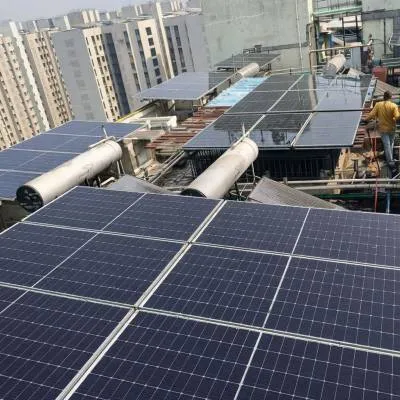
Researchers at the National Institute of Technology Rourkela have developed an Artificial Intelligence (AI) powered autonomous system to monitor and clean solar panels only when required, a development designed to improve the efficiency of solar power plants while reducing maintenance costs and water consumption. The innovation, titled Federated Learning (FL) based Autonomous System and Method for Monitoring and Cleaning Solar Plant, has been granted an Indian patent and was developed by faculty and research graduates in the Department of Computer Science and Engineering.

The system employs Federated Learning to enable intelligent monitoring while preserving data privacy by sharing encrypted model updates rather than raw operational data, thereby reducing cybersecurity risk and bandwidth usage. It integrates edge computing, predictive maintenance and autonomous fault detection to optimise operations and to identify panels that require selective cleaning. The technology aims to address efficiency losses caused by dust, bird droppings and industrial pollutants, which researchers say can reduce panel output by up to 40 per cent in arid regions.

Existing cleaning regimes are commonly labour intensive, water intensive and scheduled irrespective of panel condition, whereas the new system detects dirt accumulation and orchestrates selective cleaning only where necessary, which is expected to conserve resources. The approach has been validated through simulations at Technology Readiness Level (TRL) three and the team plans to develop a hardware prototype with Internet of Things (IoT) sensors for pilot deployments with government agencies and industry partners.

Researchers estimate that, once commercialised, the system could offer advanced AI driven capabilities at nearly 10 per cent of the cost of comparable solutions, which would support India’s National Solar Mission and net zero aims by enabling smarter maintenance of solar infrastructure. The technology is intended for deployment across utility scale parks, floating and rooftop photovoltaic installations, industrial facilities, smart city infrastructure and remote off grid renewable energy systems.

Researchers at the National Institute of Technology Rourkela have developed an Artificial Intelligence (AI) powered autonomous system to monitor and clean solar panels only when required, a development designed to improve the efficiency of solar power plants while reducing maintenance costs and water consumption. The innovation, titled Federated Learning (FL) based Autonomous System and Method for Monitoring and Cleaning Solar Plant, has been granted an Indian patent and was developed by faculty and research graduates in the Department of Computer Science and Engineering. The system employs Federated Learning to enable intelligent monitoring while preserving data privacy by sharing encrypted model updates rather than raw operational data, thereby reducing cybersecurity risk and bandwidth usage. It integrates edge computing, predictive maintenance and autonomous fault detection to optimise operations and to identify panels that require selective cleaning. The technology aims to address efficiency losses caused by dust, bird droppings and industrial pollutants, which researchers say can reduce panel output by up to 40 per cent in arid regions. Existing cleaning regimes are commonly labour intensive, water intensive and scheduled irrespective of panel condition, whereas the new system detects dirt accumulation and orchestrates selective cleaning only where necessary, which is expected to conserve resources. The approach has been validated through simulations at Technology Readiness Level (TRL) three and the team plans to develop a hardware prototype with Internet of Things (IoT) sensors for pilot deployments with government agencies and industry partners. Researchers estimate that, once commercialised, the system could offer advanced AI driven capabilities at nearly 10 per cent of the cost of comparable solutions, which would support India’s National Solar Mission and net zero aims by enabling smarter maintenance of solar infrastructure. The technology is intended for deployment across utility scale parks, floating and rooftop photovoltaic installations, industrial facilities, smart city infrastructure and remote off grid renewable energy systems.

Next Story
Infrastructure Urban

SCLR Extension Nears Completion Linking BKC With Signal-Free Route

The Santacruz-Chembur Link Road (SCLR) extension towards Bandra-Kurla Complex (BKC) via the Mumbai University campus has entered its final stage, bringing motorists closer to a direct, signal-free connection between the Western Express Highway and the city’s commercial district. The elevated connector is being built as an arm from the SCLR alignment and will link the western suburbs with BKC without surface signals. The link is designed to reduce journey times for commuters travelling from the western suburbs to BKC and to improve access to eastern Mumbai. By carrying through traffic above s..

Next Story
Infrastructure Transport

Raiganj MP Seeks Bengal Only Highway Link To Siliguri

Raiganj Member of Parliament Kartik Chandra Paul met Union Minister for Road Transport and Highways Nitin Gadkari in New Delhi to press for a new stretch of national highway in North Dinajpur district. He urged approval for a Bengal-to-Bengal link that would connect National Highways 12 and 27 to allow vehicles bound for Siliguri to avoid the current route through Kishanganj in neighbouring Bihar. He also submitted a proposed alignment of the new road to the ministry for consideration. At present vehicles from Raiganj travel along NH-12 and join NH-27 at Purnia More in Dalkhola, a route that p..

Next Story
Infrastructure Transport

Airport Kilambakkam Metro Line To Be Extended To Chengalpattu

Chennai Metro Rail (CMRL) has invited tenders for two detailed project reports that would extend its rail network to Chengalpattu in the south and extend Corridor-5 to Wimco Nagar in the north as part of a second wave of expansion beyond the operator's corridors under construction. The move signals an acceleration of planning for suburban links and interchange nodes. The larger of the two studies covers a roughly 27km extension from the planned Kilambakkam metro station to Chengalpattu under Corridor-1, Phase I. CMRL floated the tender at an estimated cost of Rs 21.6 mn. The proposed line woul..

Advertisement

Subscribe to Our Newsletter

Get daily newsletters around different themes from Construction world.

STAY CONNECTED

Advertisement

Advertisement

Advertisement