+
Power ministry to mandate renewable power generation obligation
POWER & RENEWABLE ENERGY

Power ministry to mandate renewable power generation obligation

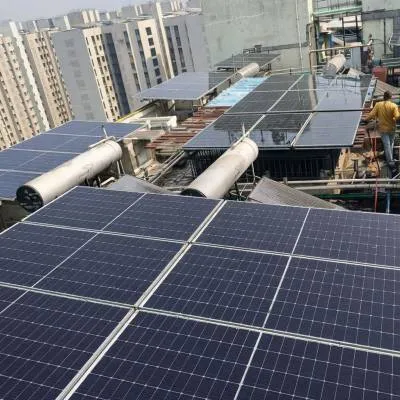
The Power Ministry plans to make it mandatory for any thermal power producer planning to install a new generating capacity after April 1, 2024, to either set up or acquire renewable energy capacity equivalent to it. This will increase the country's capacity for renewable energy.

It intends to introduce an amendment to the Tariff Policy 2016 to incorporate the "renewable generation obligation (RGO)" provision in order to put this into practise.

In a draught note that was released on November 7 and distributed to stakeholders, it requested feedback on the plan within 21 days of that date.

The Power Ministry has recommended that as part of it, each new generating firm planning to put up a coal or thermal-based capacity after April 1, 2024, would also be required to create or acquire a comparable amount of renewable energy.

“In order to promote renewable energy sources, any generating company proposing to establish a coal or lignite-based thermal generation station after a specified date shall be required to establish such renewable energy equivalent to such capacity, as may be prescribed by the Central government from time to time after due consultation with stakeholders,” the statement read.

The capacity of renewable energy that must be established, acquired, or provided by new thermal generating stations based on coal or lignite must be at least 25% of the capacity of thermal generating stations being established, it was further added.

The project aims to reach the goal of producing 50% of electricity from non-fossil fuels.

See also:
ReNew Power to invest Rs.300 bn on scaling
Government identifies 10 states for green hydrogen manufacturing


The Power Ministry plans to make it mandatory for any thermal power producer planning to install a new generating capacity after April 1, 2024, to either set up or acquire renewable energy capacity equivalent to it. This will increase the country's capacity for renewable energy. It intends to introduce an amendment to the Tariff Policy 2016 to incorporate the renewable generation obligation (RGO) provision in order to put this into practise. In a draught note that was released on November 7 and distributed to stakeholders, it requested feedback on the plan within 21 days of that date. The Power Ministry has recommended that as part of it, each new generating firm planning to put up a coal or thermal-based capacity after April 1, 2024, would also be required to create or acquire a comparable amount of renewable energy. “In order to promote renewable energy sources, any generating company proposing to establish a coal or lignite-based thermal generation station after a specified date shall be required to establish such renewable energy equivalent to such capacity, as may be prescribed by the Central government from time to time after due consultation with stakeholders,” the statement read. The capacity of renewable energy that must be established, acquired, or provided by new thermal generating stations based on coal or lignite must be at least 25% of the capacity of thermal generating stations being established, it was further added. The project aims to reach the goal of producing 50% of electricity from non-fossil fuels. See also: ReNew Power to invest Rs.300 bn on scalingGovernment identifies 10 states for green hydrogen manufacturing

Next Story
Infrastructure Urban

India Expands Semiconductor Training To 500 Institutions

Under the Chips to Startups programme of the India Semiconductor Mission, the Union minister responsible for Railways, Information and Broadcasting, and Electronics and IT reported notable progress in talent development. He indicated that over the past four years substantial steps have been taken towards a 10-year target of training 85,000 engineers in semiconductor design. World-class EDA tools have been deployed in 315 academic institutions across the country to provide students with practical exposure to chip design. These EDA tools are supported by leading global firms and are accessible t..

Next Story
Infrastructure Urban

Delhi Institutions Support India Semiconductor Mission

The Government of India has prioritised talent development through training, upskilling and workforce development under the Chips to Startups initiative of the India Semiconductor Mission, with officials noting progress in four years towards a 10-year target of training 85,000 engineers in semiconductor design. Electronic design automation tools provided by Synopsys, Cadence, Siemens, Renesas, Ansys and AMD have been deployed in 315 academic institutions, enabling students to gain practical chip design experience. Chips have been fabricated and tested at the Semiconductor Laboratory, Mohali, a..

Next Story
Infrastructure Urban

NHA Announces Winners Of NHCX Hackathon At IIT Hyderabad

The National Health Authority (NHA) has concluded the NHCX Hackathon under the Ayushman Bharat Digital Mission (ABDM) to stimulate innovation around the National Health Claims Exchange (NHCX). The winning teams presented their solutions at the NHCX Innovation Meet held at IIT Hyderabad during a two-day event in March 2026 that also served as the hackathon grand finale. The hackathon itself ran from 22 to 28 February 2026 and aimed to accelerate paperless, transparent claims processing across India. The event was organised with a range of ecosystem partners, including the Insurance Regulatory a..

Advertisement

Subscribe to Our Newsletter

Get daily newsletters around different themes from Construction world.

STAY CONNECTED

Advertisement

Advertisement

Advertisement