Rajasthan Adds 13,000 Rooftop Solar Units A Month
POWER & RENEWABLE ENERGY

Rajasthan Adds 13,000 Rooftop Solar Units A Month

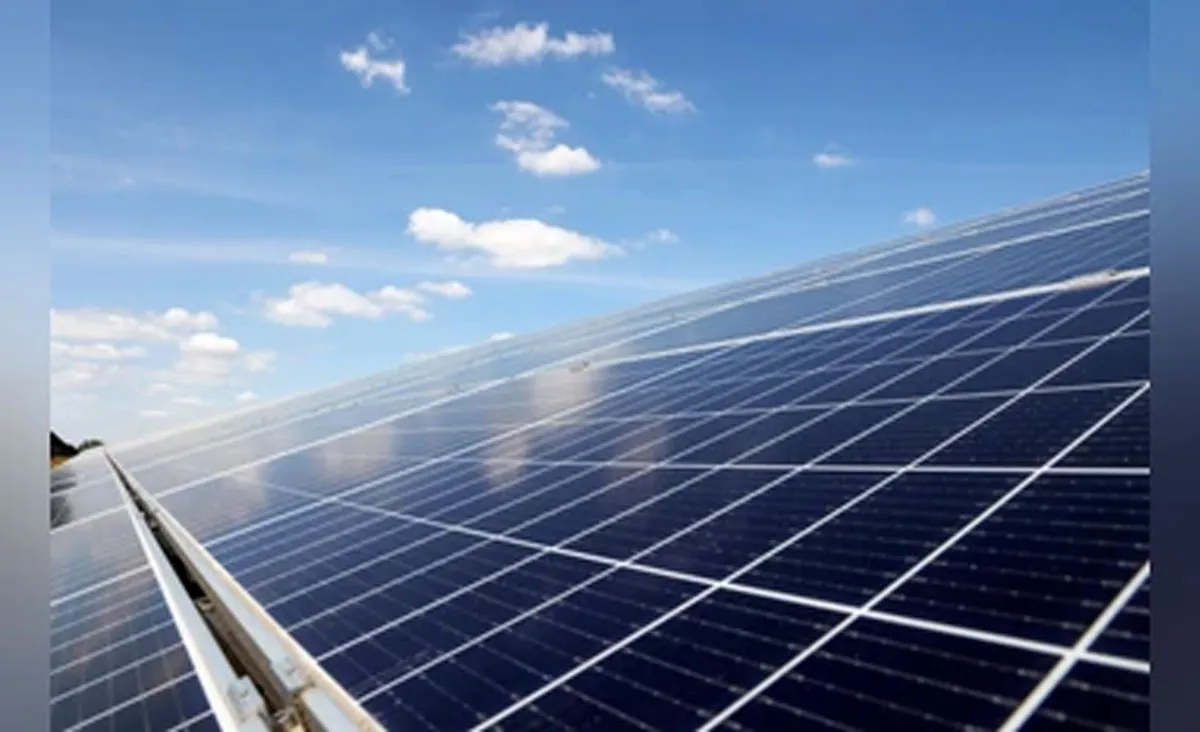
Rajasthan is witnessing a sharp acceleration in rooftop solar adoption, installing more than 13,000 systems every month, driven by free electricity incentives and state and central subsidies, a senior official from the energy department said.

One of India’s leading solar power producers, Rajasthan has seen a surge in demand since the state introduced a scheme in October 2025 offering 150 units of free electricity per month. The incentive has prompted a rush among households to install rooftop solar plants, the official said.

State-owned power distribution companies have also begun disbursing the state subsidy of Rs 0.017 million to eligible consumers. Jaipur, Jodhpur and Ajmer electricity distribution companies have already transferred the subsidy to more than 2,000 consumers, according to officials.

Under the scheme, registered consumers are eligible for a state subsidy of Rs 0.017 million along with a central subsidy of up to Rs 0.078 million for installing rooftop solar systems of 1.1 kilowatt and above under the PM Surya Ghar Yojana.

In less than three months since the launch, more than 277,000 consumers have registered to install rooftop solar plants. Between September and December 2025 alone, over 44,950 rooftop systems were installed across the state.

Rajasthan currently ranks fifth nationally in terms of rooftop solar installations under the scheme, with 124,258 systems, behind Gujarat, Maharashtra, Uttar Pradesh and Kerala. Within the state, 41,575 systems have been installed under Jaipur Vidyut Vitran Nigam, 41,647 under Ajmer Vidyut Vitran Nigam and 41,036 under Jodhpur Vidyut Vitran Nigam. The cumulative capacity under the scheme stands at 494 MW.

Across all programmes, Rajasthan ranks third in India by total installed rooftop solar capacity, with systems aggregating 2,417 MW.

To further promote rooftop solar, the state’s discoms have rolled out multiple initiatives, including a monthly ‘Rooftop Solar Champion Award’ to encourage field personnel. The installation process has also been simplified through standard operating procedures, which remove application fees, defer charges until after installation via electricity bills, avoid increases in security deposits, prioritise applications under the scheme, and waive meter testing and net metering agreement fees.

Officials said the measures are helping Rajasthan consolidate its position as a national leader in rooftop solar adoption.

Rajasthan is witnessing a sharp acceleration in rooftop solar adoption, installing more than 13,000 systems every month, driven by free electricity incentives and state and central subsidies, a senior official from the energy department said. One of India’s leading solar power producers, Rajasthan has seen a surge in demand since the state introduced a scheme in October 2025 offering 150 units of free electricity per month. The incentive has prompted a rush among households to install rooftop solar plants, the official said. State-owned power distribution companies have also begun disbursing the state subsidy of Rs 0.017 million to eligible consumers. Jaipur, Jodhpur and Ajmer electricity distribution companies have already transferred the subsidy to more than 2,000 consumers, according to officials. Under the scheme, registered consumers are eligible for a state subsidy of Rs 0.017 million along with a central subsidy of up to Rs 0.078 million for installing rooftop solar systems of 1.1 kilowatt and above under the PM Surya Ghar Yojana. In less than three months since the launch, more than 277,000 consumers have registered to install rooftop solar plants. Between September and December 2025 alone, over 44,950 rooftop systems were installed across the state. Rajasthan currently ranks fifth nationally in terms of rooftop solar installations under the scheme, with 124,258 systems, behind Gujarat, Maharashtra, Uttar Pradesh and Kerala. Within the state, 41,575 systems have been installed under Jaipur Vidyut Vitran Nigam, 41,647 under Ajmer Vidyut Vitran Nigam and 41,036 under Jodhpur Vidyut Vitran Nigam. The cumulative capacity under the scheme stands at 494 MW. Across all programmes, Rajasthan ranks third in India by total installed rooftop solar capacity, with systems aggregating 2,417 MW. To further promote rooftop solar, the state’s discoms have rolled out multiple initiatives, including a monthly ‘Rooftop Solar Champion Award’ to encourage field personnel. The installation process has also been simplified through standard operating procedures, which remove application fees, defer charges until after installation via electricity bills, avoid increases in security deposits, prioritise applications under the scheme, and waive meter testing and net metering agreement fees. Officials said the measures are helping Rajasthan consolidate its position as a national leader in rooftop solar adoption.

Next Story
Infrastructure Urban

Implementation Status of Jal Jeevan Mission

Since August 2019 the Government has implemented Jal Jeevan Mission to provide assured potable water through household tap connections in rural India. At the start of the mission only 32.3 million (mn) rural households, representing 16.7 per cent, were reported to have tap water connections. States and union territories have reported that 125.8 mn additional rural households have since been provided with tap connections. As a result, of about 193.6 mn rural households roughly 158.2 mn, or 81.71 per cent, are reported to have tap water supply at home.\n\nThe State, district and village level st..

Next Story
Infrastructure Urban

Jal Jeevan Mission Reaches Eighty One Per Cent Rural Coverage

The Government reported substantial progress under the Jal Jeevan Mission, launched in August 2019 to provide tap water to every rural household. At launch only 32.3 million (mn) rural households had tap connections and states and Union territories reported provision of 125.8 mn additional households by March 2026. Consequently, out of about 193.6 mn rural households around 158.2 mn, or 81.71 per cent, are reported to have tap water at home. The Finance Minister announced extension of the mission until 2028 in the 2025-26 budget speech. The Swachh Bharat Mission Grameen, launched in October 20..

Next Story
Infrastructure Urban

Empowering Local Governance for Sustainable Rural Water Supply

The Ministry of Jal Shakti has aligned the Jal Jeevan Mission (JJM) with the 73rd Amendment to strengthen village level planning and community ownership of water supply. Gram Panchayats, village water and sanitation committees and Pani Samitis are to plan, implement, manage and maintain piped water systems, with gram sabha processes formalising handover and oversight. Implementation support agencies including non government organisations, community based organisations and self help groups have been empanelled to train local committees and promote women participation. Under JJM, the department ..

Advertisement

Subscribe to Our Newsletter

Get daily newsletters around different themes from Construction world.

STAY CONNECTED

Advertisement

Advertisement

Advertisement