Indian Railways Reports Nine Per Cent Rise In July Freight Loading
RAILWAYS & METRO RAIL

Indian Railways Reports Nine Per Cent Rise In July Freight Loading

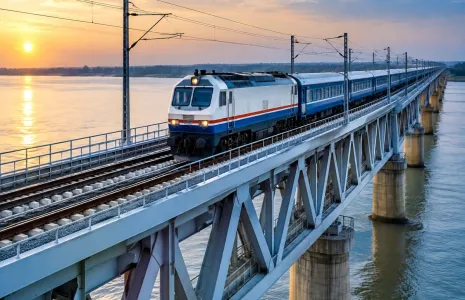
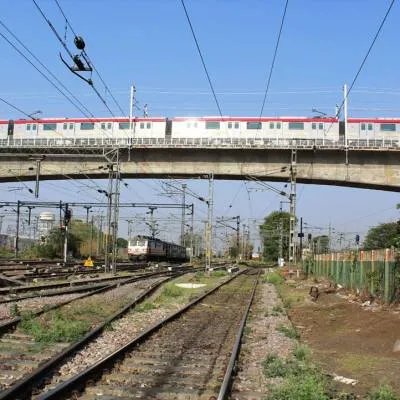
Indian Railways handled 141.3 million tonnes (141.3 mn t) of freight in July, marking a rise of nine per cent year on year. Freight loading maintained a positive trajectory across the network compared with the same month last year. Passenger traffic also increased in July, contributing to higher overall network utilisation. The July outcome continued a pattern of steady monthly gains, reflecting gradual improvement in industrial and logistics activity.

The growth in freight volumes reflected stronger demand across multiple sectors and improvements in logistics and train turnarounds. Enhanced rake availability and better coordination with freight customers supported smoother operations without compromising services on key corridors. Network throughput benefited from focused efforts to reduce dwell times and expedite loading and unloading at terminals. Coordination with ports and road carriers helped improve intermodal flow at several yards.

Railway authorities indicated that sustaining the momentum requires continued attention to infrastructure capacity, yard optimisation and digital scheduling tools. Investment in track, signalling and terminal facilities remains critical to accommodate rising freight and passenger needs. Officials highlighted predictive maintenance and freight corridor management as key measures to reduce disruptions and enhance reliability. Operational refinements to balance freight priorities with increased passenger services are central to ongoing planning.

Market participants and supply chain managers monitor monthly trends for indications of broader industrial activity given the railways' role in moving bulk commodities and manufactured goods. Continued improvements in freight loading can ease logistics bottlenecks and support steady economic activity. Analysts and logistics executives will watch detailed commodity-wise loading and seasonal analysis for clarity on underlying drivers. The monthly data therefore serves as an important input for procurement, inventory and transport planning decisions.

Indian Railways handled 141.3 million tonnes (141.3 mn t) of freight in July, marking a rise of nine per cent year on year. Freight loading maintained a positive trajectory across the network compared with the same month last year. Passenger traffic also increased in July, contributing to higher overall network utilisation. The July outcome continued a pattern of steady monthly gains, reflecting gradual improvement in industrial and logistics activity. The growth in freight volumes reflected stronger demand across multiple sectors and improvements in logistics and train turnarounds. Enhanced rake availability and better coordination with freight customers supported smoother operations without compromising services on key corridors. Network throughput benefited from focused efforts to reduce dwell times and expedite loading and unloading at terminals. Coordination with ports and road carriers helped improve intermodal flow at several yards. Railway authorities indicated that sustaining the momentum requires continued attention to infrastructure capacity, yard optimisation and digital scheduling tools. Investment in track, signalling and terminal facilities remains critical to accommodate rising freight and passenger needs. Officials highlighted predictive maintenance and freight corridor management as key measures to reduce disruptions and enhance reliability. Operational refinements to balance freight priorities with increased passenger services are central to ongoing planning. Market participants and supply chain managers monitor monthly trends for indications of broader industrial activity given the railways' role in moving bulk commodities and manufactured goods. Continued improvements in freight loading can ease logistics bottlenecks and support steady economic activity. Analysts and logistics executives will watch detailed commodity-wise loading and seasonal analysis for clarity on underlying drivers. The monthly data therefore serves as an important input for procurement, inventory and transport planning decisions.

Related Stories

Gold Stories

Next Story
Infrastructure Urban

KONE Opens India's First Digital Experience Centre in Pune

KONE, a global elevator and escalator manufacturer, has inaugurated its first Digital Experience Centre (DEC) in India, located in Pune. The facility aims to showcase how artificial intelligence (AI), connectivity and data-driven technologies can enhance customer experiences and improve building operations.The centre was inaugurated by Jussi Herlin, Executive Vice Chair, KONE Corporation; Philippe Delorme, President and CEO, KONE; and Nandan Nilekani, Co-founder and Chairman of the Board, Infosys.Designed as an interactive customer environment, the facility demonstrates digital solutions cover..

Next Story
Infrastructure Urban

CII GreenCo Launches Circularity Guidelines for Indian Industry

The Confederation of Indian Industry (CII) GreenCo Council has launched the CII GreenCo Circularity Guidelines – Pilot Version at the 17th CII GreenCo Waste & Resource Management Summit 2026 in Chennai. The initiative aims to strengthen resource efficiency, waste reduction and circular economy practices across Indian manufacturing and process industries.The guidelines introduce a structured framework with circularity indices covering raw materials, consumables, packaging and other resource inputs. These indicators will help industries assess existing practices, identify opportunities to ..

Next Story
Infrastructure Energy

Global Electronics Association Launches IPC-1783-CO2E Standard

The Global Electronics Association has introduced IPC-1783-CO2E, a new international standard aimed at improving consistency, transparency and comparability in product carbon footprint reporting across the electronics manufacturing industry.The standard, titled International Standard for Data Collection and Reporting of CO2 Equivalent (CO2e) Emissions for the Electronics Manufacturing Supply Chain, provides industry-specific guidance for collecting, estimating and reporting carbon emissions data.With increasing regulatory requirements and customer expectations, electronics manufacturers face c..

Advertisement

Subscribe to Our Newsletter

Get daily newsletters around different themes from Construction world.

STAY CONNECTED

Advertisement

SPECIAL OFFER
QR Code