Renewable Power Could Save Small Steelmakers Rs 24 Million a Year
POWER & RENEWABLE ENERGY

Renewable Power Could Save Small Steelmakers Rs 24 Million a Year

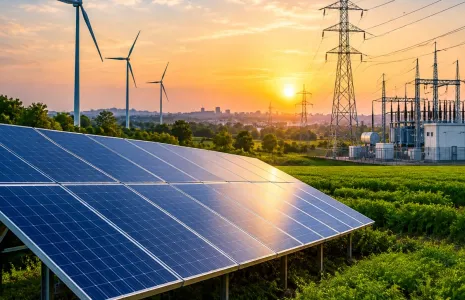
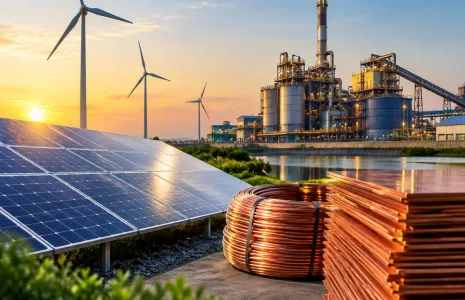
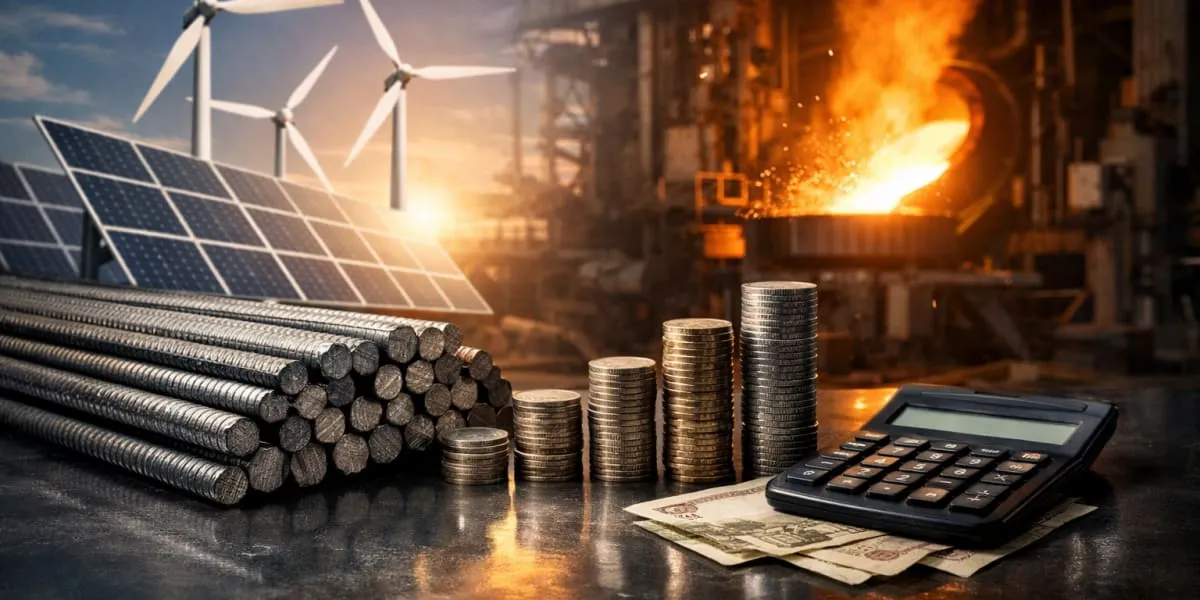
A joint study released on 12 August 2026 by the Confederation of Indian Industry, WWF-India, Climate Catalyst and JMK Research finds that small steel producers could reduce costs and carbon intensity by shifting from grid electricity to renewable power. The study notes that secondary or small steel producers account for nearly 40 per cent of India' s crude steel production and face high electricity bills.

It estimates that renewable electricity could lower annual power costs by about Rs 22 million (Rs 22 mn) to Rs 24 million (Rs 24 mn) per unit, representing a reduction of up to 34 per cent in annual power costs. Electricity accounts for up to 40 per cent of operating costs for many smaller producers, and rising fuel prices have squeezed profit margins, increasing the appeal of cheaper power sources.

The authors advocate joint ownership or cluster-based models to aggregate demand and make projects more bankable, enabling optimal plant sizing and spreading investment risk across units. The report observes that only about 11 per cent of smaller steelmakers currently use renewable power, compared with roughly 22 per cent in India' s overall electricity mix, indicating room for scaled deployment.

On the emissions front, the study situates the sector within national targets, noting that India accounted for approximately 8.2 per cent of global greenhouse gas emissions in recent assessments and that steel contributes about 12 per cent of the country' s total emissions. The government' s net zero aim for 2070 reinforces the strategic importance of decarbonising industrial power.

The report also identifies barriers to adoption, including high capital costs at an individual level, limited awareness and regulatory hurdles related to renewable ownership. Grid constraints and curtailment in some states, notably Gujarat, are cited as practical obstacles; easing these impediments could accelerate adoption and help exporters manage evolving carbon-related trade measures.

A joint study released on 12 August 2026 by the Confederation of Indian Industry, WWF-India, Climate Catalyst and JMK Research finds that small steel producers could reduce costs and carbon intensity by shifting from grid electricity to renewable power. The study notes that secondary or small steel producers account for nearly 40 per cent of India' s crude steel production and face high electricity bills. It estimates that renewable electricity could lower annual power costs by about Rs 22 million (Rs 22 mn) to Rs 24 million (Rs 24 mn) per unit, representing a reduction of up to 34 per cent in annual power costs. Electricity accounts for up to 40 per cent of operating costs for many smaller producers, and rising fuel prices have squeezed profit margins, increasing the appeal of cheaper power sources. The authors advocate joint ownership or cluster-based models to aggregate demand and make projects more bankable, enabling optimal plant sizing and spreading investment risk across units. The report observes that only about 11 per cent of smaller steelmakers currently use renewable power, compared with roughly 22 per cent in India' s overall electricity mix, indicating room for scaled deployment. On the emissions front, the study situates the sector within national targets, noting that India accounted for approximately 8.2 per cent of global greenhouse gas emissions in recent assessments and that steel contributes about 12 per cent of the country' s total emissions. The government' s net zero aim for 2070 reinforces the strategic importance of decarbonising industrial power. The report also identifies barriers to adoption, including high capital costs at an individual level, limited awareness and regulatory hurdles related to renewable ownership. Grid constraints and curtailment in some states, notably Gujarat, are cited as practical obstacles; easing these impediments could accelerate adoption and help exporters manage evolving carbon-related trade measures.

Related Stories

Gold Stories

Next Story
Infrastructure Urban

EMO Energy and e-Sprinto to Deploy 8,000 Electric Scooters

EMO Energy has announced a partnership with electric two-wheeler maker e-Sprinto to deploy 8,000 electric scooters across India this financial year. The rollout will include both low-speed and high-speed models and will be phased across several cities. The scooters will be aimed at quick-commerce and last-mile delivery operations where uptime and energy efficiency are prioritised. EMO Energy said the scooters will use its patented ZenPac liquid-cooled battery platform with active thermal management, battery intelligence and energy optimisation to improve reliability and performance. ZenPac con..

Next Story
Infrastructure Energy

Octillion Opens Third EV Battery Plant in India

Octillion Power Systems has opened its third manufacturing facility in Halol, Gujarat, adding production capacity as demand for electric vehicle battery systems grows across passenger, commercial and public transport segments. The facility covers more than 13,000 square metres and was converted from an empty structure into an operational battery manufacturing plant in less than eight months. At full capacity the Gujarat plant will manufacture more than 48,000 battery systems annually, representing over three GWh of energy storage capacity. With the addition of the Halol facility Octillion's co..

Next Story
Real Estate

Land Reforms Could Unlock Urban Affordable Housing

Former cabinet secretary and NITI Aayog member Rajeev Gauba said India’s urban housing shortage could be tackled by unlocking 10 million (mn) vacant homes and using excess unutilised land held by public sector undertakings (PSUs). He said land availability lay at the heart of the problem and estimated that land accounted for as much as 50 to 70 per cent of total project cost. He urged states to waive land?use change fees and exempt stamp duty on land and transactions linked to affordable housing. He noted that urban population was projected to rise from 500 million to nearly 900 million by 2..

Advertisement

Subscribe to Our Newsletter

Get daily newsletters around different themes from Construction world.

STAY CONNECTED

Advertisement