+
Renewables Reach Record Twenty Per Cent Share Of India's Power Mix
POWER & RENEWABLE ENERGY

Renewables Reach Record Twenty Per Cent Share Of India's Power Mix

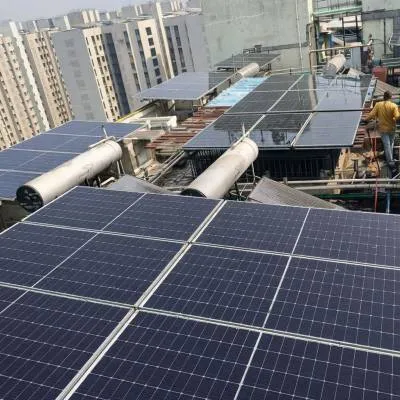
Renewable energy accounted for a record 20 per cent of India's power generation in July, marking a notable milestone in the nation’s transition to cleaner electricity. Official statistics showed that the share reached one-fifth of total generation as demand patterns and capacity additions aligned during the month. The development reflects sustained additions to renewable capacity and favourable weather conditions, which together elevated output from variable sources. The increase reduced the relative share of fossil fuel generation in the power mix for the period.

Solar and wind supplied the bulk of the incremental renewable output, complemented by hydroelectricity and biomass plants that provided dispatchable support. Grid integration benefited from improved forecasting and scheduling of variable generation, while regional transmission links helped move surplus output to demand centres. System operators adjusted dispatch of thermal units to balance supply and demand, enabling greater utilisation of non-fossil sources without compromising reliability. The pattern underlines the growing role of renewables in meeting peak and daytime electricity needs.

The record share has implications for fuel consumption and emissions, as higher renewable output lowers coal burn and associated pollutants. Power sector economics were affected as marginal generation shifted; wholesale price signals and plant operation patterns adjusted to reflect the changing supply mix. The experience in July highlights the importance of ancillary services and flexibility, including faster ramping by gas and hydro units and demand response measures. Investment in storage and flexible generation will be central to managing variability.

Policymakers and planners will need to consolidate gains through enhanced transmission, market reforms and targeted incentives for storage and grid-forming technologies. Continued capacity additions coupled with operational reforms will support the upward trajectory of renewable contribution to the grid. The milestone in July thus represents both an achievement and a prompt for further action to ensure reliable, affordable and low-carbon power for the future.

Renewable energy accounted for a record 20 per cent of India's power generation in July, marking a notable milestone in the nation’s transition to cleaner electricity. Official statistics showed that the share reached one-fifth of total generation as demand patterns and capacity additions aligned during the month. The development reflects sustained additions to renewable capacity and favourable weather conditions, which together elevated output from variable sources. The increase reduced the relative share of fossil fuel generation in the power mix for the period. Solar and wind supplied the bulk of the incremental renewable output, complemented by hydroelectricity and biomass plants that provided dispatchable support. Grid integration benefited from improved forecasting and scheduling of variable generation, while regional transmission links helped move surplus output to demand centres. System operators adjusted dispatch of thermal units to balance supply and demand, enabling greater utilisation of non-fossil sources without compromising reliability. The pattern underlines the growing role of renewables in meeting peak and daytime electricity needs. The record share has implications for fuel consumption and emissions, as higher renewable output lowers coal burn and associated pollutants. Power sector economics were affected as marginal generation shifted; wholesale price signals and plant operation patterns adjusted to reflect the changing supply mix. The experience in July highlights the importance of ancillary services and flexibility, including faster ramping by gas and hydro units and demand response measures. Investment in storage and flexible generation will be central to managing variability. Policymakers and planners will need to consolidate gains through enhanced transmission, market reforms and targeted incentives for storage and grid-forming technologies. Continued capacity additions coupled with operational reforms will support the upward trajectory of renewable contribution to the grid. The milestone in July thus represents both an achievement and a prompt for further action to ensure reliable, affordable and low-carbon power for the future.

Related Stories

Gold Stories

Next Story
Infrastructure Urban

Third Parties Can Move Court Against Unauthorised Construction

The Calcutta High Court (High Court) Circuit Bench at Port Blair held that a third party or public?spirited citizen can approach the writ court when municipal authorities fail to act against unauthorised construction, noting the burden on civic amenities and safety hazards. The Division Bench (Bench) of Justice Shampa Sarkar and Justice Arjun Ray Mukherjee upheld demolition directions for unauthorised portions of a hotel in Sri Vijaya Puram, subject to the regularisation scheme. The Bench rejected the appellant's locus contention. The Bench relied on the Supreme Court decision in Deepak Kumar ..

Next Story
Infrastructure Urban

Rs 16.67 bn Plan to Transform Srinagar Airport by 2031

The Jammu and Kashmir administration has submitted a proposal for a Rs 16.67 billion (bn) expansion of the Civil Enclave at Srinagar International Airport with a target completion year of 2031. The proposal was approved by the Cabinet Committee on Economic Affairs on 24 February 2026 and forwarded to the Ministry of Home Affairs with detailed project parameters and cost estimates. The stated intention is to lift annual passenger handling markedly to address rising travel demand and to modernise core terminal infrastructure. The scheme envisages the construction of a new Integrated Terminal Bui..

Next Story
Infrastructure Energy

India Pushes Self-Reliance In Critical Minerals

Minister of State for Coal and Mines Satish Chandra Dubey said at an industry roadshow in Raipur that India has made continuous efforts to become self-reliant in critical minerals to secure domestic industrial and clean energy supply chains. The roadshow was intended to connect state authorities with industry leaders to address operational and technical aspects. The event facilitated dialogue between entrepreneurs and officials to explain technical matters. The engagement comes against the backdrop of the National Critical Mineral Mission (NCMM), introduced for a seven-year period from 2024-25..

Advertisement

Subscribe to Our Newsletter

Get daily newsletters around different themes from Construction world.

STAY CONNECTED

Advertisement

SPECIAL OFFER
QR Code