SECI RTC Bid Discovers Rs Five Point Two Five Tariff
POWER & RENEWABLE ENERGY

SECI RTC Bid Discovers Rs Five Point Two Five Tariff

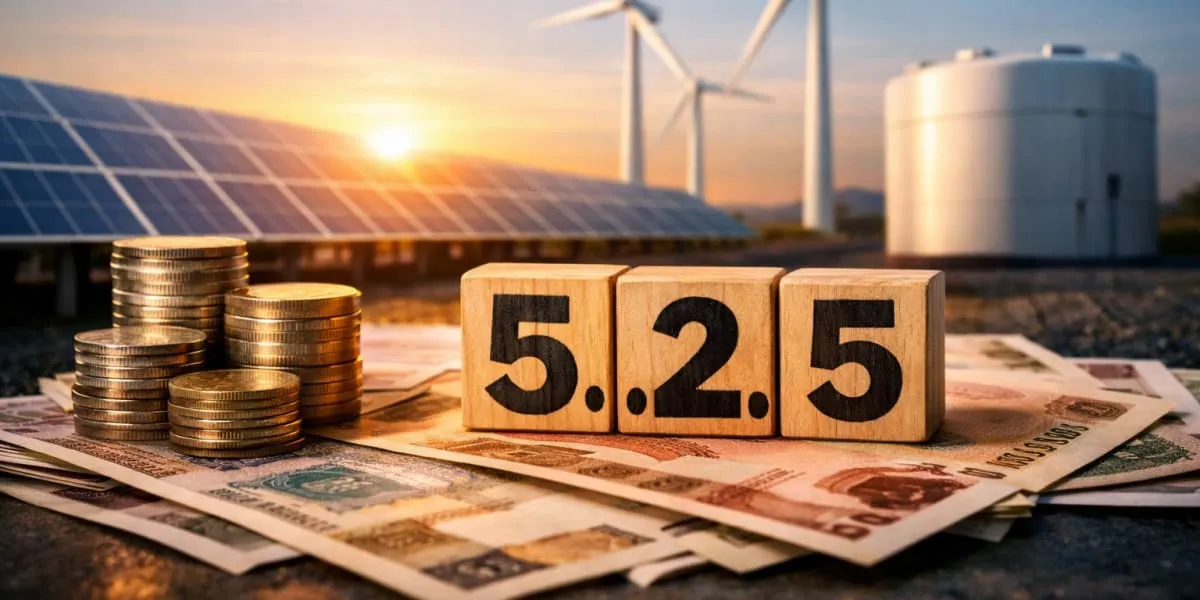
The Solar Energy Corporation of India round-the-clock renewable energy auction discovered a tariff of Rs five point two five per unit, which the Ministry of New and Renewable Energy secretary Santosh Sarangi presented as evidence of growing competitiveness in integrated solar, wind and storage technologies at the CII International Energy Conference and Exhibition in New Delhi. He indicated that the government had anticipated a higher price but that competitive bidding by developers produced a lower rate. The outcome was framed as a milestone for hybrid projects intended to provide firm renewable supply.

The RTC procurement requires 90 per cent assured power availability in every time block and specifies that solar will supply only 50 per cent of daytime output, demonstrating how complementary resources and storage can meet dispatchable demand. Officials described the design as supporting reliability and system flexibility through hybridisation. Session participants noted implications for grid planning and dispatch protocols.

Sarangi noted that India has exceeded 300 GW of renewable energy capacity and remains on course for the Prime Minister's target of 500 GW of non-fossil fuel capacity by 2030, attributing progress to policy certainty, domestic manufacturing and market-creation measures. He highlighted domestic manufacturing with more than 213 gigawatt (GW) of solar module capacity and over 32 GW of solar cell capacity, and said nearly 85 per cent of wind energy manufacturing has been indigenised. Those manufacturing scales were cited as underpinning competitive supply chains.

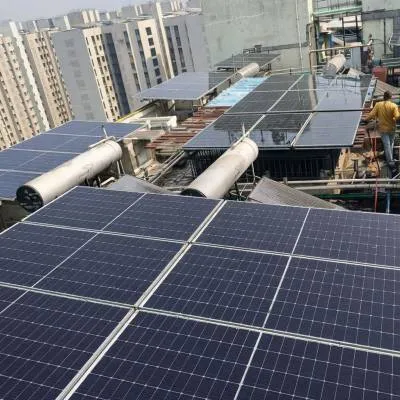
He said the PM Surya Ghar scheme had reached more than five mn households and was progressing towards its target of ten mn rooftop solar installations. On regional cooperation, he argued that cross-border electricity trade needs both transmission infrastructure and harmonised regulations and that the One Sun, One World, One Grid initiative could enable sharing of resources across time zones. The conference also recorded a memorandum of understanding between Odisha and Madhya Pradesh to foster a knowledge partnership on renewable energy.

The agreement will support exchange of best practices and innovations including reactive power management with backing from the Bhopal-based Centre for Mission of Energy Transition. Representatives from Sri Lanka and Bhutan and a former senior economic relations official highlighted the need for stronger regional electricity integration and regulatory harmonisation to bolster energy security. Officials concluded that competitive bidding and integrated RTC projects are creating momentum for scalable, reliable renewable power solutions.

The Solar Energy Corporation of India round-the-clock renewable energy auction discovered a tariff of Rs five point two five per unit, which the Ministry of New and Renewable Energy secretary Santosh Sarangi presented as evidence of growing competitiveness in integrated solar, wind and storage technologies at the CII International Energy Conference and Exhibition in New Delhi. He indicated that the government had anticipated a higher price but that competitive bidding by developers produced a lower rate. The outcome was framed as a milestone for hybrid projects intended to provide firm renewable supply. The RTC procurement requires 90 per cent assured power availability in every time block and specifies that solar will supply only 50 per cent of daytime output, demonstrating how complementary resources and storage can meet dispatchable demand. Officials described the design as supporting reliability and system flexibility through hybridisation. Session participants noted implications for grid planning and dispatch protocols. Sarangi noted that India has exceeded 300 GW of renewable energy capacity and remains on course for the Prime Minister's target of 500 GW of non-fossil fuel capacity by 2030, attributing progress to policy certainty, domestic manufacturing and market-creation measures. He highlighted domestic manufacturing with more than 213 gigawatt (GW) of solar module capacity and over 32 GW of solar cell capacity, and said nearly 85 per cent of wind energy manufacturing has been indigenised. Those manufacturing scales were cited as underpinning competitive supply chains. He said the PM Surya Ghar scheme had reached more than five mn households and was progressing towards its target of ten mn rooftop solar installations. On regional cooperation, he argued that cross-border electricity trade needs both transmission infrastructure and harmonised regulations and that the One Sun, One World, One Grid initiative could enable sharing of resources across time zones. The conference also recorded a memorandum of understanding between Odisha and Madhya Pradesh to foster a knowledge partnership on renewable energy. The agreement will support exchange of best practices and innovations including reactive power management with backing from the Bhopal-based Centre for Mission of Energy Transition. Representatives from Sri Lanka and Bhutan and a former senior economic relations official highlighted the need for stronger regional electricity integration and regulatory harmonisation to bolster energy security. Officials concluded that competitive bidding and integrated RTC projects are creating momentum for scalable, reliable renewable power solutions.

Related Stories

Gold Stories

Next Story
Infrastructure Urban

Sabarmati Riverfront Two Plots Up for Auction at Rs2.24 bn Base Price

Two commercial plots on the western bank of the Sabarmati Riverfront will be auctioned with a base price of Rs 112 crore each, equivalent to Rs 1.12 bn apiece and Rs 2.24 billion in total. The parcels are located adjacent to the Metro Rail Bridge in Ahmedabad and form the first commercial offering after a prolonged pause. The Riverfront Development Corporation has framed the sale as part of a phased commercial release to revive development along the riverfront. The combined base valuation has been set by the corporation to reflect market rates along the riverfront. The corporation has fixed a ..

Next Story
Infrastructure Urban

Andhra Pradesh to Connect Over One Million Streetlights

Andhra Pradesh will undertake a statewide smart streetlighting programme across all 123 Urban Local Bodies (ULBs), bringing around 1.05 million (mn) streetlights under an AI enabled monitoring and management system. The programme will be implemented by Energy Efficiency Services Limited (EESL) with the Commissioner and Director of Municipal Administration under the state Municipal Administration and Urban Development Department. The project aims to convert conventional streetlighting into a digitally managed municipal service monitored and maintained remotely. The initial phase will cover abou..

Next Story
Infrastructure Urban

AMC To Procure Four Machines For Guard Rail Cleaning

Ahmedabad Municipal Corporation will introduce four specialised machines for cleaning guard railings along major roads and the central verges of BRTS and Metro corridors. The civic body plans to replace manual labour with mechanised cleaning to improve maintenance of road infrastructure and greenery. The purchase is estimated at Rs 82.8 million (mn), excluding GST. The proposal sets the base price of each machine at about Rs 20.7 million (mn) so four units total Rs 82.8 million (mn) before GST. 18 per cent GST will be applicable separately. During the warranty period each machine will operate ..

Advertisement

Subscribe to Our Newsletter

Get daily newsletters around different themes from Construction world.

STAY CONNECTED

Advertisement