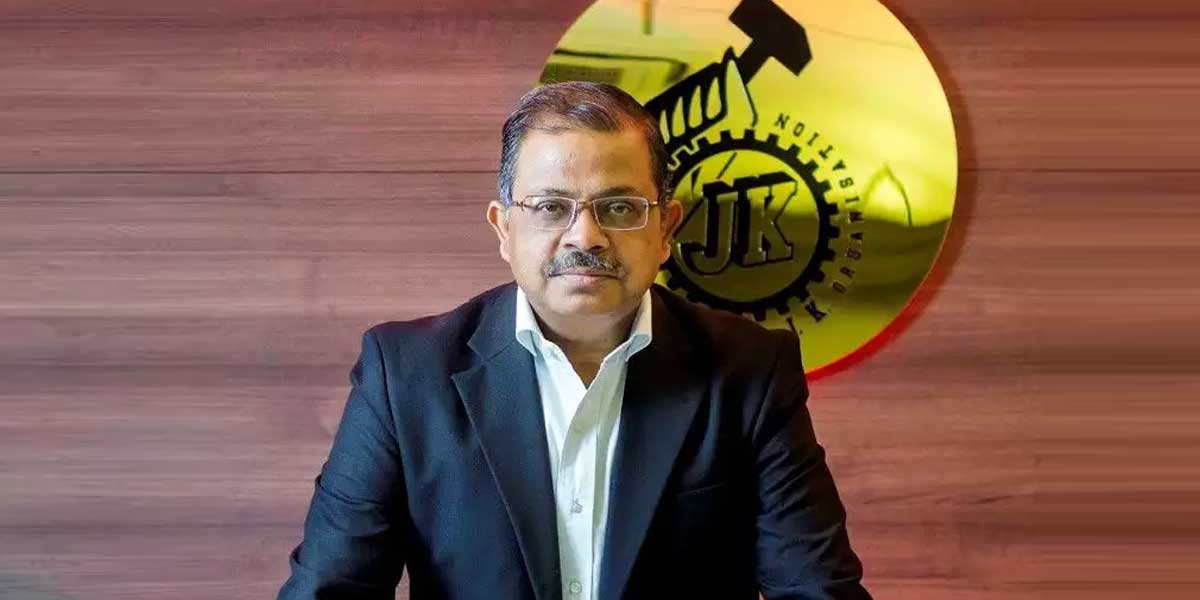
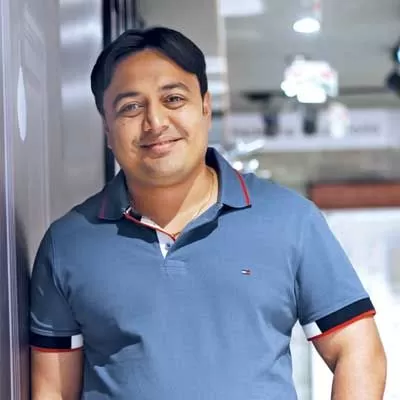
Jitendra Singh, presently Chief Information Officer, JK Cement. He is a product of XLRI Jamshedpur. Held leadership positions at Nagarjuna Chemicals & Fertilisers Ltd. and at HIL, CK Birla Group Company, in conversation with Vikas Damle, Executive editor of Indian Cement Review.1) Kindly explain to our readers about the SAP platform in brief and when did you go live at JK? How was the journey? Please elaborate.
JK Cement Ltd. implemented SAP in the year 2009 with core modules like FICO, SD, MM, PP, QM, PM and PS. As usual the ‘S’ curve was observed in the initial implementation and institutionalization phase, later stabilised to a good extent.
Along with core transactional system, we also have SAP BI/BW landscape to cater to the effective MIS and data management respectively.
As the SAP landscape kept on maturing at JKCL, we added few more functionalities like CRM using SAP C4C, Treasury and Risk Management (TRM), Business Planning and Consolidation (BPC), Success Factors (HRMS), etc.
In the year 2018, we migrated our database to HANA, thereby converting the system as Suite on HANA (SoH), resulting in a much Efficient and Effective ERP with in-memory computing. Also the migration to SoH brought it a step closer to SAP S4/HANA, which is planned for implementation soon.
2) It is more fashionable for industry to declare that they use SAP. Many times it is seen that even 50% potential of SAP is not used by many? What is your take?
SAP today has evolved as the most trusted platform for capturing the data organization wide, having appropriate checks and controls built in and equipped with the facility to configure the system for alignment with business needs (of course without compromising on the basic thread of process controls).
I sincerely feel that when it comes to managing a Multi Business, Multi Geography system, SAP is definitely an asset and a great enabler.
The usage percentage may differ from organization to organization – but not because SAP is not useful, but largely on the Organizational appetite for having a centralised ERP with the varied degree of checks and controls desired.
At JKCL, conservatively speaking, SAP is the pivot of every functions data capturing and reporting, and is being used to its optimum.
3) In your case how SAP is used for sales and manufacturing function? Please explain.
We’ve been optimally using SAP for both Sales and Manufacturing operations by configuring the modules available for the purpose.
In fact we’ve configured SAP SD module not only to capture sales data (SO, Invoices, etc.), but to an extent that the transactional data being captured passes through multiple validations, bringing in stricter controls which help us maximize the potential from each transaction.
In manufacturing, the PP, QM, PM modules (over and above MM module for inventory management) enable us in bringing up the cost controls, effective plant maintenance, Digital Quality certificates generation, etc.
The retention module is automated and provides desired visibility to the leadership team in planning on day-to-day basis.v
BPC tool uses the Sales and manufacturing data in Planning process, providing a near exact precision in MRP, Sales, Costing data points.4) Talking about logistics, cement industry incurs relatively higher cost to the tune of 25-30% on logistics. Huge number of trucks waiting outside the plant is a common scene. At JK, we hear that you have brought down logistic cost considerably using digital technologies? Kindly provide information.
Logistics is a key component in Cement Industry and requires a much deeper insight and validations, compared to few other industries.
The vehicles waiting outside the plant in yard, is through an organized sequence based controlled yard management and is never chaotic at JKCL. With a complete visibility on every vehicle from Yard-in to Yard out and en-route, we have been able to effectively manage the logistics at all plants.
We were able to bring down the logistics cost considerably through automation at various levels. Some of them are. :
a) RFID based in-plant tracking system – reduction in TAT
b) GPS based track and trace of vehicles – visibility on Route, short trips, diversion, etc.
c) Online bidding among transporters. – reduction in freight
d) E proof of delivery (ePOD) – visibility to customers and faster resolution of billing related transactions for transportersv
e) Linear programming based best route selection for a faster delivery, reduced freight and timelines.
5) Please explain to our readers the use of IoT and drones in the coming years. What has been the status at your own plants?
We’ve used drone based survey of mines and stock to bring in efficiency in the system, and intend to institutionalize it in future.
IoT can play a big role in organization wise integration of various equipment and machinery, wherein the conversion from manual intervention based tweaking to an automated plant controls – will bring in harmonised production and a proactive plant management.
For IoT, we are in process of strengthening our Plant Operations through :
a) Cordoning the Operational Technology (OT) with strong security controls.
b) Use of IoT for efficient remote monitoring and control.
c) Integrating IT and OT for an overall view to the leadership team.
d) Use of AR+VR for remote maintenance and support
6) How IT can be used in training and development of manpower in cement industry?
JKCL as an organization has always believed in a trained, skilled and awareness based manpower enablement, wherein there are number of institutions from JKCL engaged in providing training individuals in multiple domains.
We use IT enabled tools to impart trainings to our manpower in both technical as well as behavioural aspects.
The best example is utilizing the learning and Development tools during the lockdown period, wherein more than 50 new modules were uploaded on our online Learning Management System (LMS), along with having a collaboration and integration with external agencies in hosting their standard courses online through our system.
The efforts are to create standard training modules for our workers through our experienced faculty from ITI. Some of these courses are already available on channels like YouTube, etc.
7) AS a CIO, your role in the organisation got more pronounced during lockdown period, what was the response of your team during this period to the organisation at large? Give few typical examples.
Fortunately for us, the leadership team is completely aligned to the thought of Digital JKCL, especially Mr. Raghavpat Singhania and Mr. Madhavkrishna Singhania, who always encourage us to rollout tools and technologies which are futuristic in nature and bring in value to the organization through automation.
In the past 3+ years, we have rolled out multiple projects which are yielding benefits in respective functions.
Because of the migration to latest technologies including Cloud, SaaS, IoT, SDWAN, etc. and Infrastructure level and Applications like CRM, DNA, CTS, IHB, etc. we were more or less prepared for the online mode of working at all levels.
The timely migration to Microsoft Cloud platform about 18 months back, made the collaboration and communication easy for everyone in the company.
We have had more than 1,000+ online technical meetings across Officials, Customers and Suppliers during the lockdown period.
My team has been working round the clock to ensure a seamless working environment for all individuals in the organization and has been able to provide the required support in time and in an effective manner.
We enabled e-visit (Sales force visit through online tools), e-joining (New joiners completing formalities online), e-provisioning (enabling BYOD, access to required tool/technology online), etc. during the lockdown period.
The paperless movement across the organization (including Robotic Process Automation), is an opportunity to mitigate the risk of contact based spreading during COVID-19.
8) Work from home (WfH) model has limitations in the manufacturing sector. Still given a situation we are facing today due to Covid-19 outbreak, what kind of scene will emerge post Covid-19 (for WfH) in the manufacturing sector?
This is correct that WfH model is essentially applicable to the office workers (especially in India), but this is also an opportunity to identify the areas where we can introduce robotics and process automation to reduce dependency on physical presence.
Robotics and Remote Management in Manufacturing is an area where we can proceed with and ensure that the operations are not impacted in situations like the present one (COVID-19). The combination of AR and VR, Drones, IoT, etc. are a necessity today, and needs implementation faster.
Smarter organizations have already realised the need for latest technologies in both Office as well as Manufacturing environment and are embracing it faster than ever.