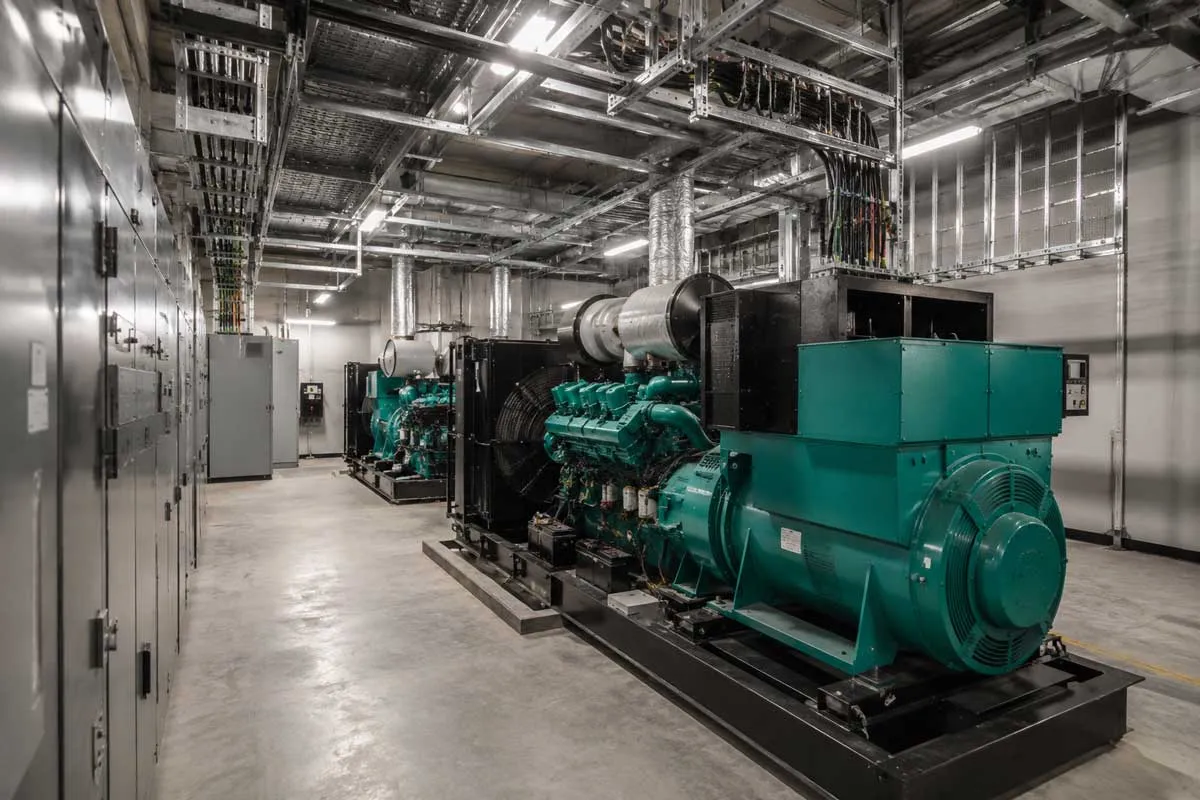
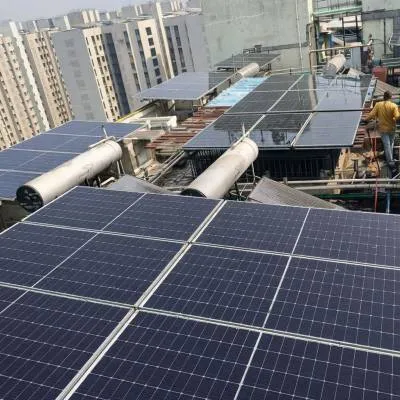
For decades, diesel gensets occupied a largely functional role in buildings: a mandatory backup system specified to meet statutory requirements and activated only during grid outages. Today, however, this perception is undergoing a profound shift. Across residential, commercial and mission-critical developments, developers, consultants and operators are increasingly viewing gensets as integral to a broader energy resilience strategy. Rising occupant expectations, growing dependence on digital systems and the proliferation of smart technologies mean that uninterrupted power has become essential rather than optional.Altaf Abdul, Principal Consultants, A-Square MEP Consultants, notes that clients are no longer satisfied with merely having backup power. “Power resilience has moved from a compliance checkbox to a core design value, discussed in the same breath as facade performance and structural systems,” he says.Mahindra Lifespaces is witnessing a similar transition. According to Sudharshan KR, Chief Project Officer, energy planning today extends beyond ensuring continuity to encompass efficiency, renewable integration and decarbonisation goals. The developer's net-zero projects demonstrate how backup power planning is increasingly being aligned with broader sustainability objectives. “Our approach to energy planning has evolved to take a more integrated view of efficiency, renewable energy and power continuity,” he says.At Puravankara, backup power is now treated as a critical component of operational continuity. According to Mallanna Sasalu, CEO - South, reliable power is essential for maintaining elevators, security systems, water supply, common-area lighting, access control, building management systems and home automation systems.Similarly, TV Ganesh, Executive Director - Technical, Shriram Properties, has integrated energy resilience planning into the early stages of project design. “The genset is no longer just a fallback. It is a planned, load-matched, fuel-optimised and increasingly IoT-monitored asset expected to perform seamlessly when called upon,” says the company.Planning for a smarter futureThe increasing adoption of smart building technologies, connected services and home automation systems is significantly altering how backup power systems are specified. Modern developments house a range of ‘always-on’ systems including access control, surveillance, fibre infrastructure, BMS and intelligent metering platforms. Even a brief interruption can disrupt operations and compromise occupant comfort and safety.According to Abdul, BMS integration has moved from being a premium add-on to a baseline expectation. Clients increasingly seek real-time visibility into fuel consumption, equipment health, predictive maintenance and automatic failover capabilities.Developers echo this sentiment. Ganesh points out that UPS systems are now routinely deployed alongside gensets to bridge the brief transition period during power outages, ensuring that sensitive digital systems continue functioning without interruption.Mahindra Lifespaces believes that the growing adoption of EV charging, smart building systems and connected services is fundamentally changing how energy infrastructure is planned. The company notes that increasing dependence on continuous and reliable power across everyday functions is compelling developers to prioritise uninterrupted availability, efficient load management and long-term adaptability right from the design stage. “Energy planning is becoming more integrated at the design stage, with reliability, efficiency and long-term adaptability considered together rather than in isolation,” adds Sudharshan. The EV challengeThe rapid rise of electric mobility is emerging as one of the most significant variables influencing backup power design. While developers are actively incorporating EV charging infrastructure across projects, the question of whether EV charging should be supported through diesel backup remains contentious.Puravankara believes that connecting EV charging directly to generator power is neither efficient nor aligned with long-term sustainability goals. Instead, EV infrastructure is being designed with scalability in mind as part of the overall electrical load architecture. Meanwhile, Shriram Properties is adopting managed load control strategies, enabling EV charging loads to be throttled or deferred during grid outages so that critical building services are prioritised.These changing requirements are compelling developers and consultants to incorporate additional load headroom and smarter load management systems while specifying gensets.Avoiding costly mistakesDespite growing awareness, industry experts believe several planning errors continue to compromise backup power reliability.One of the most common mistakes, according to Abdul, is sizing gensets only for present-day requirements. Buildings evolve over time, with increasing digital infrastructure, denser server rooms and expanding EV charging requirements often placing unexpected demands on backup systems. Another recurring issue is inadequate space allocation. Gensets are frequently relegated to leftover basement spaces with poor ventilation and limited maintenance access, adversely affecting long-term reliability.Load sequencing also remains a critical concern. Without proper automatic transfer switch (ATS) strategies, simultaneous restart of multiple systems following an outage can overload and trip the genset, leaving buildings without power despite having backup infrastructure in place.“The single most effective thing any developer can do is bring the power systems specialist in at the concept stage,” Abdul emphasises.Mission-critical reliabilityIn sectors such as data centres, where downtime tolerance is virtually zero, gensets have evolved into strategic infrastructure assets.Rakesh Mishra, Head - Design & Engineering, Techno Digital, explains that backup systems are now engineered as part of a comprehensive resilience architecture incorporating utility redundancy, UPS systems, battery backup infrastructure and synchronised generator configurations. “Power resilience is no longer measured by backup availability alone but by the ability to maintain continuous operations under all conditions,” he says.Consequently, data centres increasingly deploy high-redundancy architectures such as N+1, N+N and 2N configurations, alongside predictive diagnostics, routine testing and extended onsite fuel storage.Towards hybrid energy ecosystemsAs sustainability gains prominence, the industry is increasingly seeking ways to reconcile stringent uptime requirements with decarbonisation goals.For developers pursuing net-zero ambitions, backup power planning is increasingly being aligned with wider sustainability strategies. Mahindra Lifespaces, for instance, has integrated onsite solar generation, renewable energy procurement and climate-responsive design principles across projects such as Mahindra Eden and Mahindra Zen. These developments illustrate how conventional backup systems are gradually becoming part of broader low-carbon energy ecosystems.Developers such as Mahindra Lifespaces and Puravankara are already integrating solar power, renewable energy procurement and intelligent energy management systems into their projects.Within data centres, battery energy storage systems (BESS), renewable energy integration and alternative fuels such as biodiesel blends, hydrotreated vegetable oil and hydrogen-based solutions are gradually being explored. While diesel gensets remain indispensable for long-duration backup, their future role is likely to evolve within hybrid energy ecosystems combining renewables, storage technologies and intelligent power management platforms.The road aheadThe future of backup power lies not in standalone diesel machines tucked away in basements but in integrated, intelligent and sustainable energy ecosystems. As buildings become increasingly digital, connected and energy-intensive, backup power planning will need to begin at the concept stage, with equal emphasis on resilience, flexibility and sustainability. The projects that succeed will be those that view gensets not as a compliance necessity but as a strategic enabler of business continuity, occupant experience and future readiness.Quick bytesBackup power planning now begins at the concept stage. Power continuity is becoming central to occupant experience. Smart buildings and EVs are redefining backup requirements. Solar, storage and gensets are converging into hybrid systems. Future-ready projects prioritise redundancy and intelligent monitoring.