+
Who Pays When Politics Disrupts Construction?
ECONOMY & POLICY

Who Pays When Politics Disrupts Construction?

At the recent round tables organised by Construction World, developers lamented rising costs and labour shortages. The availability of labour itself is a problem. And we are not even talking about skille...

At the recent round tables organised by Construction World, developers lamented rising costs and labour shortages. The availability of labour itself is a problem. And we are not even talking about skilled labour, which is an even bigger challenge. Many factors are affecting labour availability. Since migrant labour from states such as West Bengal, Odisha, Uttar Pradesh and Bihar is the main source for the urban construction sector, any factor that affects their lives sends them scampering home. The West Bengal elections, for one, caused massive reverse migration due to anxiety regarding voter status and electoral roll verification. This was further accelerated by political parties capitalising on workers’ desire to return by organising “Special Voting Trains” and subsidised transport.First, the West Asia crisis caused a shortage of LPG, making cooking difficult for informal workers. Now, due to a delayed and deficient monsoon and dwindling lake reserves dropping to critical levels, the Municipal Corporation of Mumbai has taken the drastic step of completely suspending municipal water supply to construction sites and stopping new temporary water connections for building activities. This has resulted in water supply being cut off even for the dwelling units of construction workers. The workers’ woes have only multiplied. Developers must now offer assurances to workers for these basic amenities. Project planning will now have to incorporate such contingencies. Due to election freebies, another aspect of national growth is being affected: contractual payouts to contractors who are building our infrastructure. Contractors in Maharashtra, Karnataka and Rajasthan are up in arms over their dues. Chief Ministers of these states are trying to pacify agitated contractor associations by issuing financial timelines and direct operational mandates to clear massive backlogs of unpaid dues. This backlog has been caused by unbudgeted announcements of welfare schemes and freebies by politicians trying to secure victories in elections.This can be another reason for the reverse migration of labour, because if contractors are not being paid, their workers are definitely getting the short end of the stick. The new Labour Codes were meant to create a consolidated safety net for India’s construction workforce by introducing a strengthened welfare framework for Building and Other Construction Workers (BOCW), improving workplace conditions and ensuring greater protection. The responsibility for payment of wages lies with employers, and wages are to be paid on time, including minimum wages, overtime, etc. However, state governments are being let off the hook despite acting irresponsibly. There appears to be no legal liability on them, despite the legally mandated Fiscal Responsibility and Budget Management (FRBM) Act, 2003 at the central level, and corresponding state-level legislation, which lay down guidelines for fiscal deficit and borrowing limits. In May 2026, the Government introduced a 1per cent cess on the total cost of construction incurred by employers for building and other construction activities. The cess is calculated at 1per cent of the overall construction cost borne by employers. It applies broadly to building and other construction projects, including commercial structures, irrespective of their scale or cost. The revenue collected through this cess is allocated for the welfare of construction workers, including healthcare, financial assistance, insurance coverage and educational support for workers’ children. Despite this, roughly `49,800 crore collected as welfare cess remains unutilised nationally. Out of an estimated `1.17 lakh crore collected through the 1 per cent cess on construction projects, less than half has been distributed to registered construction workers for social security. If the industry is facing a labour crisis on account of the actions of political parties, elections and freebies, why cannot the fund mandated for workers’ welfare come to their rescue? Why are contractors’ dues not being paid? How are we going to enhance quality or become technologically more efficient unless rightful dues are paid on time? Construction World will be hosting round tables under the auspices of FIRST Construction Council in Bengaluru and Delhi, and will then file a report with NITI Aayog. If you have a point of view or wish to support this initiative, write to me at president@FIRSTconstructioncouncil.com or comment on my LinkedIn post.

Related Stories

Gold Stories
Next Story
Real Estate

BMC OC Amnesty Scheme Requires Key Approvals from Mumbai Societies

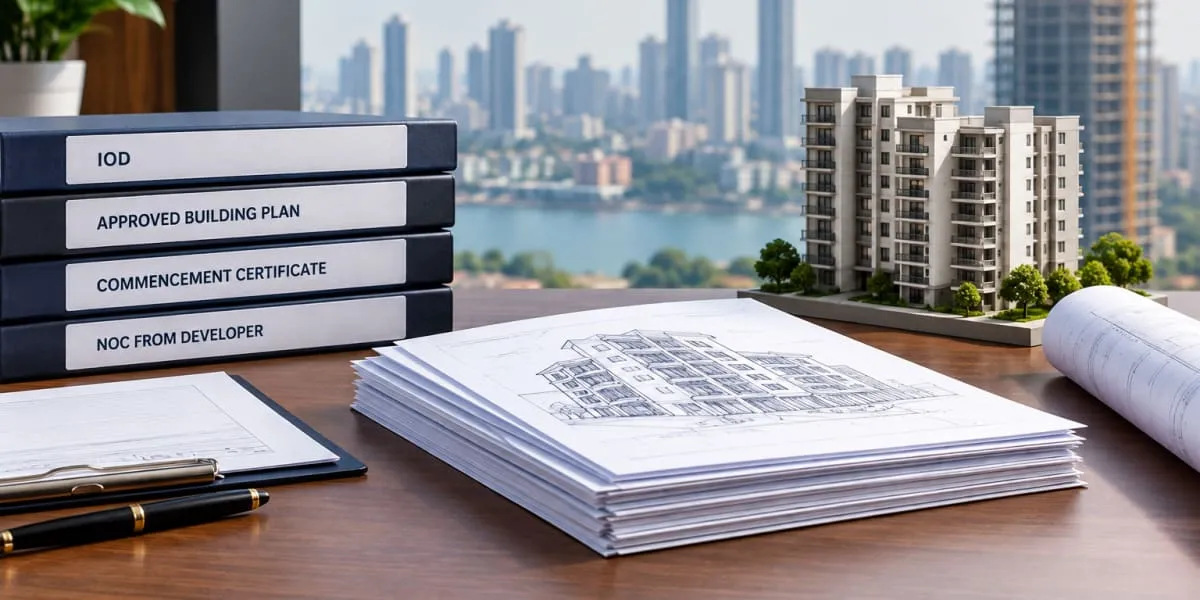
The Brihanmumbai Municipal Corporation (BMC) has clarified that housing societies applying under its Occupation Certificate (OC) amnesty scheme must possess key approvals linked to the original construction. The requirements include a valid Intimation of Disapproval (IOD), an approved building plan and a Commencement Certificate (CC), along with a No Objection Certificate (NOC) from the developer or original construction applicant. The Standard Operating Procedure (SOP) makes clear that the absence of an OC alone will not qualify a building for relief. Societies must establish that their build..

Next Story
Real Estate

Gurugram Emerges as Luxury Senior Living Hub

Gurugram is emerging as a potential hub for luxury senior living, supported by available land, healthcare infrastructure, connectivity and a concentration of affluent professionals, high-net-worth individuals and non-resident Indians. These factors could give the city an advantage over land-constrained metros such as Mumbai. A report by the Association of Senior Living India (ASLI) and JLL estimates that India’s organised senior living market could represent a $10.1 bn opportunity by 2030. The sector had about 25,050 organised units as of June 2026, while penetration stood at only 1.5 per ce..
Next Story
Real Estate

Corrosion Costs India’s Infrastructure Rs. 142 bn Annually

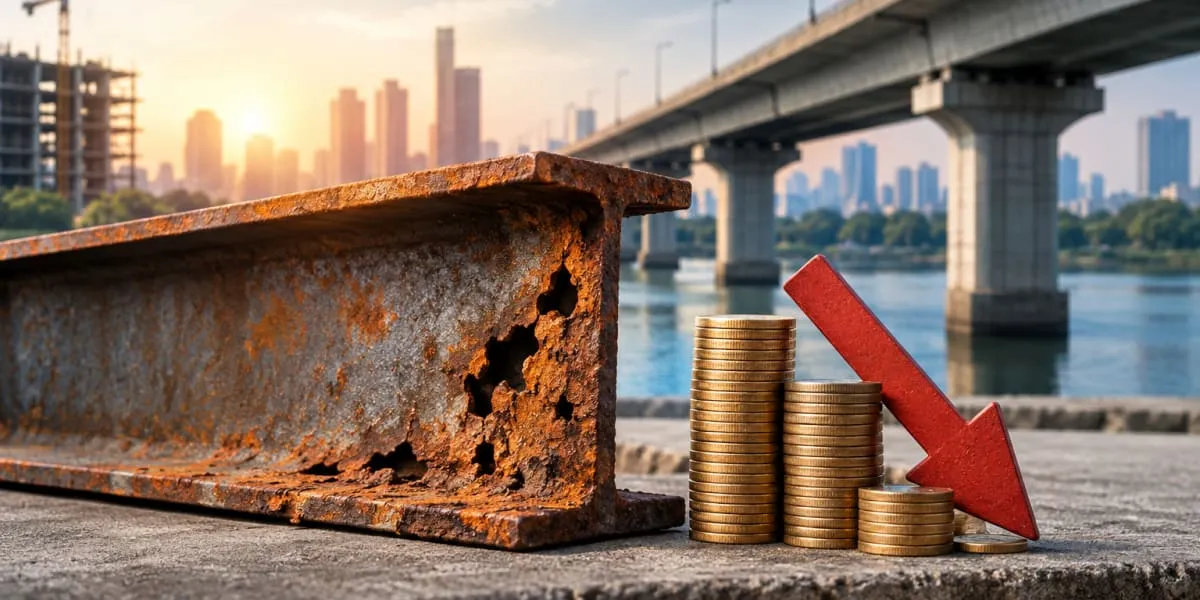
Corrosion costs India an estimated Rs. 1.42 tn annually, equivalent to 4.3 per cent of gross domestic product, according to a report by the Confederation of Indian Industry and the National Research Institute. Infrastructure accounts for Rs. 142 bn of the annual burden, making it the sector with the largest absolute cost among those examined. The report, presented at the CII Annual Infrastructure Summit 2026, said the infrastructure-sector cost equals about 2.9 per cent of the sector’s gross domestic product. It estimated that effective measures could generate maximum savings of Rs. 495.8 bn..

Advertisement

Subscribe to Our Newsletter

Get daily newsletters around different themes from Construction world.

STAY CONNECTED

Advertisement

SPECIAL OFFER
QR Code