+
A road to sustainability
ROADS & HIGHWAYS

A road to sustainability

India generates an estimated ~3.3 million metric tonne of plastic waste annually, which pollutes our land and water and even enters our bodies through the food chain. While India has committed to phase out the use of single-use plastic by 2022, the disposal of plastic waste remains a challenge....

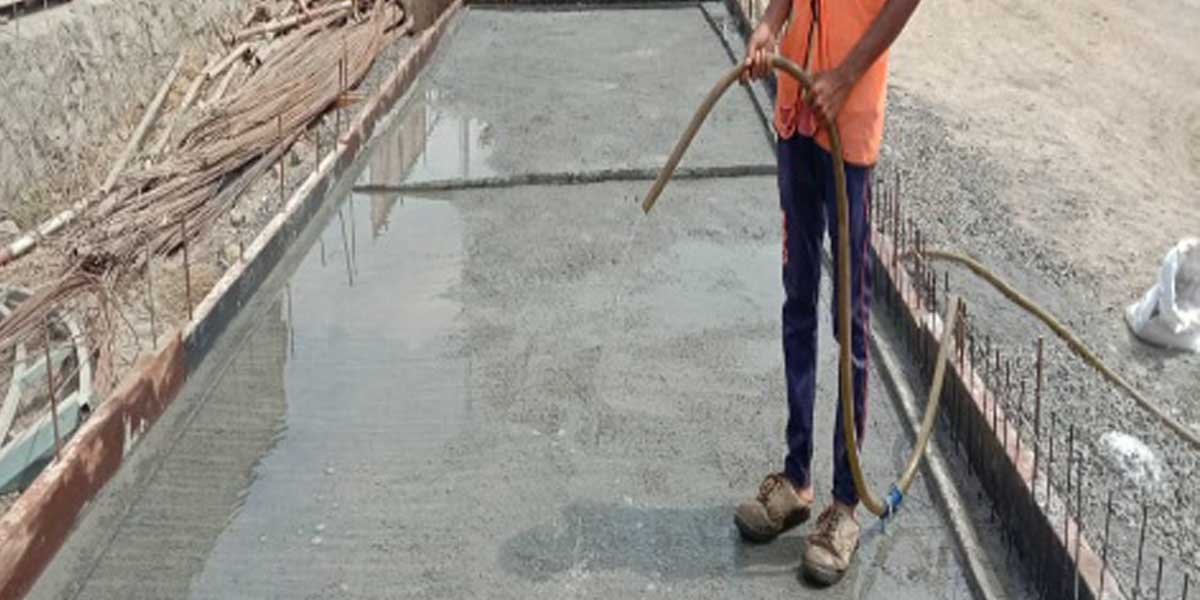
India generates an estimated ~3.3 million metric tonne of plastic waste annually, which pollutes our land and water and even enters our bodies through the food chain. While India has committed to phase out the use of single-use plastic by 2022, the disposal of plastic waste remains a challenge. Tackling plastic waste through alternative application In construction, there is significant scope to leverage alternative materials to achieve both positive environment impact and improved quality and durability. This approach that has borne fruit with India’s first concrete-plastic road in a residential project at Happinest Palghar. At Mahindra Happinest, we realised the potential of alternative applications of plastic waste early. One of the most promising applications of recycled plastic waste was as part replacement for fine aggregates in conventional concrete used in road construction. Even a small proportion of fine aggregates thus replaced with plastic waste can significantly lessen the burden on landfills. Moreover, this helps conserve depleting natural resources like stone and sand. Challenges Our first challenge was lack of data on roadmaking involving commonly available plastic waste like polyethylene (PE), polypropylene (PP), polystyrene (PS) and polyvinylchloride (PVC) mixed with concrete. Though used in smaller quantities, this is a much better use of plastic in concrete road compared to its use in asphalt or bitumen-based roadmaking, in which the melting of bitumen and waste plastic causes air pollution. Such plastic roads can serve as quasi-landfills for commonly available, single-use plastic waste items like shopping bags and foam packaging that are nearly impossible to recycle. Other challenges included the need to convert the multi-sized pieces of plastic into small uniform particles and lack of skilled manpower. It was a steep learning curve! The methodology The eight-step construction methodology devised begins with segregation of collected plastic waste followed by cleaning and drying. It is then shredded into small pieces between 2.36 and 4.75 mm in a machine as a small percentage replacement to fine aggregate. Next comes the design of the dry concrete mix as per IS 10262 (2009) and the wet product mixing in a machine. Then comes the placing (casting) of concrete in moulds/casts/road sites; compacting (densification) of the cast mix; and curing by covering the concreted surface with hessian cloth and gunny bags and sprinkling water for a minimum of 28 days. The result Mahindra Happinest has filed for a patent for this technology, which was used to build a 9-m-wide and 300-m-long concrete-plastic road at Happinest Palghar. This method also helps reduce carbon dioxide emissions; reduces construction cost; and ensures required compressive strength. While conventional concrete (M30) has a compressive strength of about 24 MPa after seven days, a mix comprising 15 per cent of fine aggregate/crushed sand replaced by waste plastic has a compressive strength of 25 MPa with a lower water-cement ratio. Such roads are less likely to develop cracks, potholes or craters, even with extended use, and have higher water/rain resistance compared to conventional asphalt/bitumen roads. About the author: With 25 years of experience in civil engineering and construction management, Amit Pal is Chief Project Officer, Mahindra Happinest, where he manages the entire project lifecycle, from land selection and design to handovers.

Related Stories

Gold Stories

Next Story
Real Estate

Peninsula Land launches 19 luxury villas in Pune

Pune’s residential landscape is witnessing a shift as premium homebuyers increasingly seek larger spaces, privacy and independent living options beyond high-rise apartments. Addressing this demand, Peninsula Land Limited, part of the Ashok Piramal Group, has launched AshokVillas, an exclusive collection of 19 premium furnished villas in Gahunje, Pune.The development combines the independence of a standalone home with the convenience and security of a managed residential community. Designed around low-density horizontal living, AshokVillas offers residents private spaces while providing acces..

Next Story
Infrastructure Urban

MyBranch Expands South India Network with 16 Workspace Centres

MyBranch has expanded its South India presence with a 50,000 sq ft flexible workspace network comprising 16 centres across 14 cities in Andhra Pradesh, Karnataka, Tamil Nadu and Telangana.The expansion reflects growing demand for flexible office infrastructure as businesses establish regional teams, satellite offices and operations beyond traditional metropolitan markets. MyBranch’s network spans Bengaluru, Coimbatore, Guntur, Hanamkonda, Hubballi, Hyderabad, Madurai, Mangaluru, Rajahmundry, Salem, Tirupati, Vellore, Vijayawada and Visakhapatnam, with a large office space in Chennai also und..

Next Story
Building Material

Walplast Launches Moisture-Resistant Gypsum Plaster Solutions

Walplast Products Pvt. Ltd. has expanded its HomeSure GypEx portfolio with the launch of GypEx MoistShield and GypEx Gold, two gypsum plaster solutions designed to address moisture-prone applications and improve plastering efficiency.The new products have been developed in response to the growing demand for faster construction processes, improved material performance and consistent surface quality. The solutions aim to simplify interior plastering while addressing specific application requirements across construction environments.“Through HomeSure GypEx MoistShield and GypEx Gold, we are exp..

Advertisement

Subscribe to Our Newsletter

Get daily newsletters around different themes from Construction world.

STAY CONNECTED

Advertisement

SPECIAL OFFER
QR Code