Effective Dispute Resolution
ROADS & HIGHWAYS

Effective Dispute Resolution

GURANPREET SINGH SARNA elaborates on the changing landscape of arbitration in construction.Construction disputes are highly complex and parties are resorting to dispute resolution and arbitration to resolve them. Arbitration is one of the most preferred mechanis...

"Join industry leaders at RAHSTA Expo, India's premier platform for roads, highways and traffic infrastructure. Register now to explore innovations, network with experts and shape the future of mobility."

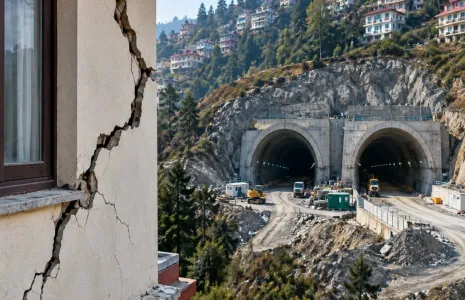
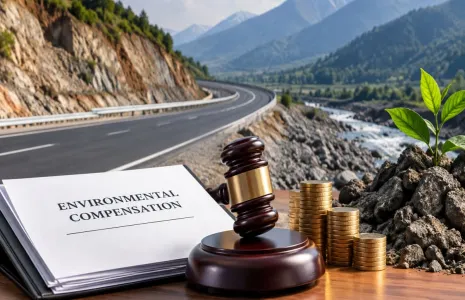
GURANPREET SINGH SARNA elaborates on the changing landscape of arbitration in construction.Construction disputes are highly complex and parties are resorting to dispute resolution and arbitration to resolve them. Arbitration is one of the most preferred mechanisms to resolve disputes. The issues prevalent in construction largely carry high stakes, involved in infrastructure projects, assessment of damages, study of data and involvement of specific technical expertise. Some landmark judgements that have proven effective are discussed in this article for a comprehensive understanding of the sector. National Highways Authority of India v. Sayedabad Tea EstateThe moot question that arises in this matter is whether the application under Section 11 of the Arbitration and Conciliation Act 1996 is maintainable in view of Section 3G(5) of the National Highways Act 1956. It is concluded that the National Highways Act 1956 will prevail over the Arbitration and Conciliation Act 1996. In the said matter, the Court upheld that the Central Government shall consider and appoint an arbitrator in terms of Section 3G(5) of the Act 1956 within a period of 30 days with prior intimation to the respondents. As the litigation has consumed 12 years, it is considered appropriate to further observe that the arbitrator so appointed by the Central Government may adjudicate and decide the dispute within a reasonable time but in no case later than six months after the respondent/applicant record its presence in the proceedings. The Apex Court held that the expression ‘subject to’ as used in Section 3G(5) of the National Highways Act clearly indicates that the legislation intended to give overriding effect to the provisions of the National Highways Act where it relates to the appointment of the arbitrator to be made by the Central Government. Therefore, it was held that Section 11 of 1996 Act has no application in the present case.Union of India v. Parmar Construction Co., 2019 (2) ARBLR 328 (SC)In this matter, the High Court held that an independent arbitrator can be appointed by the High Court only after adhering to the procedure agreed by the parties.The questions that arise for consideration in the matter are whether:The High Court was justified in invoking the amended provision introduced by the Arbitration and Conciliation (Amendment Act) 2015 with effect from October 23, 2015 The arbitration agreement stands discharged on acceptance of the amount and signing no claim/discharge certificate It was permissible for the High Court under Section 11(6) of the Arbitration and Conciliation Act, 1996 (prior to the Amendment Act 2015) to appoint a third-party or independent arbitrator when the parties have mutually agreed for the procedure vis-à-vis the authority to appoint the designated arbitrator. The High Court has passed separate orders in exercise of its powers under Section 11(6) of the Arbitration and Conciliation Act 1996 in appointing an independent arbitrator without adhering to the mutually agreed procedure under the agreement executed between the parties.The Apex Court held that the High Court was not justified in appointing an independent arbitrator without resorting to the procedure for appointment of an arbitrator prescribed under Clause 64(3) of the contract under the inbuilt mechanism as agreed by the parties.Consequently, the orders passed by the High Court are quashed and set aside. The appellants are directed to appoint the arbitrator in terms of clause 64(3) of the agreement within a period of one month under intimation to each of the respondents/contractors.And as sufficient time has been consumed at the first stage itself in the appointment of an arbitrator and the majority of respondents being petty contractors, the statement of claim be furnished by each of the respondents within four weeks thereafter; the arbitrator may decide the claim after affording the opportunity of hearing to the parties expeditiously without being influenced/inhibited by the observations made independently in accordance with law.TRF v. Energo Engineering Projects, AIR 2017 SC 3889 In this matter, it is clarified  that another arbitrator cannot be appointed by an individual who is ineligible to be appointed as an arbitrator. Retrospective effect will apply to the decision in such matters. The seminal issues that emanate for consideration are whether the High Court, while dealing with the applications under Section 11(6) of the Arbitration and Conciliation Act 1996, is justified to repel the submissions of the appellants that once the person who was required to arbitrate upon the disputes arisen under the terms and conditions of the contract becomes ineligible by operation of law, he would not be eligible to nominate a person as an arbitrator; and, second, a plea that pertains to statutory disqualification of the nominated arbitrator can be raised before the court in application preferred under Section 11(6) of the Act, for such an application is not incompetent.It is concluded that once the arbitrator has become ineligible by operation of law, he cannot nominate another as an arbitrator. The arbitrator becomes ineligible as per the prescription contained in Section 12(5) of the Arbitration and Conciliation Act, 1996. It is inconceivable in law that a person who is statutorily ineligible can nominate a person. Needless to say, once the infrastructure collapses, the superstructure is bound to collapse. One cannot have a building without the plinth. Or, to put it differently, once the identity of the managing director as the sole arbitrator is lost, the power to nominate someone else as an arbitrator is obliterated. In conclusionThe judiciary is cognisant of long-drawn litigations and their impact on development. The above judgements are attempts towards effective and faster resolution of disputes for the overall benefits of the parties involved in disputes. It also emphasises that the role of arbitrators is significant for offering impartial judgements. This will offer much-needed respite to the parties and justice for all. About the author: Guranpreet Singh Sarna, Associate Partner, Dhir & Dhir Associates, has over 10 years of experience in practice areas such as projects and infrastructure, project finance and the capital market. Apart from being part of some major infrastructure projects, he is proficient in EPC and PPP projects. To share your views, write in at feedback@ConstructionWorld.in

Next Story
Real Estate

The Workplace Reset

If the past few years have seen sustainability emerge as a buzzword in the design of commercial spaces, the next few years will see the focus shift to ‘experience’. Workplaces that prioritise superior employee experiences consistently report stronger talent attraction and higher retention rates and productivity, while using resources sustainably.First things first; what sort of experiences are expected from a workplace?As Vandana Dhawan Saxena, Founder and Design Principal, Studio IV Designs, explains, “Offices have grown into environments that need to support various kinds of experience..

Next Story
Infrastructure Urban

Designing Human-Centric High-Rises

The Institution of Engineers (India) (IEI), Navi Mumbai Local Centre, under the aegis of the Architectural Engineering Division Board, organised a one-day national seminar, ‘Reaching New Heights – Overcoming High-Rise Construction Challenges’, at CBD Belapur, Navi Mumbai.The seminar brought together architects, engineers, planners, developers, academicians and industry professionals to deliberate on the design, construction, operation and sustainability of tall buildings in rapidly urbanising cities...To read the full article Click Here ..

Next Story
Infrastructure Urban

Carbon-negative and ultra-low carbon are not just claims!

In an interaction with Construction World, Tarun Jami, Founder, GreenJams, explains how the company is cutting cement’s carbon footprint by 80 per cent through Binder, while scaling innovations such as Agrocrete® and Novastone to make buildings lighter, faster and carbon-negative.Agrocrete® is positioned as a carbon-negative material. What does this mean for developers?For developers, Agrocrete® offers a practical way to reduce embodied carbon at the material level. Since walling forms a significant part of a building’s material footprint, using carbon-negative blocks can bring the net ..

Advertisement

Subscribe to Our Newsletter

Get daily newsletters around different themes from Construction world.

STAY CONNECTED

Advertisement

Advertisement

Advertisement