

+
India to Spend Rs 12.2 Trillion on Infrastructure in FY27
Equipment

India to Spend Rs 12.2 Trillion on Infrastructure in FY27

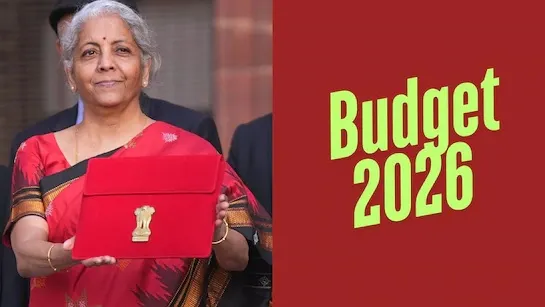
India’s federal government has announced a record infrastructure outlay of Rs 12.2 trillion for fiscal year 2027, marking an 11.4 per cent year-on-year increase as it seeks to accelerate economic growth amid a volatile global environment. The allocation, outlined in the Union Budget presented by Nirmala Sitharaman, underlines the government’s continued reliance on public capital expenditure to support growth, job creation and industrial expansion.

Infrastructure spending has been scaled up significantly in the post-COVID period, positioning it as a key lever to stimulate demand in Asia’s third-largest economy and the world’s most populous nation. Alongside infrastructure, the Budget places a renewed emphasis on strengthening India’s manufacturing base, aligning with the long-term vision of positioning the country as a global production hub.

According to the revised estimates, the government’s capital expenditure for the ongoing fiscal year ending March 2026 has been adjusted to Rs 10.95 trillion, slightly lower than the earlier budgeted Rs 11.21 trillion, which had been the highest allocation on record at the time.

Industry leaders have broadly welcomed the Budget’s direction. Deepak Shetty, MD & CEO, JCB India, said the Budget charts a transformative course towards a ‘Viksit Bharat’, with a strong focus on scaling manufacturing across seven strategic sectors and promoting champion MSMEs. He highlighted the emphasis on domestic manufacturing of high-value capital goods such as tunnel boring machines, earthmoving equipment and cranes as a major positive for the construction equipment industry, alongside infrastructure initiatives including seven high-speed rail corridors.

Echoing similar views, Shalabh Chaturvedi, Managing Director, India & SAARC, CASE Construction Equipment, described the increase in public capital expenditure to Rs 12.2 trillion as a decisive push for infrastructure. He noted that the proposed Scheme for Enhancement of Construction and Infrastructure Equipment would support domestic production of technologically advanced equipment and reinforce the vision of Aatmanirbhar Bharat. He also pointed to opportunities arising from City Economic Regions, freight corridors and the expansion of national waterways under PM Gati Shakti.

From a market development perspective, Puneet Vidyarthi, Head of Brand Marketing, CASE Construction India & APAC, observed that the Budget’s focus on infrastructure-led growth beyond metros could accelerate economic activity in semi-urban and rural markets, while underlining the importance of building skills at the grassroots level.

Manufacturers also see policy continuity as a key enabler. Sorab Agrawal, Executive Director, ACE, said recognising construction and infrastructure equipment as critical growth enablers would help improve productivity, safety and technological capability at project sites, while reducing import dependence and supporting domestic manufacturing.

From a broader industrial and macroeconomic standpoint, Sunil Mathur, MD & CEO, Siemens Limited, welcomed the sustained focus on infrastructure and long-term growth, noting that the capital expenditure allocation and a fiscal deficit target of around 4.3 per cent reflect a disciplined approach to strengthening India’s growth foundations.

In the infrastructure development space, Sunil Nair, CEO, Ramky Infrastructure, highlighted proposals such as the Infrastructure Risk Guarantee Fund as forward-looking interventions that could ease financing bottlenecks and encourage private investment. He also pointed to asset monetisation through REITs for CPSE-owned real estate and initiatives such as Chemical Parks, bulk drug parks and the Rs 10,000 crore Biopharma Shakti scheme as measures that would unlock capital and strengthen India’s manufacturing and innovation ecosystem.

Overall, the Union Budget 2026 reinforces infrastructure and manufacturing as central pillars of India’s growth strategy, with industry expecting the record capital outlay to translate into sustained investment momentum and long-term competitiveness.

India’s federal government has announced a record infrastructure outlay of Rs 12.2 trillion for fiscal year 2027, marking an 11.4 per cent year-on-year increase as it seeks to accelerate economic growth amid a volatile global environment. The allocation, outlined in the Union Budget presented by Nirmala Sitharaman, underlines the government’s continued reliance on public capital expenditure to support growth, job creation and industrial expansion.Infrastructure spending has been scaled up significantly in the post-COVID period, positioning it as a key lever to stimulate demand in Asia’s third-largest economy and the world’s most populous nation. Alongside infrastructure, the Budget places a renewed emphasis on strengthening India’s manufacturing base, aligning with the long-term vision of positioning the country as a global production hub.According to the revised estimates, the government’s capital expenditure for the ongoing fiscal year ending March 2026 has been adjusted to Rs 10.95 trillion, slightly lower than the earlier budgeted Rs 11.21 trillion, which had been the highest allocation on record at the time.Industry leaders have broadly welcomed the Budget’s direction. Deepak Shetty, MD & CEO, JCB India, said the Budget charts a transformative course towards a ‘Viksit Bharat’, with a strong focus on scaling manufacturing across seven strategic sectors and promoting champion MSMEs. He highlighted the emphasis on domestic manufacturing of high-value capital goods such as tunnel boring machines, earthmoving equipment and cranes as a major positive for the construction equipment industry, alongside infrastructure initiatives including seven high-speed rail corridors.Echoing similar views, Shalabh Chaturvedi, Managing Director, India & SAARC, CASE Construction Equipment, described the increase in public capital expenditure to Rs 12.2 trillion as a decisive push for infrastructure. He noted that the proposed Scheme for Enhancement of Construction and Infrastructure Equipment would support domestic production of technologically advanced equipment and reinforce the vision of Aatmanirbhar Bharat. He also pointed to opportunities arising from City Economic Regions, freight corridors and the expansion of national waterways under PM Gati Shakti.From a market development perspective, Puneet Vidyarthi, Head of Brand Marketing, CASE Construction India & APAC, observed that the Budget’s focus on infrastructure-led growth beyond metros could accelerate economic activity in semi-urban and rural markets, while underlining the importance of building skills at the grassroots level.Manufacturers also see policy continuity as a key enabler. Sorab Agrawal, Executive Director, ACE, said recognising construction and infrastructure equipment as critical growth enablers would help improve productivity, safety and technological capability at project sites, while reducing import dependence and supporting domestic manufacturing.From a broader industrial and macroeconomic standpoint, Sunil Mathur, MD & CEO, Siemens Limited, welcomed the sustained focus on infrastructure and long-term growth, noting that the capital expenditure allocation and a fiscal deficit target of around 4.3 per cent reflect a disciplined approach to strengthening India’s growth foundations.In the infrastructure development space, Sunil Nair, CEO, Ramky Infrastructure, highlighted proposals such as the Infrastructure Risk Guarantee Fund as forward-looking interventions that could ease financing bottlenecks and encourage private investment. He also pointed to asset monetisation through REITs for CPSE-owned real estate and initiatives such as Chemical Parks, bulk drug parks and the Rs 10,000 crore Biopharma Shakti scheme as measures that would unlock capital and strengthen India’s manufacturing and innovation ecosystem.Overall, the Union Budget 2026 reinforces infrastructure and manufacturing as central pillars of India’s growth strategy, with industry expecting the record capital outlay to translate into sustained investment momentum and long-term competitiveness.

Next Story
Infrastructure Urban

Manohar Lal Inaugurates Municipalika 2026

Union Minister for Housing and Urban Affairs and Power, Shri Manohar Lal, inaugurated Municipalika 2026 at Bharat Mandapam, New Delhi, outlining a comprehensive roadmap for India’s evolving urban landscape under the vision of Viksit Bharat @2047. The three-day exhibition and conference, recognised as India’s only 360-degree platform on safe, smart and sustainable city solutions, is being held from 25 to 27 February 2026. The 18th edition brings together ministers, mayors, municipal commissioners, Smart City CEOs, policymakers, planners and technology providers to deliberate on governance,..

Next Story
Infrastructure Urban

Enlight Metals Speeds Metal Deliveries by 35%

Enlight Metals has introduced its Agentic AI-enabled procurement platform aimed at addressing long-standing inefficiencies in India’s metal supply chain. The company reports 35 per cent faster procurement cycles and delivery timelines of up to 24 hours across major industrial regions. As infrastructure and manufacturing activity intensify, metal sourcing has remained constrained by fragmented supply networks, limited demand visibility and manual coordination. Enlight Metals’ platform integrates Agentic AI across sourcing, inventory management and logistics, replacing reactive workflows wi..

Next Story
Infrastructure Energy

Critical Minerals Key to India’s Clean Energy Push

A new report released by FICCI in collaboration with Deloitte underscores the strategic importance of critical minerals and rare earth elements (REEs) in supporting India’s clean energy transition, industrial competitiveness and long-term economic security. As India moves towards 500 GW of renewable capacity, 30 per cent EV penetration by 2030 and net-zero emissions by 2070, access to lithium, nickel, cobalt, graphite, copper and REEs will be central to achieving these targets. The study highlights that mineral security is emerging as a decisive factor in sustaining economic growth and tech..

Advertisement

Subscribe to Our Newsletter

Get daily newsletters around different themes from Construction world.

STAY CONNECTED

Advertisement

Advertisement

Advertisement

Open In App