


Sinoboom Launches i-Link Telematics Platform
Equipment

Sinoboom Launches i-Link Telematics Platform

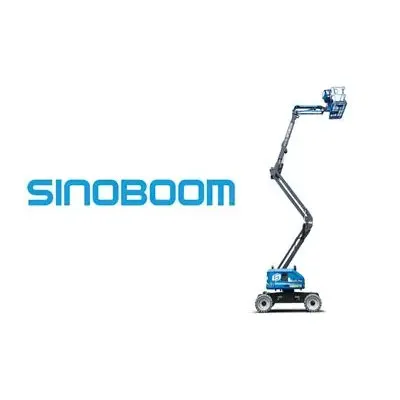
Sinoboom has recently announced the launch of Sinoboom i-Link, its proprietary telematics platform designed to deliver end-to-end digital management across the full equipment lifecycle, from delivery to daily operations. The globally oriented IoT solution integrates equipment connectivity, monitoring, remote control, standardised APIs and the core functions of Sinoboom’s existing Customer Service Management platform.
At the heart of the system is the Sinoboom T-Box, which enables real-time visibility into machine operating status and performance. The hardware has been engineered for simplicity, scalability and durability, supporting long-term deployment across diverse operating environments. Equipped with 5G connectivity and WiFi fallback, the T-Box supports multi-location data collection through a multi-CAN bus setup and is Modbus-ready, allowing Modbus and J1939 protocols to be integrated into a unified data framework.
The platform supports remote firmware upgrades via OTA and is built with extendable OEM applications in mind. Beyond data collection, Sinoboom i-Link enables remote control of key machine functions, improving operational efficiency while giving fleet managers clear visibility of utilisation, operating status and asset location. Features such as remote locking, GPS tracking, remote diagnostics and proactive maintenance reminders help enhance security, reduce downtime and streamline servicing.
Sinoboom i-Link also offers advanced fleet analytics and remote software management, converting operational data into actionable insights such as utilisation trends and failure analysis. Firmware updates can be deployed remotely across selected machines through FOTA, significantly reducing service interventions and machine downtime. Powered by AI, the platform supports predictive fault alerts and maintenance guidance, with further intelligent capabilities planned as the system evolves.
Ben Xie, Head of the Sinoboom Intelligent Research Institute and Global CIO, said the platform has been developed with fleet managers at its core, combining AI-driven intelligence with practical telematics features to help customers improve uptime, reduce operating costs and maintain greater control over their fleets.  

Sinoboom has recently announced the launch of Sinoboom i-Link, its proprietary telematics platform designed to deliver end-to-end digital management across the full equipment lifecycle, from delivery to daily operations. The globally oriented IoT solution integrates equipment connectivity, monitoring, remote control, standardised APIs and the core functions of Sinoboom’s existing Customer Service Management platform.At the heart of the system is the Sinoboom T-Box, which enables real-time visibility into machine operating status and performance. The hardware has been engineered for simplicity, scalability and durability, supporting long-term deployment across diverse operating environments. Equipped with 5G connectivity and WiFi fallback, the T-Box supports multi-location data collection through a multi-CAN bus setup and is Modbus-ready, allowing Modbus and J1939 protocols to be integrated into a unified data framework.The platform supports remote firmware upgrades via OTA and is built with extendable OEM applications in mind. Beyond data collection, Sinoboom i-Link enables remote control of key machine functions, improving operational efficiency while giving fleet managers clear visibility of utilisation, operating status and asset location. Features such as remote locking, GPS tracking, remote diagnostics and proactive maintenance reminders help enhance security, reduce downtime and streamline servicing.Sinoboom i-Link also offers advanced fleet analytics and remote software management, converting operational data into actionable insights such as utilisation trends and failure analysis. Firmware updates can be deployed remotely across selected machines through FOTA, significantly reducing service interventions and machine downtime. Powered by AI, the platform supports predictive fault alerts and maintenance guidance, with further intelligent capabilities planned as the system evolves.Ben Xie, Head of the Sinoboom Intelligent Research Institute and Global CIO, said the platform has been developed with fleet managers at its core, combining AI-driven intelligence with practical telematics features to help customers improve uptime, reduce operating costs and maintain greater control over their fleets.  

Next Story
Infrastructure Urban

Implementation Status of Jal Jeevan Mission

Since August 2019 the Government has implemented Jal Jeevan Mission to provide assured potable water through household tap connections in rural India. At the start of the mission only 32.3 million (mn) rural households, representing 16.7 per cent, were reported to have tap water connections. States and union territories have reported that 125.8 mn additional rural households have since been provided with tap connections. As a result, of about 193.6 mn rural households roughly 158.2 mn, or 81.71 per cent, are reported to have tap water supply at home.\n\nThe State, district and village level st..

Next Story
Infrastructure Urban

Jal Jeevan Mission Reaches Eighty One Per Cent Rural Coverage

The Government reported substantial progress under the Jal Jeevan Mission, launched in August 2019 to provide tap water to every rural household. At launch only 32.3 million (mn) rural households had tap connections and states and Union territories reported provision of 125.8 mn additional households by March 2026. Consequently, out of about 193.6 mn rural households around 158.2 mn, or 81.71 per cent, are reported to have tap water at home. The Finance Minister announced extension of the mission until 2028 in the 2025-26 budget speech. The Swachh Bharat Mission Grameen, launched in October 20..

Next Story
Infrastructure Urban

Empowering Local Governance for Sustainable Rural Water Supply

The Ministry of Jal Shakti has aligned the Jal Jeevan Mission (JJM) with the 73rd Amendment to strengthen village level planning and community ownership of water supply. Gram Panchayats, village water and sanitation committees and Pani Samitis are to plan, implement, manage and maintain piped water systems, with gram sabha processes formalising handover and oversight. Implementation support agencies including non government organisations, community based organisations and self help groups have been empanelled to train local committees and promote women participation. Under JJM, the department ..

Advertisement

Subscribe to Our Newsletter

Get daily newsletters around different themes from Construction world.

STAY CONNECTED

Advertisement

Advertisement

Advertisement