

Bokaro Steel to Remove Illegal Occupants
Real Estate

Bokaro Steel to Remove Illegal Occupants

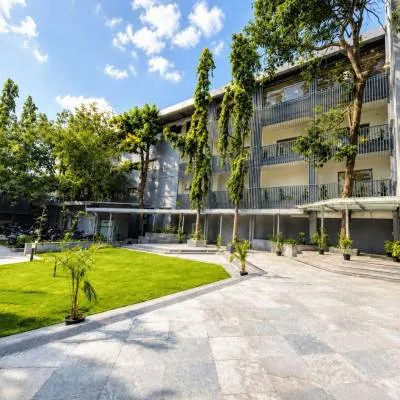
Bokaro Steel Plant is gearing up for a comprehensive mapping exercise aimed at identifying and removing illegal occupants from its residential quarters. This proactive initiative underscores the company's commitment to reclaiming its properties and ensuring compliance with housing regulations.

The mapping exercise will involve a thorough survey of residential quarters to identify unauthorised occupants and verify the rightful residents. Bokaro Steel Plant aims to streamline occupancy and address issues of unauthorised occupation, thereby optimising housing resources and maintaining the integrity of its residential facilities.

Illegal occupation of residential quarters not only poses challenges for Bokaro Steel Plant in terms of resource allocation but also raises concerns regarding safety, security, and maintenance of the premises. By conducting this mapping exercise, the company aims to reclaim its properties and enforce discipline in housing allocation.

Furthermore, the initiative reflects Bokaro Steel Plant's adherence to regulatory guidelines and commitment to upholding transparency and fairness in its housing policies. The mapping exercise will enable the company to ensure that residential quarters are allocated to eligible beneficiaries in accordance with established procedures.

As Bokaro Steel Plant embarks on this mapping exercise, stakeholders anticipate a more efficient and equitable allocation of residential quarters, benefiting eligible employees and their families. The initiative underscores the company's proactive approach to addressing housing-related challenges and optimising its resources for the well-being of its workforce.

"Join industry leaders at RAHSTA Expo, India's premier platform for roads, highways and traffic infrastructure. Register now to explore innovations, network with experts and shape the future of mobility."

Bokaro Steel Plant is gearing up for a comprehensive mapping exercise aimed at identifying and removing illegal occupants from its residential quarters. This proactive initiative underscores the company's commitment to reclaiming its properties and ensuring compliance with housing regulations. The mapping exercise will involve a thorough survey of residential quarters to identify unauthorised occupants and verify the rightful residents. Bokaro Steel Plant aims to streamline occupancy and address issues of unauthorised occupation, thereby optimising housing resources and maintaining the integrity of its residential facilities. Illegal occupation of residential quarters not only poses challenges for Bokaro Steel Plant in terms of resource allocation but also raises concerns regarding safety, security, and maintenance of the premises. By conducting this mapping exercise, the company aims to reclaim its properties and enforce discipline in housing allocation. Furthermore, the initiative reflects Bokaro Steel Plant's adherence to regulatory guidelines and commitment to upholding transparency and fairness in its housing policies. The mapping exercise will enable the company to ensure that residential quarters are allocated to eligible beneficiaries in accordance with established procedures. As Bokaro Steel Plant embarks on this mapping exercise, stakeholders anticipate a more efficient and equitable allocation of residential quarters, benefiting eligible employees and their families. The initiative underscores the company's proactive approach to addressing housing-related challenges and optimising its resources for the well-being of its workforce.

Next Story
Real Estate

The Workplace Reset

If the past few years have seen sustainability emerge as a buzzword in the design of commercial spaces, the next few years will see the focus shift to ‘experience’. Workplaces that prioritise superior employee experiences consistently report stronger talent attraction and higher retention rates and productivity, while using resources sustainably.First things first; what sort of experiences are expected from a workplace?As Vandana Dhawan Saxena, Founder and Design Principal, Studio IV Designs, explains, “Offices have grown into environments that need to support various kinds of experience..

Next Story
Infrastructure Urban

Designing Human-Centric High-Rises

The Institution of Engineers (India) (IEI), Navi Mumbai Local Centre, under the aegis of the Architectural Engineering Division Board, organised a one-day national seminar, ‘Reaching New Heights – Overcoming High-Rise Construction Challenges’, at CBD Belapur, Navi Mumbai.The seminar brought together architects, engineers, planners, developers, academicians and industry professionals to deliberate on the design, construction, operation and sustainability of tall buildings in rapidly urbanising cities...To read the full article Click Here ..

Next Story
Infrastructure Urban

Carbon-negative and ultra-low carbon are not just claims!

In an interaction with Construction World, Tarun Jami, Founder, GreenJams, explains how the company is cutting cement’s carbon footprint by 80 per cent through Binder, while scaling innovations such as Agrocrete® and Novastone to make buildings lighter, faster and carbon-negative.Agrocrete® is positioned as a carbon-negative material. What does this mean for developers?For developers, Agrocrete® offers a practical way to reduce embodied carbon at the material level. Since walling forms a significant part of a building’s material footprint, using carbon-negative blocks can bring the net ..

Advertisement

Subscribe to Our Newsletter

Get daily newsletters around different themes from Construction world.

STAY CONNECTED

Advertisement

Advertisement

Advertisement