

India Joins Pax Silica To Secure Global Silicon Stack
Technology

India Joins Pax Silica To Secure Global Silicon Stack

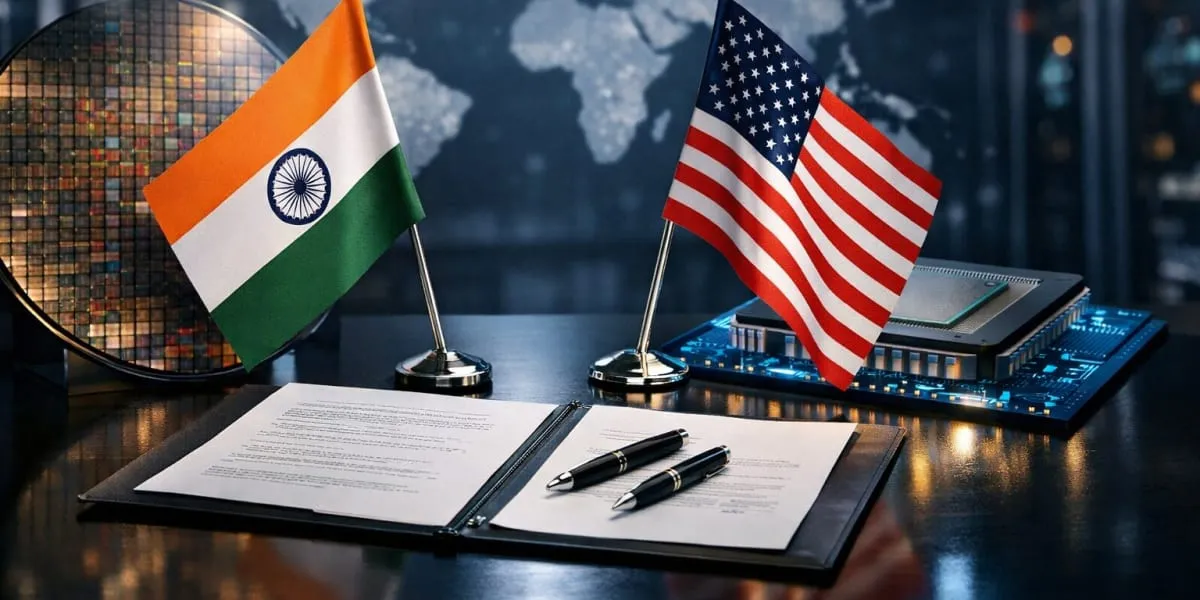
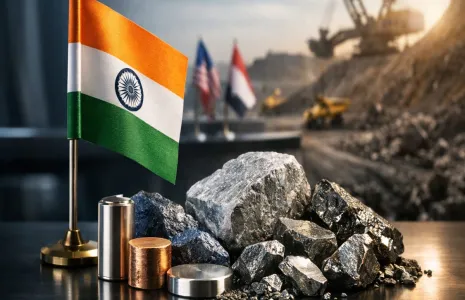
On the fifth day of the India AI Impact Summit 2026, India formally joined the Pax Silica coalition, marking a significant milestone in strategic technology and supply chain cooperation with the United States. The signing brought together senior government leaders and signalled a shared commitment to securing the full technology stack that will power the AI driven global economy. The initiative was described as aimed at reducing overconcentration in global supply chains and preventing economic coercion while promoting governance by open, democratic societies.\n\nMinister of Electronics and Information Technology Ashwini Vaishnaw characterised the event as more than a ceremony and framed it as the building of future foundations and opportunities for younger generations. He drew attention to compounding growth since 1947 and highlighted India’s expanding semiconductor capabilities, saying that engineers in India are designing two-nanometre chips. He also noted that the semiconductor industry will require around one million (mn) new skilled professionals, which presents a substantial opportunity for the country.\n\nUnited States Under Secretary of State for Economic Growth, Energy, and the Environment Jacob Helberg set out the declaration as a roadmap for a shared future and affirmed that economic security equates to national security. The US Ambassador to India Sergio Gor characterised India’s entry into the coalition as strategic and essential and explained that the effort seeks to secure the chain from critical mineral extraction to fabrication fabs and data centre deployment of frontier AI. Senior industry voices at a subsequent fireside discussion reiterated the need for resilient, secure supply chains and cooperative innovation to advance AI for public benefit.\n\nOfficials underlined the democratic foundation of the partnership and stated that the initiative reflects a deliberate effort by like minded nations to shape the twenty first century economic and technological order. The summit outcomes positioned India within a future global tech ecosystem centred on partnership, resilience and freedom and indicated a coordinated national push across AI, semiconductors and critical minerals. Participants said the pact aims to ensure that advanced technologies are developed and governed in line with democratic values.

On the fifth day of the India AI Impact Summit 2026, India formally joined the Pax Silica coalition, marking a significant milestone in strategic technology and supply chain cooperation with the United States. The signing brought together senior government leaders and signalled a shared commitment to securing the full technology stack that will power the AI driven global economy. The initiative was described as aimed at reducing overconcentration in global supply chains and preventing economic coercion while promoting governance by open, democratic societies.\n\nMinister of Electronics and Information Technology Ashwini Vaishnaw characterised the event as more than a ceremony and framed it as the building of future foundations and opportunities for younger generations. He drew attention to compounding growth since 1947 and highlighted India’s expanding semiconductor capabilities, saying that engineers in India are designing two-nanometre chips. He also noted that the semiconductor industry will require around one million (mn) new skilled professionals, which presents a substantial opportunity for the country.\n\nUnited States Under Secretary of State for Economic Growth, Energy, and the Environment Jacob Helberg set out the declaration as a roadmap for a shared future and affirmed that economic security equates to national security. The US Ambassador to India Sergio Gor characterised India’s entry into the coalition as strategic and essential and explained that the effort seeks to secure the chain from critical mineral extraction to fabrication fabs and data centre deployment of frontier AI. Senior industry voices at a subsequent fireside discussion reiterated the need for resilient, secure supply chains and cooperative innovation to advance AI for public benefit.\n\nOfficials underlined the democratic foundation of the partnership and stated that the initiative reflects a deliberate effort by like minded nations to shape the twenty first century economic and technological order. The summit outcomes positioned India within a future global tech ecosystem centred on partnership, resilience and freedom and indicated a coordinated national push across AI, semiconductors and critical minerals. Participants said the pact aims to ensure that advanced technologies are developed and governed in line with democratic values.

Next Story
Infrastructure Urban

MIDC and Ramky Unit Sign Concession for Life Sciences Park

Maharashtra Industrial Development Corporation has signed a concession agreement with Maha Integrated Life Sciences City Limited (MILeS City), a wholly owned subsidiary of Ramky Infrastructure Limited (RIL), to develop a high-tech pharmaceutical park at Dighi Port Industrial Area in Raigad. The project will follow a public-private partnership under a DBFOT model and has an estimated cost of Rs 30 billion (Rs 30 bn). The concession will run for 95 years, including a five-year construction phase, with MILeS City responsible for development and management. The development will occupy approximatel..

Next Story
Real Estate

BuzzWorks Leases Hyderabad Office to MyComplianceOffice

Brigade Group’s managed workspace provider BuzzWorks has leased 550 seats at Mindspace Business Park in Hyderabad to Dublin based MyComplianceOffice, in what is the company’s largest office in India. With this signing, BuzzWorks' total leased office space in Hyderabad stands at zero point one one million (mn) square feet. The new premises will house core functions including product engineering, product management, customer success and global operations. Artificial intelligence enabled compliance technology initiatives will also be part of the local delivery model. BuzzWorks will provide wo..

Next Story
Infrastructure Transport

Jindal Stainless Flags Operational Strain From Middle East Crisis

Jindal Stainless warned that the Middle East war crisis has affected its operations because of dependence on industrial gases such as propane and LPG and on natural gas. The scrap-based production route used by the stainless steel maker does not generate blast furnace or coke oven gases internally, unlike the conventional steel industry. Several plant processes have been adversely impacted and production is being run at rationalised capacity. Disruptions in global shipping routes have resulted in vessel diversions, longer transit times and cargo delays, adding pressure to supply chains and to ..

Advertisement

Subscribe to Our Newsletter

Get daily newsletters around different themes from Construction world.

STAY CONNECTED

Advertisement

Advertisement

Advertisement