
MIT-WPU Develops Safer Hydrogen Transport Technology
Technology

MIT-WPU Develops Safer Hydrogen Transport Technology

Researchers at MIT World Peace University (MIT-WPU) have developed a safer and more cost-effective technology for transporting hydrogen, addressing a major bottleneck in India’s clean energy transition. The team has engineered a Liquid Organic Hydrogen Carrier (LOHC) system that allows hydrogen to be transported in a stable, non-flammable and non-explosive liquid form under normal temperature and pressure conditions.

The breakthrough removes one of the key barriers to the large-scale adoption of hydrogen, which has long been constrained by safety risks and high transportation costs. Traditionally, hydrogen must be compressed at extremely high pressures or liquefied at temperatures below minus 253 degrees Celsius, both of which require complex infrastructure and significant investment.

According to Prof. (Dr.) Rajib Kumar Sinharay, Principal Investigator, the research demanded exceptional persistence. Initial experiments showed no visible results for nearly fifty days, but after close to ten months and around one hundred trials, the team achieved a milestone that has not been previously documented. He noted that building an entirely new methodology from scratch was challenging, but ultimately demonstrated the value of sustained scientific effort.

The project began when Ohm Cleantech Private Limited (OCPL), part of the h2e Power Group, approached MIT-WPU to solve a problem that had remained unresolved even at leading institutions. With no existing documented methodology in India or globally, the researchers and OCPL jointly conceptualised and developed the process. Details of the innovation remain confidential as the company proceeds with international patent filings.

OCPL founder Siddharth Mayur said the progress marks a significant step towards safe, innovative and scalable hydrogen transport. He added that the company is keen to commercialise the technology in alignment with the National Green Hydrogen Mission and the vision of Atmanirbhar Bharat.

MIT-WPU’s LOHC system works through a two-stage chemical process. During hydrogenation, hydrogen is chemically bonded into a specially designed organic liquid, enabling safe storage and transport. At the destination, the dehydrogenation process releases the hydrogen, while the carrier liquid remains reusable. This approach allows hydrogen to be handled using existing fuel tankers, storage systems and potentially standard pipelines, sharply reducing costs and operational risks.

Laboratory trials have delivered results that place India at the forefront of LOHC research. The team achieved complete hydrogen storage within two hours, compared with up to eighteen hours reported in global studies. The process operated at 130 degrees Celsius and a pressure of 56 bar, lower than conventional benchmarks. Nearly 11,000 litres of hydrogen were stored in just 15.6 litres of carrier liquid, while dehydrogenation tests recovered 86 per cent of the stored hydrogen, with further optimisation underway.

Research Advisor Prof. Datta Dandge said the ability to transport hydrogen like any other industrial liquid could remove long-standing safety and regulatory barriers, accelerating the country’s hydrogen mission and transforming clean-energy logistics for transport and heavy industry.

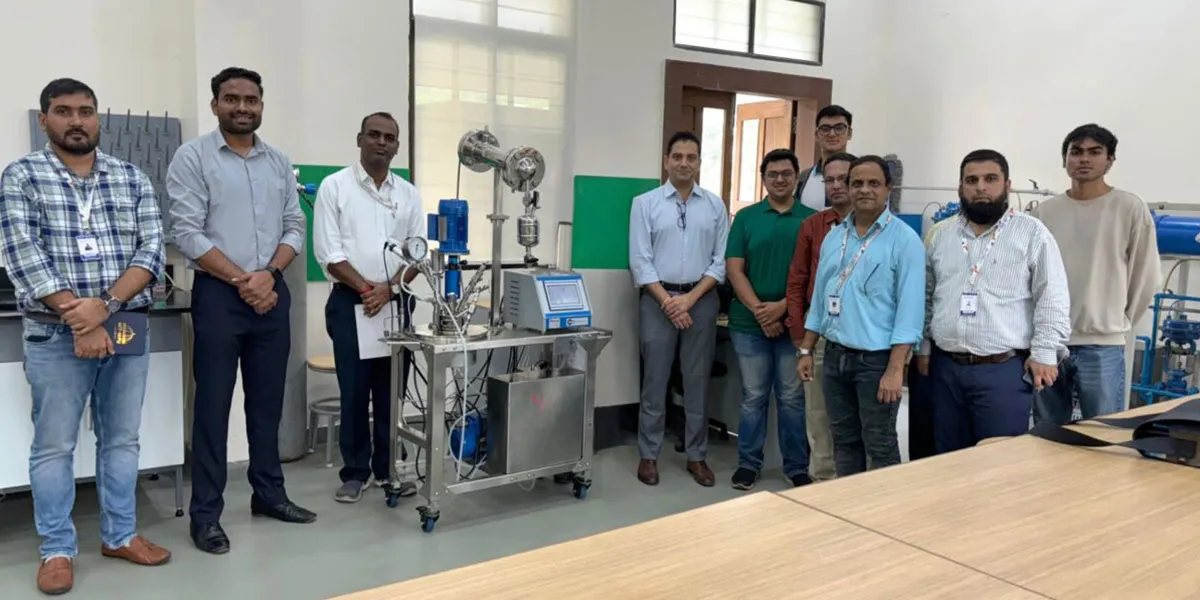
The research was conducted at MIT-WPU’s advanced hydrogen laboratory, equipped with systems capable of operating at temperatures up to 350 degrees Celsius and pressures of 200 bar. The team is now focused on refining the process and scaling it from laboratory success to industrial deployment.

Project Fellow and PhD student Nishant Patil described the work as a defining experience, adding that contributing to a breakthrough with national impact strengthened his commitment to advancing innovation in India’s clean energy ecosystem.

Researchers at MIT World Peace University (MIT-WPU) have developed a safer and more cost-effective technology for transporting hydrogen, addressing a major bottleneck in India’s clean energy transition. The team has engineered a Liquid Organic Hydrogen Carrier (LOHC) system that allows hydrogen to be transported in a stable, non-flammable and non-explosive liquid form under normal temperature and pressure conditions. The breakthrough removes one of the key barriers to the large-scale adoption of hydrogen, which has long been constrained by safety risks and high transportation costs. Traditionally, hydrogen must be compressed at extremely high pressures or liquefied at temperatures below minus 253 degrees Celsius, both of which require complex infrastructure and significant investment. According to Prof. (Dr.) Rajib Kumar Sinharay, Principal Investigator, the research demanded exceptional persistence. Initial experiments showed no visible results for nearly fifty days, but after close to ten months and around one hundred trials, the team achieved a milestone that has not been previously documented. He noted that building an entirely new methodology from scratch was challenging, but ultimately demonstrated the value of sustained scientific effort. The project began when Ohm Cleantech Private Limited (OCPL), part of the h2e Power Group, approached MIT-WPU to solve a problem that had remained unresolved even at leading institutions. With no existing documented methodology in India or globally, the researchers and OCPL jointly conceptualised and developed the process. Details of the innovation remain confidential as the company proceeds with international patent filings. OCPL founder Siddharth Mayur said the progress marks a significant step towards safe, innovative and scalable hydrogen transport. He added that the company is keen to commercialise the technology in alignment with the National Green Hydrogen Mission and the vision of Atmanirbhar Bharat. MIT-WPU’s LOHC system works through a two-stage chemical process. During hydrogenation, hydrogen is chemically bonded into a specially designed organic liquid, enabling safe storage and transport. At the destination, the dehydrogenation process releases the hydrogen, while the carrier liquid remains reusable. This approach allows hydrogen to be handled using existing fuel tankers, storage systems and potentially standard pipelines, sharply reducing costs and operational risks. Laboratory trials have delivered results that place India at the forefront of LOHC research. The team achieved complete hydrogen storage within two hours, compared with up to eighteen hours reported in global studies. The process operated at 130 degrees Celsius and a pressure of 56 bar, lower than conventional benchmarks. Nearly 11,000 litres of hydrogen were stored in just 15.6 litres of carrier liquid, while dehydrogenation tests recovered 86 per cent of the stored hydrogen, with further optimisation underway. Research Advisor Prof. Datta Dandge said the ability to transport hydrogen like any other industrial liquid could remove long-standing safety and regulatory barriers, accelerating the country’s hydrogen mission and transforming clean-energy logistics for transport and heavy industry. The research was conducted at MIT-WPU’s advanced hydrogen laboratory, equipped with systems capable of operating at temperatures up to 350 degrees Celsius and pressures of 200 bar. The team is now focused on refining the process and scaling it from laboratory success to industrial deployment. Project Fellow and PhD student Nishant Patil described the work as a defining experience, adding that contributing to a breakthrough with national impact strengthened his commitment to advancing innovation in India’s clean energy ecosystem.

Next Story
Real Estate

Sumadhura To Invest Rs 6,000 Million In Telangana Industrial Park

Sumadhura Group, one of South India’s leading real estate developers, has signed a memorandum of understanding with the Government of Telangana at the Telangana Rising Global Summit 2025, held at Bharat Future City. The agreement aligns with the state’s long-term vision to become a USD 3 trillion economy by 2047 through sustained investment in manufacturing, infrastructure, logistics and advanced industries. Under the MoU, Sumadhura Group will invest Rs 6,000 million over a two-year period to develop a 100-acre Grade A+ Industrial Park in Telangana. The project is aimed at attracting glob..

Next Story
Equipment

Liebherr Dozers Power MXGP Latvia Track Preparation

Liebherr’s PR 716 crawler dozers played a crucial role in the preparation and upkeep of the MXGP of Latvia 2025 track, delivering reliable performance under wet and demanding conditions. With operating weights between 13,300 kg and 15,800 kg and a 97 kW (132 hp) engine, the machines were well suited to reshaping and maintaining the circuit throughout the event. The crawler dozers were instrumental in smoothing the track surface and managing moisture-related challenges, ensuring optimal riding conditions. Advanced features such as precise blade control and efficient fuel consumption helped m..

Next Story
Equipment

TIL Unveils Three Indigenous Lifts At EXCON 2025

TIL Limited, India’s material handling and infrastructure equipment manufacturer, has unveiled three fully indigenous products at EXCON 2025, the country’s flagship construction equipment exhibition held at the Bangalore International Exhibition Centre. The launches underscore TIL’s focus on engineering excellence, safety and Make in India manufacturing, as it positions itself as a comprehensive solutions provider for India’s infrastructure growth. EXCON 2025 brings together more than 1,200 exhibitors and thousands of industry professionals, offering a platform for TIL to showcase its..

Advertisement

Subscribe to Our Newsletter

Get daily newsletters around different themes from Construction world.

STAY CONNECTED

Advertisement

Advertisement

Advertisement

Advertisement

Open In App