+
Amit Shah Launches Bharat Taxi Cooperative Ride-hailing Platform
ECONOMY & POLICY

Amit Shah Launches Bharat Taxi Cooperative Ride-hailing Platform

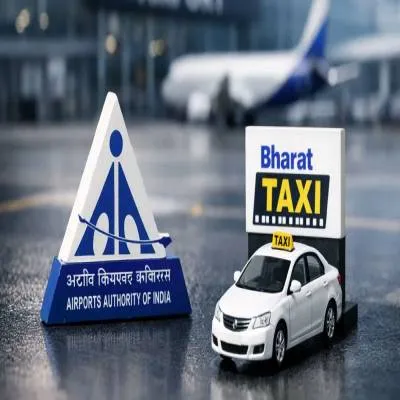
Union Minister Amit Shah launched Bharat Taxi, the first cooperative-led ride-hailing platform, in New Delhi on Monday. He presented the initiative as a means to empower drivers through collective ownership and local governance. The platform was described as seeking to provide an alternative to existing models by prioritising driver welfare and fairer revenue sharing. The launch ceremony highlighted the role of cooperative societies in fostering inclusive economic participation.

The cooperative model will allow drivers to become members and participate in decision making, including governance and service standards. Authorities indicated the structure is intended to reduce dependence on traditional investor-driven platforms and to circulate earnings more directly among driver members. Officials emphasised measures to improve working conditions, vehicle standards and customer safety without providing immediate granular operational details. Membership rules were explained as aiming to ensure democratic control and transparent allocation of platform earnings.

The launch is expected to begin with a phased rollout across the capital and to extend subsequently to Gujarat and Ahmedabad as part of an incremental expansion strategy. Organisers outlined that partnerships with local bodies and unions would be pursued to facilitate onboarding and regulatory compliance. The platform aims to attract drivers by offering competitive commissions and by leveraging cooperative principles to build trust. Organisers noted that driver training and customer service protocols would form part of the rollout framework.

The initiative aligns with a broader push to promote cooperative enterprises and to diversify options in the urban mobility sector. Observers suggested that a cooperative alternative could alter market dynamics and provide commuters with additional choices while addressing driver grievances. The government indicated continued support for innovations that aim to balance commercial viability with social objectives. Analysts will watch how the model scales and whether it can reconcile service quality with member centric governance.

Union Minister Amit Shah launched Bharat Taxi, the first cooperative-led ride-hailing platform, in New Delhi on Monday. He presented the initiative as a means to empower drivers through collective ownership and local governance. The platform was described as seeking to provide an alternative to existing models by prioritising driver welfare and fairer revenue sharing. The launch ceremony highlighted the role of cooperative societies in fostering inclusive economic participation. The cooperative model will allow drivers to become members and participate in decision making, including governance and service standards. Authorities indicated the structure is intended to reduce dependence on traditional investor-driven platforms and to circulate earnings more directly among driver members. Officials emphasised measures to improve working conditions, vehicle standards and customer safety without providing immediate granular operational details. Membership rules were explained as aiming to ensure democratic control and transparent allocation of platform earnings. The launch is expected to begin with a phased rollout across the capital and to extend subsequently to Gujarat and Ahmedabad as part of an incremental expansion strategy. Organisers outlined that partnerships with local bodies and unions would be pursued to facilitate onboarding and regulatory compliance. The platform aims to attract drivers by offering competitive commissions and by leveraging cooperative principles to build trust. Organisers noted that driver training and customer service protocols would form part of the rollout framework. The initiative aligns with a broader push to promote cooperative enterprises and to diversify options in the urban mobility sector. Observers suggested that a cooperative alternative could alter market dynamics and provide commuters with additional choices while addressing driver grievances. The government indicated continued support for innovations that aim to balance commercial viability with social objectives. Analysts will watch how the model scales and whether it can reconcile service quality with member centric governance.

Next Story
Building Material

NITI Aayog Unveils Cement Decarbonisation Roadmap

NITI Aayog has released a sector-specific decarbonisation roadmap for cement as part of three green transition reports covering cement, aluminium and MSMEs. The report projects cement production rising to around 2,100 million tonnes by 2070 from 391 million tonnes in 2023, while targeting a reduction in carbon intensity to 0.09–0.13 tCO₂e per tonne. It recommends clinker substitution, refuse-derived fuels, CCUS adoption and carbon trading mechanisms to enable deep decarbonisation. ..

Next Story
Technology

Genesys Launches Advanced GeoRadar System

Genesys International Corporation has launched an advanced Ground Penetrating Radar (GPR) solution from IDS GeoRadar for underground utility mapping in India. The system uses patented Equalised Scrambling Technology (EST) and Wide/Multi-Array Antenna Technology to deliver high-resolution three-dimensional imaging of subsurface infrastructure. The technology enables the detection and mapping of buried assets such as water pipelines, sewer networks, telecom cables and power lines. By providing detailed subsurface insights, the system aims to help urban authorities and infrastructure developers ..

Next Story
Infrastructure Urban

Hindustan Zinc Partners Virginia Tech to Boost Silver Recovery

Hindustan Zinc Limited recently signed a Memorandum of Understanding (MoU) with Virginia Tech to advance research aimed at improving silver recovery across its lead–zinc (Pb–Zn) concentrators. The collaboration will focus on refining flotation techniques and optimising reagent usage to improve concentrate quality and operational efficiency at processing plants.Virginia Tech, based in Blacksburg, Virginia, is globally recognised for its expertise in mining engineering, mineral processing and applied metallurgical research. Through this partnership, Hindustan Zinc will leverage global resear..

Advertisement

Subscribe to Our Newsletter

Get daily newsletters around different themes from Construction world.

STAY CONNECTED

Advertisement

Advertisement

Advertisement

Open In App