Cabinet Approves Transition of North and South Blocks to Seva Teerth
ECONOMY & POLICY

Cabinet Approves Transition of North and South Blocks to Seva Teerth

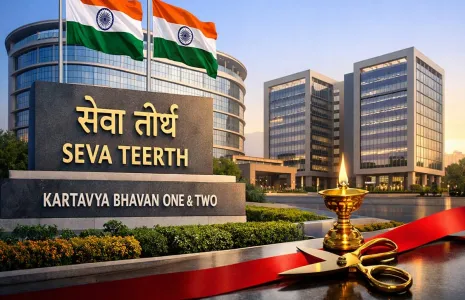
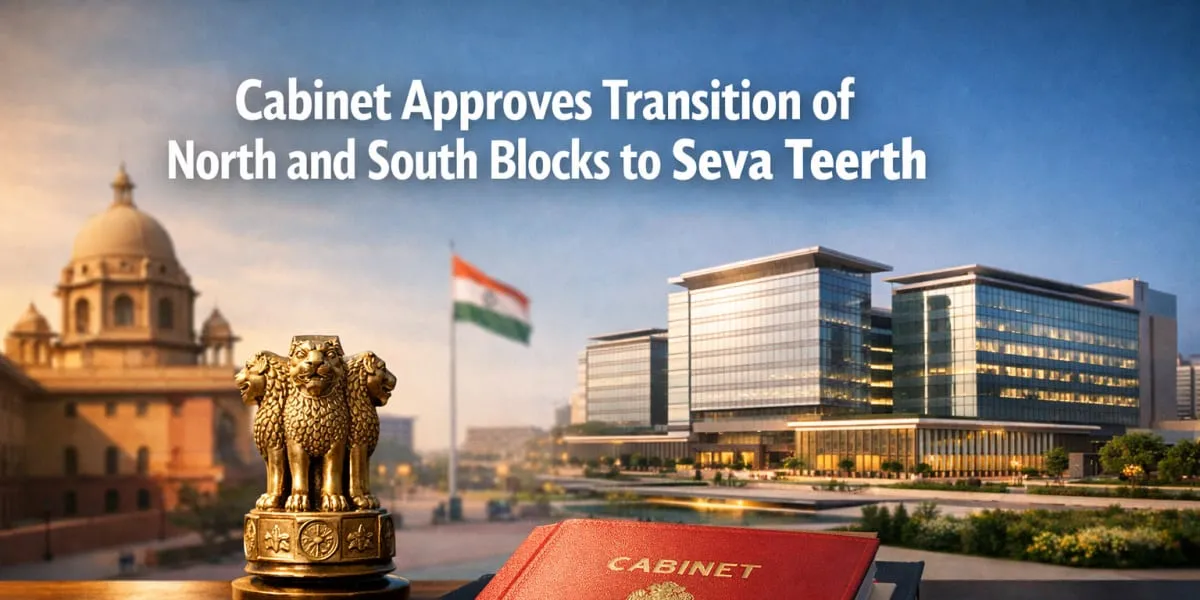
The Union Cabinet has approved the proposal to transition the Prime Minister's Office (PMO) and other central offices from the historic North and South Blocks to the newly dedicated Seva Teerth and the Kartavya Bhavans, following the dedication of the new PMO on 13 February 2026. The decision formalises the relocation of ministerial and executive workspaces to a modern, technological and environmentally friendly complex intended to enhance productivity for staff. The Cabinet has also resolved that North and South Blocks will be integrated into the Yuge Yugeen Bharat National Museum.\n\nThe North and South Blocks were constructed under British rule and were retained after independence for governmental functions, with the Prime Minister's Office functioning from South Block for decades. The buildings have served as the centre for major national decisions and have witnessed the horror of Partition, the challenges of war and the Emergency, as well as the transition from typewriters to digital governance. Cabinets formed under the leadership of 16 prime ministers have deliberated within these chambers, shaping policy across successive administrations.\n\nOfficials noted that South Block hosted numerous reform initiatives and that many decisions shaping governance and welfare originated there. Reforms such as direct benefit transfer (DBT), Swachh Bharat Abhiyan, Digital India and the goods and services tax (GST) were advanced from these offices, and major steps on national security and social justice, including the abrogation of Article 370 and legislation on triple talaq, followed cabinet consideration. Military measures described in the release as surgical strike, air strike and Operation Sindoor reflected assertive security policy.\n\nThe Cabinet characterised the transition as symbolic of a movement from a colonial past towards a culture of service and a resolve to build a developed nation, while noting the need for contemporary, efficient workplaces. The museum is intended to celebrate the continuity of civilisation and to link historic achievements with a prosperous future. The Union Cabinet expressed gratitude for leadership that guided the transformation into Seva Teerth and confirmed that the vacated heritage buildings will be preserved through the museum.

The Union Cabinet has approved the proposal to transition the Prime Minister's Office (PMO) and other central offices from the historic North and South Blocks to the newly dedicated Seva Teerth and the Kartavya Bhavans, following the dedication of the new PMO on 13 February 2026. The decision formalises the relocation of ministerial and executive workspaces to a modern, technological and environmentally friendly complex intended to enhance productivity for staff. The Cabinet has also resolved that North and South Blocks will be integrated into the Yuge Yugeen Bharat National Museum.\n\nThe North and South Blocks were constructed under British rule and were retained after independence for governmental functions, with the Prime Minister's Office functioning from South Block for decades. The buildings have served as the centre for major national decisions and have witnessed the horror of Partition, the challenges of war and the Emergency, as well as the transition from typewriters to digital governance. Cabinets formed under the leadership of 16 prime ministers have deliberated within these chambers, shaping policy across successive administrations.\n\nOfficials noted that South Block hosted numerous reform initiatives and that many decisions shaping governance and welfare originated there. Reforms such as direct benefit transfer (DBT), Swachh Bharat Abhiyan, Digital India and the goods and services tax (GST) were advanced from these offices, and major steps on national security and social justice, including the abrogation of Article 370 and legislation on triple talaq, followed cabinet consideration. Military measures described in the release as surgical strike, air strike and Operation Sindoor reflected assertive security policy.\n\nThe Cabinet characterised the transition as symbolic of a movement from a colonial past towards a culture of service and a resolve to build a developed nation, while noting the need for contemporary, efficient workplaces. The museum is intended to celebrate the continuity of civilisation and to link historic achievements with a prosperous future. The Union Cabinet expressed gratitude for leadership that guided the transformation into Seva Teerth and confirmed that the vacated heritage buildings will be preserved through the museum.

Next Story
Infrastructure Urban

Lemon Tree Hotels Signs Resort In Lonavala Maharashtra

Lemon Tree Hotels Limited (LTHL) has signed a licence agreement for Lemon Tree Resort in Lonavala, Maharashtra, with the asset to be managed by Carnation Hotels Private Limited, a wholly owned subsidiary of LTHL. The resort will offer 50 well appointed rooms and will include a restaurant, banquet, meeting room, swimming pool, spa and fitness centre. The company described the addition as part of its strategy to expand branded resort offerings in key getaway destinations. Lonavala, located in the Sahyadri hills, is a popular leisure destination in western India known for scenic landscapes and a ..

Next Story
Infrastructure Urban

Kalai Chettinad Art And Architecture Festival At The Lotus Palace

The Lotus Palace Chettinad will host Kalai, the Chettinad Art and Architecture Festival, a four-day, three-night immersive celebration of the artistic legacy of Chettinad from three to six April 2026. The event has been organised by Apeejay Surrendra Park Hotels Limited (ASPHL) and will take place across restored heritage properties in Chettinad. It will be designed to offer guests a layered experience of place, structure and story that connects art, architecture and living traditions. The festival aims to present a confluence of global influences and local aesthetics. Kalai has been curated i..

Next Story
Infrastructure Energy

SJVN Reaches One bn Units At 1,000 MW Bikaner Solar Project

SJVN Limited (SJVN) has reached a milestone with its 1,000 megawatt (MW) Bikaner Solar Power Project by generating one bn units of electricity on 20 March 2026. The achievement underscores the company's role in supplying clean and sustainable energy to the national grid. The generation milestone was recorded within months of the project commencing operations and highlights rapid performance from the new facility. The Bikaner project, located in Bikaner district of Rajasthan, has been developed and implemented by SJVN Green Energy Limited (SGEL) under the Central Public Sector Undertaking Schem..

Advertisement

Subscribe to Our Newsletter

Get daily newsletters around different themes from Construction world.

STAY CONNECTED

Advertisement

Advertisement

Advertisement