PM To Inaugurate Seva Teerth And Kartavya Bhavan One And Two
Real Estate

PM To Inaugurate Seva Teerth And Kartavya Bhavan One And Two

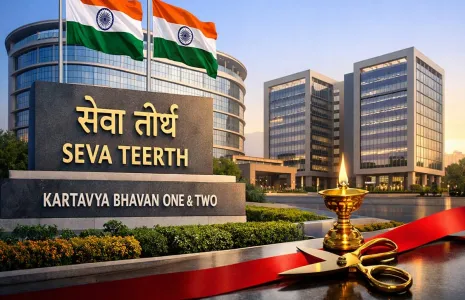
Prime Minister Narendra Modi will unveil the name of the Seva Teerth complex on 13 February 2026 and will formally inaugurate Seva Teerth and Kartavya Bhavan One and Kartavya Bhavan Two later the same day with an evening address at the complex. The inauguration marks a significant milestone in the modernisation of India’s administrative governance architecture and reflects the central leadership’s stated commitment to creating a more efficient and citizen-centric governance ecosystem. The consolidation responds to long-standing operational inefficiencies arising from fragmented and ageing infrastructure across the Central Vista area.

Seva Teerth houses the Prime Minister’s Office (PMO), the National Security Council Secretariat (NSCS) and the Cabinet Secretariat, which had operated from multiple separate locations. Kartavya Bhavan One and Kartavya Bhavan Two accommodate several key ministries, including the Ministry of Finance, the Ministry of Defence, the Ministry of Health and Family Welfare and the Ministry of Education along with other central departments, enabling closer coordination and streamlined decision making. Officials indicate that the physical consolidation is expected to lower maintenance costs, reduce duplication and improve the working environment for government staff.

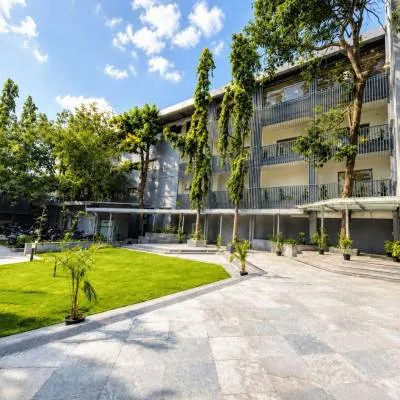
Both complexes feature digitally integrated offices, structured public interface zones and centralised reception facilities designed to facilitate improved citizen engagement and administrative efficiency. The design meets four-star Green Rating for Integrated Habitat Assessment (GRIHA) standards and incorporates renewable energy systems, water conservation measures and waste management solutions to reduce environmental impact and enhance operational performance. Comprehensive safety and security frameworks include smart access control systems, surveillance networks and advanced emergency response infrastructure to ensure secure and accessible premises for officials and visitors.

The projects are presented as future-ready facilities that will support interdepartmental collaboration and employee well being while presenting a unified administrative footprint for the central government. The inauguration is part of a broader effort to modernise public infrastructure and optimise service delivery to citizens. Observers suggest that the move to consolidated, high-performance buildings may set a precedent for further administrative rationalisation.

Prime Minister Narendra Modi will unveil the name of the Seva Teerth complex on 13 February 2026 and will formally inaugurate Seva Teerth and Kartavya Bhavan One and Kartavya Bhavan Two later the same day with an evening address at the complex. The inauguration marks a significant milestone in the modernisation of India’s administrative governance architecture and reflects the central leadership’s stated commitment to creating a more efficient and citizen-centric governance ecosystem. The consolidation responds to long-standing operational inefficiencies arising from fragmented and ageing infrastructure across the Central Vista area. Seva Teerth houses the Prime Minister’s Office (PMO), the National Security Council Secretariat (NSCS) and the Cabinet Secretariat, which had operated from multiple separate locations. Kartavya Bhavan One and Kartavya Bhavan Two accommodate several key ministries, including the Ministry of Finance, the Ministry of Defence, the Ministry of Health and Family Welfare and the Ministry of Education along with other central departments, enabling closer coordination and streamlined decision making. Officials indicate that the physical consolidation is expected to lower maintenance costs, reduce duplication and improve the working environment for government staff. Both complexes feature digitally integrated offices, structured public interface zones and centralised reception facilities designed to facilitate improved citizen engagement and administrative efficiency. The design meets four-star Green Rating for Integrated Habitat Assessment (GRIHA) standards and incorporates renewable energy systems, water conservation measures and waste management solutions to reduce environmental impact and enhance operational performance. Comprehensive safety and security frameworks include smart access control systems, surveillance networks and advanced emergency response infrastructure to ensure secure and accessible premises for officials and visitors. The projects are presented as future-ready facilities that will support interdepartmental collaboration and employee well being while presenting a unified administrative footprint for the central government. The inauguration is part of a broader effort to modernise public infrastructure and optimise service delivery to citizens. Observers suggest that the move to consolidated, high-performance buildings may set a precedent for further administrative rationalisation.

Next Story
Infrastructure Urban

Güntner Showcases Cooling Tech at China Expo

Güntner showcased its latest refrigeration and air conditioning innovations at China Refrigeration 2026, highlighting digital intelligence and carbon-neutral solutions.The company presented its aicore™ Controls and IoT platform, designed to optimise energy consumption, enable remote monitoring and enhance lifecycle management of cooling systems. The solution integrates advanced controllers and cloud-based capabilities to improve operational efficiency and reduce energy use.Güntner also demonstrated advancements in heat pump technologies, including its role in projects such as the Ordos Zer..

Next Story
Real Estate

Superb Realty Ties Up with Praan for AI Air Tech

Superb Realty has partnered with Praan to deploy AI-powered autonomous air infrastructure across over one million sq ft of real estate in Mumbai, marking a significant move towards intelligent indoor environments.The rollout will begin at Superb Altura and expand across upcoming residential and mixed-use developments. The initiative aims to integrate real-time sensing, adaptive purification and AI-led optimisation to improve indoor air quality and occupant experience.Praan’s technology is designed to remove ultrafine particles significantly smaller than conventional systems and eliminate har..

Next Story
Technology

DAAKit Raises $138,000 in Pre-Seed Round

DAAKit has raised $138,000 in a pre-seed funding round led by Inflection Point Ventures to expand its hyperlocal fulfilment network and strengthen technology capabilities.The company plans to use the funds to launch 25 new dark stores across Tier I and Tier II cities, enhance its technology infrastructure, and expand its leadership and operations teams. Currently operational in Delhi, Gurugram, Mumbai, Bengaluru and Kolkata, DAAKit is also piloting expansion into Tier II markets through Lucknow.Built on an asset-light, technology-driven model, the platform enables brands to position inventory ..

Advertisement

Subscribe to Our Newsletter

Get daily newsletters around different themes from Construction world.

STAY CONNECTED

Advertisement

Advertisement

Advertisement