+
CSIR-NIScPR Marks 5th Foundation Day, Launches SVASTIK Portal
ECONOMY & POLICY

CSIR-NIScPR Marks 5th Foundation Day, Launches SVASTIK Portal

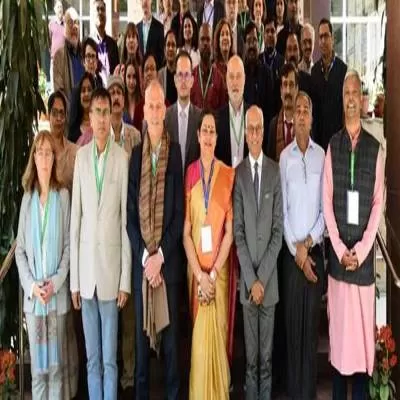
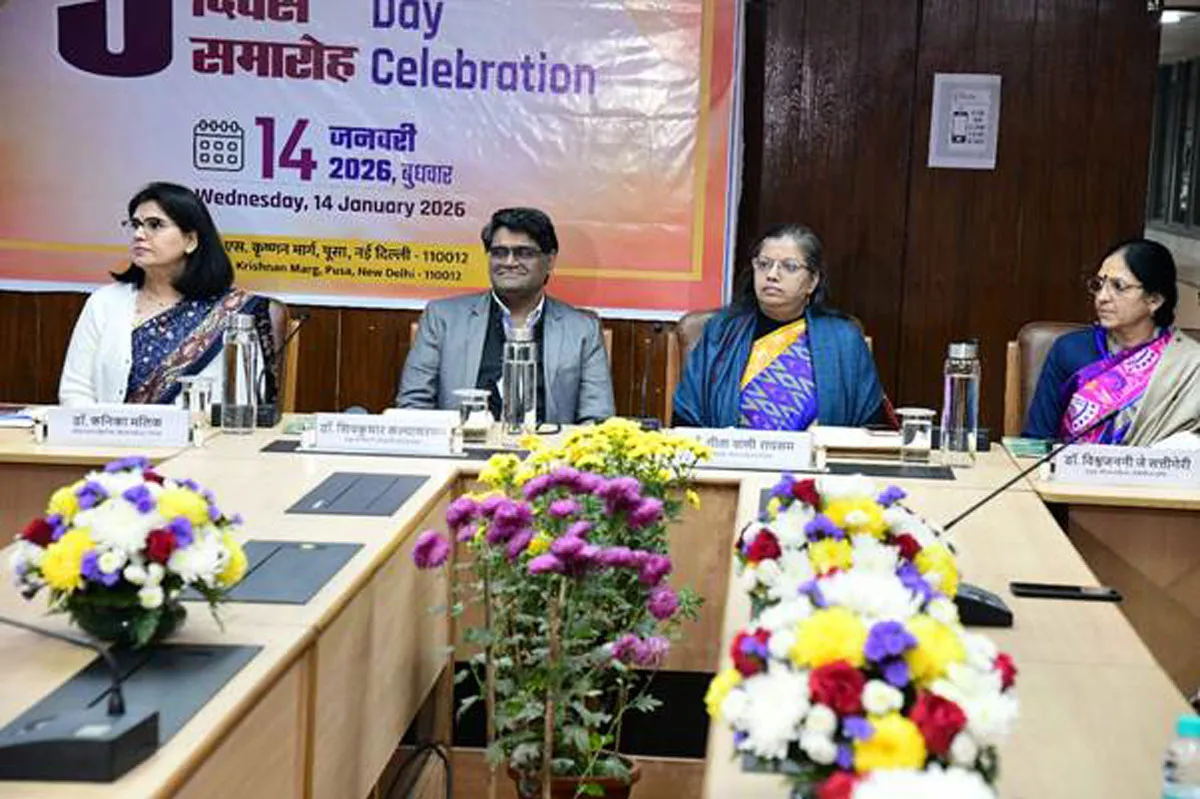
The CSIR–National Institute of Science Communication and Policy Research (CSIR-NIScPR) celebrated its 5th Foundation Day, reaffirming its commitment to advancing science communication, policy research and the use of artificial intelligence for regional language outreach. The event highlighted the institute’s growing role in strengthening India’s science policy ecosystem and taking its research and communication efforts to a global audience.

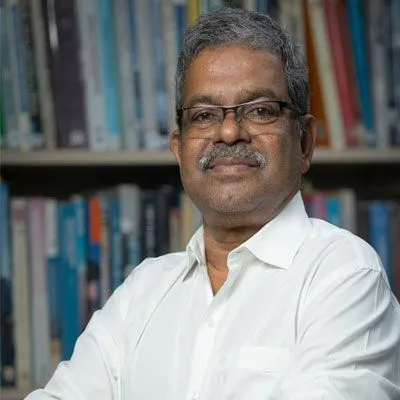
Welcoming the gathering, Dr. Geetha Vani Rayasam, Director, CSIR-NIScPR, underlined the institute’s strong legacy in science communication and its future priorities. “We need to engage global institutions. We are working on how to leverage AI in regional language communication,” she said, emphasising the need for wider dissemination of scientific knowledge across linguistic and geographic boundaries.

Dr Viswajanani J. Sattigeri, Head, CSIR–Traditional Knowledge Digital Library (TKDL) Unit, highlighted the international recognition of TKDL and its importance in safeguarding India’s traditional knowledge. “Traditional knowledge is very important, and we are the only lab that validates traditional knowledge. Policy research at NIScPR has huge potential—previously, our policy document was released by the Former President of India. TKDL is now fully digitized, so we can research more relevant tools,” she said.

The Chief Guest, Dr Shivkumar Kalyanaraman, CEO, Anusandhan National Research Foundation (ANRF), Government of India, delivered a distinguished lecture, praising NIScPR’s alignment with ANRF’s vision of positioning India as a global research and innovation hub. “I praise the idea of NIScPR going global—we need to think global. NIScPR uses policy to solve societal problems, and we need to become world-class,” he said, also inviting collaboration on AI-enabled research formats and outreach tools.

On the occasion, Dr Kalyanaraman launched the SVASTIK web portal—Scientifically Validated Societal Traditional Knowledge—a national initiative implemented by CSIR-NIScPR. The portal provides a single-window platform for accessing SVASTIK content and disseminates India’s scientifically validated traditional knowledge in English, 19 Indian languages and five foreign languages, strengthening outreach and stakeholder engagement nationwide and globally.

The CSIR–National Institute of Science Communication and Policy Research (CSIR-NIScPR) celebrated its 5th Foundation Day, reaffirming its commitment to advancing science communication, policy research and the use of artificial intelligence for regional language outreach. The event highlighted the institute’s growing role in strengthening India’s science policy ecosystem and taking its research and communication efforts to a global audience.Welcoming the gathering, Dr. Geetha Vani Rayasam, Director, CSIR-NIScPR, underlined the institute’s strong legacy in science communication and its future priorities. “We need to engage global institutions. We are working on how to leverage AI in regional language communication,” she said, emphasising the need for wider dissemination of scientific knowledge across linguistic and geographic boundaries.Dr Viswajanani J. Sattigeri, Head, CSIR–Traditional Knowledge Digital Library (TKDL) Unit, highlighted the international recognition of TKDL and its importance in safeguarding India’s traditional knowledge. “Traditional knowledge is very important, and we are the only lab that validates traditional knowledge. Policy research at NIScPR has huge potential—previously, our policy document was released by the Former President of India. TKDL is now fully digitized, so we can research more relevant tools,” she said.The Chief Guest, Dr Shivkumar Kalyanaraman, CEO, Anusandhan National Research Foundation (ANRF), Government of India, delivered a distinguished lecture, praising NIScPR’s alignment with ANRF’s vision of positioning India as a global research and innovation hub. “I praise the idea of NIScPR going global—we need to think global. NIScPR uses policy to solve societal problems, and we need to become world-class,” he said, also inviting collaboration on AI-enabled research formats and outreach tools.On the occasion, Dr Kalyanaraman launched the SVASTIK web portal—Scientifically Validated Societal Traditional Knowledge—a national initiative implemented by CSIR-NIScPR. The portal provides a single-window platform for accessing SVASTIK content and disseminates India’s scientifically validated traditional knowledge in English, 19 Indian languages and five foreign languages, strengthening outreach and stakeholder engagement nationwide and globally.

Next Story
Infrastructure Transport

Second Mountain Tunnel Breakthrough in Palghar Advances High Speed Rail

The Mumbai-Ahmedabad high speed rail (MAHSR) project reached a milestone with the breakthrough of a mountain tunnel in Palghar, Maharashtra. Mountain tunnel MT-six measures 454 metres long and 14.4 metres wide and will accommodate up and down tracks. The breakthrough follows MT-five near Saphale on second January 2026 and the MT-six excavation was completed from both ends using the New Austrian Tunnelling Method. The ministry reported that the tunnelling was completed within 12 months. The New Austrian Tunnelling Method is favoured for its flexibility in complex geology and irregular tunnel s..

Next Story
Infrastructure Transport

Modi Government Pushes Atmanirbhar Container Drive With BCSL MoU

The Union Government advanced a plan to create an integrated, domestically anchored container ecosystem with the signing of a Memorandum of Understanding to establish the Bharat Container Shipping Line (BCSL). The MoU was signed by key agencies including the Shipping Corporation of India and Container Corporation of India alongside major port authorities and Sagarmala Finance Corporation Limited under the Ministry of Ports, Shipping and Waterways, in the presence of senior ministers. The initiative aligns with the Container Manufacturing Assistance Scheme announced in the Union Budget 2026–2..

Next Story
Infrastructure Urban

Ministry Reports Gains In Mobility For Marginalised Communities

The Ministry of Social Justice and Empowerment is implementing skill development, education and rehabilitation schemes to promote socio-economic mobility and sustainable livelihoods for marginalised and disadvantaged communities across the country. Programmes target Scheduled Castes, Other Backward Classes, Economically Weaker Sections, De-notified Tribes and Safai Karamcharis through specialised implementing corporations and empanelled training institutes. Pradhan Mantri Dakshata Aur Kushalta Sampann Hitgrahi Yojana, or PM-DAKSH, provided skill training and placement support through the Nati..

Advertisement

Subscribe to Our Newsletter

Get daily newsletters around different themes from Construction world.

STAY CONNECTED

Advertisement

Advertisement

Advertisement

Open In App