Delhi Plans Seven Projects With Centre To Decongest City
ECONOMY & POLICY

Delhi Plans Seven Projects With Centre To Decongest City

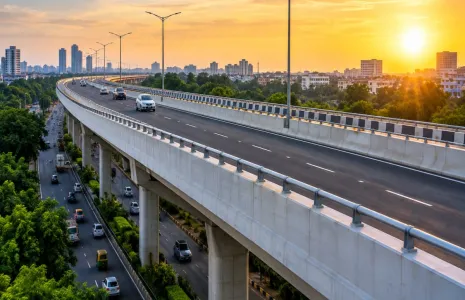
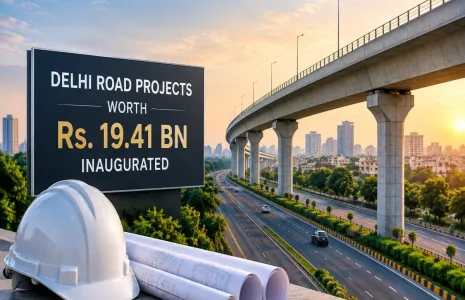
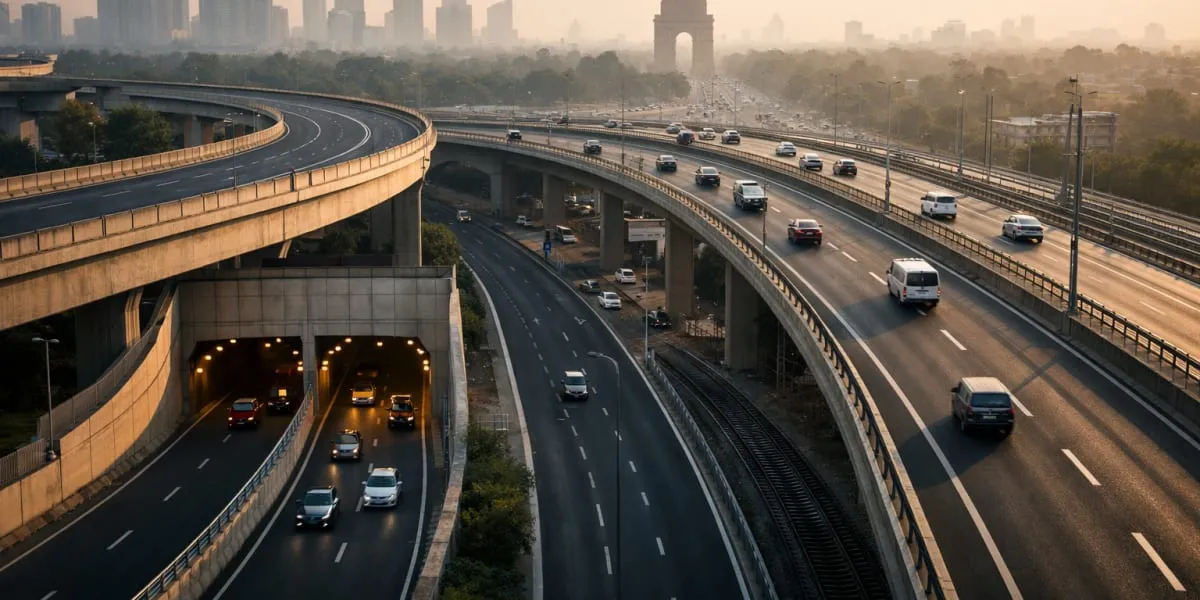
The Delhi government and the central government will jointly undertake seven major infrastructure projects to decongest the capital and improve links with neighbouring cities and states. The combined cost is Rs 248 billion (bn) and the schemes are intended to enhance access to Gurgaon, Dehradun and other regional hubs. The projects comprise expressways, tunnels, elevated corridors and service roads to modernise transport across the Delhi National Capital Region.

The chief minister, Rekha Gupta, said the projects were planned under a double-engine government framework to streamline transportation. Officials said a review with the union road transport minister covered timelines and approvals. Several schemes remain in approval while others have target start dates over the next year.

Planned works include a six-lane tunnel of eight km from Nelson Mandela Marg to Shiv Murti in Gurgaon at Rs 70 bn to ease congestion on Rao Tula Ram Marg and improve airport access. A 20 km elevated corridor linking AIIMS and Mahipalpur to Gurgaon is budgeted at Rs 50 bn and is slated to start in April 2027. A 17 km link to the Dehradun Expressway near Tronica City will connect Urban Extension Road-2 at a cost of Rs 35 bn.

A 65 km Noida-Faridabad corridor via the Delhi-Dehradun Expressway will link multiple expressways and is estimated at Rs 70 bn with a proposed start in December 2026. The Delhi-Amritsar-Katra Expressway link of 17 km will boost freight movement to Gurugram and the airport and carries Rs 15 bn, with work due in March 2027. Service roads along Urban Extension Road-II spanning 26 km will support Mundka industrial area and are allocated Rs 65 bn and remain under approval.

A 500 m Kalindi Kunj interchange near the Okhla Barrage is planned to connect Noida, Jasola, Sarita Vihar and Faridabad and carries Rs three bn with an expected start in October 2026. Officials said the projects aim to reduce pressure on arterial routes such as the Outer Ring Road and to improve freight and commuter flows across the region.

The Delhi government and the central government will jointly undertake seven major infrastructure projects to decongest the capital and improve links with neighbouring cities and states. The combined cost is Rs 248 billion (bn) and the schemes are intended to enhance access to Gurgaon, Dehradun and other regional hubs. The projects comprise expressways, tunnels, elevated corridors and service roads to modernise transport across the Delhi National Capital Region. The chief minister, Rekha Gupta, said the projects were planned under a double-engine government framework to streamline transportation. Officials said a review with the union road transport minister covered timelines and approvals. Several schemes remain in approval while others have target start dates over the next year. Planned works include a six-lane tunnel of eight km from Nelson Mandela Marg to Shiv Murti in Gurgaon at Rs 70 bn to ease congestion on Rao Tula Ram Marg and improve airport access. A 20 km elevated corridor linking AIIMS and Mahipalpur to Gurgaon is budgeted at Rs 50 bn and is slated to start in April 2027. A 17 km link to the Dehradun Expressway near Tronica City will connect Urban Extension Road-2 at a cost of Rs 35 bn. A 65 km Noida-Faridabad corridor via the Delhi-Dehradun Expressway will link multiple expressways and is estimated at Rs 70 bn with a proposed start in December 2026. The Delhi-Amritsar-Katra Expressway link of 17 km will boost freight movement to Gurugram and the airport and carries Rs 15 bn, with work due in March 2027. Service roads along Urban Extension Road-II spanning 26 km will support Mundka industrial area and are allocated Rs 65 bn and remain under approval. A 500 m Kalindi Kunj interchange near the Okhla Barrage is planned to connect Noida, Jasola, Sarita Vihar and Faridabad and carries Rs three bn with an expected start in October 2026. Officials said the projects aim to reduce pressure on arterial routes such as the Outer Ring Road and to improve freight and commuter flows across the region.

Next Story
Products

Fynd Launches AI Platform to Accelerate Fashion Creation

Fynd, an AI-native retail technology company backed by Reliance Retail Ventures, has launched Fynd Create, a platform designed to bring design intelligence, sourcing and manufacturing onto a single connected ecosystem. The platform aims to help brands respond faster to changing consumer preferences and shorten product development cycles.As social media trends continue to compress traditional fashion seasons, brands are under increasing pressure to move from seasonal planning to demand-driven production. Conventional supply chains, often characterised by long lead times and fragmented operation..

Next Story
Resources

Modis Navnirman Appointed For Neel Kiran CHSL Redevelopment

Modis Navnirman (MNL) has been appointed as the developer for the redevelopment of Neel Kiran Co-operative Housing Society Ltd in Khar West, Mumbai, following a selection process in which members chose MNL as their preferred partner. The appointment will add approximately Rs two point five billion (Rs two point five bn) to the company's Gross Development Value pipeline and strengthen its focus on redevelopment and urban renewal projects across the Mumbai Metropolitan Region. The project site is a landmark residential society in Khar West, and the selection reflects members' preference for a pa..

Next Story
Infrastructure Energy

Diamond Power Commissions Eighth MV and EHV Cable Line

Diamond Power Infrastructure (DPIL) has commissioned its eighth Medium Voltage (MV) and Extra High Voltage (EHV) power cable production line at its manufacturing facility in Vadodara, Gujarat. The new line enhances the company's manufacturing capacity in the technologically advanced MV and EHV underground power cable segment. This segment supplies cables for power transmission networks, power generation projects and renewable energy evacuation systems. The development is presented as a step to meet evolving infrastructure needs. The MV and EHV cables produced at the Vadodara facility serve urb..

Advertisement

Subscribe to Our Newsletter

Get daily newsletters around different themes from Construction world.

STAY CONNECTED

Advertisement

Advertisement

Advertisement