

NHAI To Develop Secondary Service Lane Along UER-2
ROADS & HIGHWAYS

NHAI To Develop Secondary Service Lane Along UER-2

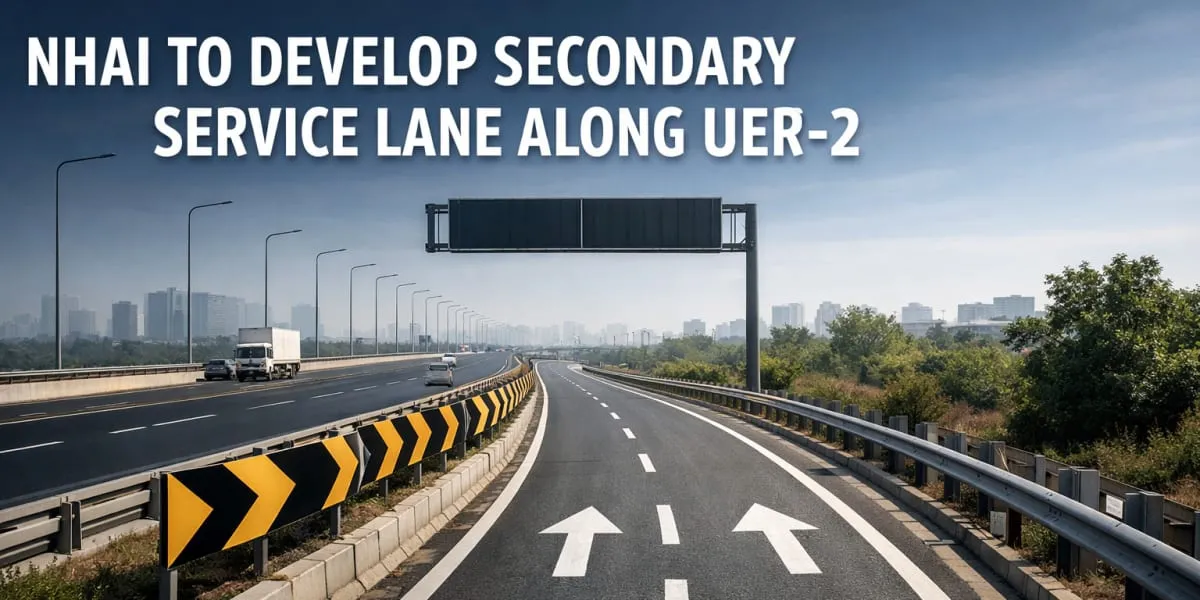
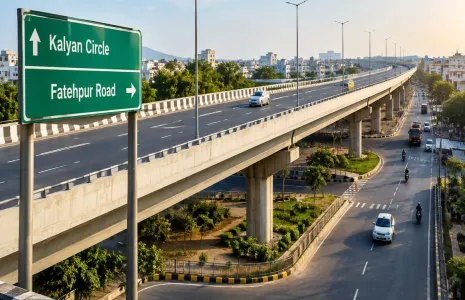
The National Highways Authority of India (NHAI) has announced plans to develop a secondary service lane along the Urban Extension Road II corridor in Delhi to improve access and traffic flow. The project is intended to provide dedicated space for local traffic and service vehicles, reducing interference with the main carriageway. Officials said the measure is aimed at enhancing last-mile connectivity for residential and commercial areas adjacent to the corridor. The corridor serves as a key arterial route for peripheral districts and the lane is intended to cater for growing local travel demands.

The secondary lane will run parallel to the existing Urban Extension Road II and is designed to manage slow moving vehicles, delivery traffic and short distance commuters. Design considerations will include pedestrian crossings, service bays and provisions for emergency access while mitigating encroachment. The authority will assess utility relocation needs and integrate drainage, lighting and landscaping to ensure a safer and more organised corridor. Design will follow applicable highway standards and specify durable surfacing and adequate signage.

Implementation will be coordinated with the Delhi government and civic agencies to minimise disruption and maintain traffic movement during construction. The scheme is expected to be carried out in phases to manage work fronts and reduce commuter inconvenience. Stakeholder consultations will guide alignment choices and local access arrangements. Traffic management plans will be prepared and authorities will inform commuters of diversions to limit inconvenience.

Once completed, the lane is expected to ease pressure on the main carriageway, reduce congestion and improve road safety for all users. It should also support more efficient public transport feeder services and smoother goods movement in adjoining neighbourhoods. Ongoing monitoring and maintenance will be necessary to preserve functionality and prevent recurrent encroachment. Periodic reviews will assess outcomes and adjust operational measures as required regularly thereafter.

The National Highways Authority of India (NHAI) has announced plans to develop a secondary service lane along the Urban Extension Road II corridor in Delhi to improve access and traffic flow. The project is intended to provide dedicated space for local traffic and service vehicles, reducing interference with the main carriageway. Officials said the measure is aimed at enhancing last-mile connectivity for residential and commercial areas adjacent to the corridor. The corridor serves as a key arterial route for peripheral districts and the lane is intended to cater for growing local travel demands. The secondary lane will run parallel to the existing Urban Extension Road II and is designed to manage slow moving vehicles, delivery traffic and short distance commuters. Design considerations will include pedestrian crossings, service bays and provisions for emergency access while mitigating encroachment. The authority will assess utility relocation needs and integrate drainage, lighting and landscaping to ensure a safer and more organised corridor. Design will follow applicable highway standards and specify durable surfacing and adequate signage. Implementation will be coordinated with the Delhi government and civic agencies to minimise disruption and maintain traffic movement during construction. The scheme is expected to be carried out in phases to manage work fronts and reduce commuter inconvenience. Stakeholder consultations will guide alignment choices and local access arrangements. Traffic management plans will be prepared and authorities will inform commuters of diversions to limit inconvenience. Once completed, the lane is expected to ease pressure on the main carriageway, reduce congestion and improve road safety for all users. It should also support more efficient public transport feeder services and smoother goods movement in adjoining neighbourhoods. Ongoing monitoring and maintenance will be necessary to preserve functionality and prevent recurrent encroachment. Periodic reviews will assess outcomes and adjust operational measures as required regularly thereafter.

Next Story
Infrastructure Transport

MMRDA Removes 1.14 lakh m of Metro Barricades

In a bid to ease congestion and improve urban mobility during monsoon, MMRDA has undertaken one of the largest coordinated barricade removal and monsoon preparedness drives across its ongoing metro and infrastructure projects.With substantial progress achieved in viaduct and structural works across multiple metro corridors, barricades from completed stretches beneath metro viaducts are being systematically removed, restoring maximum possible road space before the monsoon. Wider carriageways across key arterial roads are expected to improve traffic flow, reduce congestion, support better rainwa..

Next Story
Infrastructure Transport

Pune Division to Remove All Diamond Crossings by Year-End

The Pune railway division has announced plans to remove all 16 diamond crossings by the end of 2026 as part of a major yard remodelling project following the derailment of a Vande Bharat Express at Pune Junction on April 27. Railway authorities said the replacements aim to improve safety and streamline train operations across the busy station. The decision followed a Central Railway finding that the accident involved a non-standard diamond crossing and highlighted the need for replacement. Regular maintenance of existing crossings will continue until the replacement work is completed. Official..

Next Story
Infrastructure Urban

Goa Declares 80 Million Square Metres No Development Zone

The Goa state government has declared 80 million square metres (mn) of land a no development zone, designating the area as protected from new construction. The notification reclassifies tracts across the state under a no development category for planning and regulatory purposes. The declaration signals a formal halt to new building permits within the defined zone. Authorities indicated that maps will be issued to show broad boundaries while detailed surveys will refine precise limits. The move transfers responsibility for enforcement to local planning authorities and relevant departments, whic..

Advertisement

Subscribe to Our Newsletter

Get daily newsletters around different themes from Construction world.

STAY CONNECTED

Advertisement

Advertisement

Advertisement