India Enters Strongest Credit Growth Phase Since 2012
ECONOMY & POLICY

India Enters Strongest Credit Growth Phase Since 2012

India is entering its strongest phase of credit growth since 2012 as corporate loan demand surged to a 13-year high in May.

Corporate credit growth accelerated to 18.3 per cent year-on-year in May, marking the fastest pace seen since 2012. The rise reflects firms stepping up borrowing to support operations and capacity expansion amid brighter economic momentum.

Companies have increased borrowing for working capital, investment and business expansion, fuelling a broad-based expansion in bank credit. Banks are reporting stronger demand from corporate borrowers as activity gains momentum and inventories and capital expenditure requirements rise. The trend signals a revival in the credit cycle after an extended period of subdued corporate borrowing.

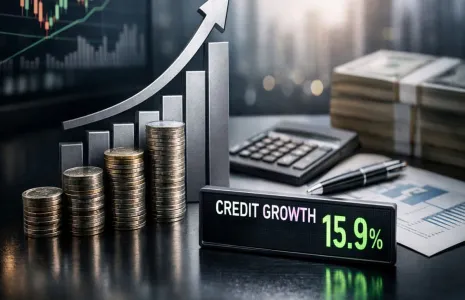
Scheduled commercial banks recorded credit growth of 15.9 per cent in FY 2025-26, underscoring widespread lending strength across the system. Industrial credit growth accelerated to 15 per cent during the fiscal year, compared with 8.2 per cent a year earlier, with lending to micro, small and medium enterprises a notable contributor. Improved liquidity conditions have further supported the expansion of loans to industry and commerce.

The current shift marks a significant change from the prolonged weakness that followed balance-sheet stress in the banking and corporate sectors, and suggests a more broad-based recovery in credit growth. The sustainability of the cycle will depend on whether rising borrowing is channelled into productive investment rather than predominantly short-term working capital needs. Regulators, lenders and corporates will therefore watch capital allocation, investment outcomes and asset quality closely.

Analysts expect that sustained credit growth can support investment, employment and capacity creation if funds are deployed towards long-term projects. However, a rapid expansion of lending will require careful risk management to prevent a rebound in non-performing assets and to ensure adequate capital buffers. Continued coordination between monetary and fiscal authorities and prudent bank lending norms will be important to maintain momentum.

India is entering its strongest phase of credit growth since 2012 as corporate loan demand surged to a 13-year high in May. Corporate credit growth accelerated to 18.3 per cent year-on-year in May, marking the fastest pace seen since 2012. The rise reflects firms stepping up borrowing to support operations and capacity expansion amid brighter economic momentum. Companies have increased borrowing for working capital, investment and business expansion, fuelling a broad-based expansion in bank credit. Banks are reporting stronger demand from corporate borrowers as activity gains momentum and inventories and capital expenditure requirements rise. The trend signals a revival in the credit cycle after an extended period of subdued corporate borrowing. Scheduled commercial banks recorded credit growth of 15.9 per cent in FY 2025-26, underscoring widespread lending strength across the system. Industrial credit growth accelerated to 15 per cent during the fiscal year, compared with 8.2 per cent a year earlier, with lending to micro, small and medium enterprises a notable contributor. Improved liquidity conditions have further supported the expansion of loans to industry and commerce. The current shift marks a significant change from the prolonged weakness that followed balance-sheet stress in the banking and corporate sectors, and suggests a more broad-based recovery in credit growth. The sustainability of the cycle will depend on whether rising borrowing is channelled into productive investment rather than predominantly short-term working capital needs. Regulators, lenders and corporates will therefore watch capital allocation, investment outcomes and asset quality closely. Analysts expect that sustained credit growth can support investment, employment and capacity creation if funds are deployed towards long-term projects. However, a rapid expansion of lending will require careful risk management to prevent a rebound in non-performing assets and to ensure adequate capital buffers. Continued coordination between monetary and fiscal authorities and prudent bank lending norms will be important to maintain momentum.

Next Story
Infrastructure Urban

AI Powered Security Robot To Debut At Puri Station

The East Coast Railway (ECoR) has unveiled an artificial intelligence powered robotic surveillance platform that will be deployed at Puri railway station ahead of Lord Jagannath's Bahuda Yatra on 24 July to enhance passenger safety and security. The platform, named DSC ARJUN, was revealed in the presence of ECoR General Manager Parmeshwar Funkwal and senior railway and Railway Protection Force (RPF) officers. ECoR officials said the system has been introduced as a temporary deployment for the festival and may later be shifted to Bhubaneswar railway station. Developed to support Railway Protect..

Next Story
Infrastructure Urban

India Eases RCMC Rule For Low Value Exports

The Directorate General of Foreign Trade (DGFT) has proposed exempting low value export consignments from the requirement to hold a registration-cum-membership certificate (RCMC), in a move intended to simplify compliance for small exporters. The proposal targets shipments with a free-on-board value of up to Rs 10,000 and seeks to reduce paperwork for first time exporters and micro, small and medium enterprises. The announcement forms part of a wider government effort to encourage exports through online platforms and emerging delivery channels. Under the proposed amendment to Paragraph 2.57 of..

Next Story
Infrastructure Urban

Assam Launches Centre Of Excellence For Additive Manufacturing

The Assam government has inaugurated a Digital Design and additive manufacturing centre of excellence in Guwahati, signalling a push towards technology driven manufacturing across the state. Chief Minister Himanta Biswa Sarma opened the facility and outlined its intended role in fostering innovation, product development and entrepreneurship. The centre will provide industries, startups and researchers with access to advanced digital manufacturing tools and additive manufacturing capabilities. Officials said the facility aims to strengthen the state innovation ecosystem and reduce dependence on..

Advertisement

Subscribe to Our Newsletter

Get daily newsletters around different themes from Construction world.

STAY CONNECTED

Advertisement

Advertisement

Advertisement