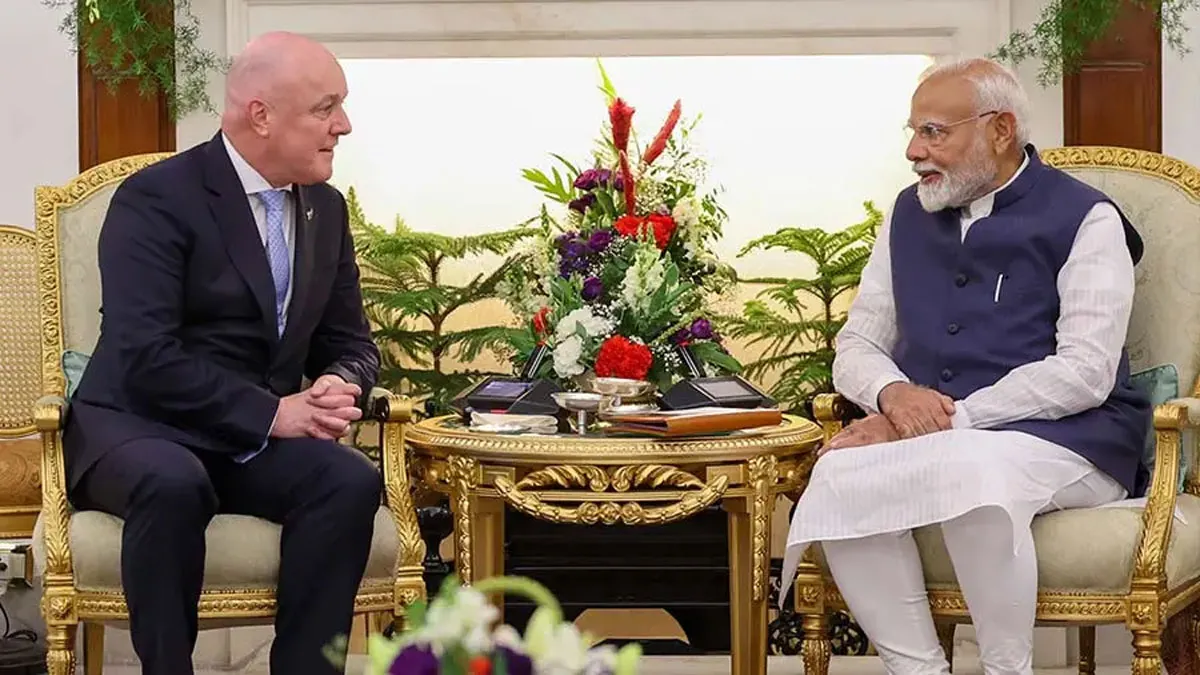
India, New Zealand Conclude Landmark Free Trade Agreement
ECONOMY & POLICY

India, New Zealand Conclude Landmark Free Trade Agreement

India and New Zealand have concluded a comprehensive and forward-looking Free Trade Agreement, marking a major economic and strategic milestone in India’s engagement with the Indo-Pacific region. The agreement, finalised under the vision of Viksit Bharat 2047, is among India’s fastest-concluded FTAs and aims to drive trade, investment, employment, skill mobility and long-term economic resilience.

Negotiations for the agreement were formally launched on 16 March 2025 and concluded after five intensive negotiation rounds along with multiple in-person and virtual intersessions. The FTA establishes a high-quality economic partnership focused on employment generation, MSME participation, innovation in agriculture, and deeper integration of Indian businesses into global value chains. Commerce and Industry Minister Piyush Goyal said the agreement is centred on people, creating opportunities for farmers, entrepreneurs, women, youth, students and innovators, while boosting agricultural productivity and opening global pathways for learning and work.

Under the agreement, New Zealand will eliminate tariffs on 100 per cent of its tariff lines, granting duty-free access to all Indian exports. This is expected to significantly enhance the competitiveness of labour-intensive sectors such as textiles, apparel, leather, footwear, marine products, gems and jewellery, handicrafts, engineering goods and automobiles, directly benefiting workers, artisans, MSMEs and women-led enterprises. India has also secured New Zealand’s most ambitious services offer to date, covering IT and IT-enabled services, professional services, education, financial services, tourism, construction and other business services, creating new opportunities for high-skill employment.

The FTA includes a future-ready mobility framework that strengthens people-to-people ties and positions India as a key supplier of skilled and semi-skilled talent. Provisions include improved entry and stay norms for Indian professionals and students, work opportunities during studies, post-study work pathways, a Working Holiday visa framework, and a new Temporary Employment Entry Visa pathway. This pathway allows up to 5,000 Indian professionals at any given time to work in New Zealand for up to three years across sectors such as IT, engineering, healthcare, education, construction, as well as professions including AYUSH practitioners, yoga instructors, chefs and music teachers.

Agricultural cooperation has been strengthened through dedicated Agri-Technology Action Plans for kiwifruit, apples and honey, focusing on productivity enhancement, research collaboration, quality improvement and value-chain development. The agreement also envisages Centres of Excellence, improved planting material, capacity building for farmers, better orchard and post-harvest practices, and sustainable beekeeping, supporting income growth for Indian farmers.

On investment, New Zealand has committed to facilitate investments of USD 20 billion into India over the next 15 years, supporting manufacturing, infrastructure, services, innovation and job creation under the Make in India programme. The FTA also provides a boost to pharmaceuticals and medical devices by enabling faster regulatory access through acceptance of Good Manufacturing Practice and Good Clinical Practice inspection reports from comparable global regulators, reducing compliance costs and expediting approvals.

The agreement includes commitments on geographical indications, with New Zealand agreeing to amend its laws to facilitate the registration of Indian wines, spirits and other goods within defined timelines. Cooperation has also been agreed in areas such as AYUSH, culture, fisheries, audio-visual tourism, forestry, horticulture and traditional knowledge, promoting India’s wellness systems and medical value travel globally.

Beyond tariff liberalisation, the FTA addresses non-tariff barriers through enhanced regulatory cooperation, transparency, streamlined customs procedures, sanitary and phytosanitary measures, and technical barriers to trade disciplines, ensuring that tariff concessions translate into effective market access. Bilateral merchandise trade between India and New Zealand stood at USD 1.3 billion in 2024–25, while total trade in goods and services reached about USD 2.4 billion in 2024. The FTA provides a stable and predictable framework to unlock the full potential of this growing economic relationship and represents a new-generation trade partnership aligned with India’s long-term development goals

India and New Zealand have concluded a comprehensive and forward-looking Free Trade Agreement, marking a major economic and strategic milestone in India’s engagement with the Indo-Pacific region. The agreement, finalised under the vision of Viksit Bharat 2047, is among India’s fastest-concluded FTAs and aims to drive trade, investment, employment, skill mobility and long-term economic resilience. Negotiations for the agreement were formally launched on 16 March 2025 and concluded after five intensive negotiation rounds along with multiple in-person and virtual intersessions. The FTA establishes a high-quality economic partnership focused on employment generation, MSME participation, innovation in agriculture, and deeper integration of Indian businesses into global value chains. Commerce and Industry Minister Piyush Goyal said the agreement is centred on people, creating opportunities for farmers, entrepreneurs, women, youth, students and innovators, while boosting agricultural productivity and opening global pathways for learning and work. Under the agreement, New Zealand will eliminate tariffs on 100 per cent of its tariff lines, granting duty-free access to all Indian exports. This is expected to significantly enhance the competitiveness of labour-intensive sectors such as textiles, apparel, leather, footwear, marine products, gems and jewellery, handicrafts, engineering goods and automobiles, directly benefiting workers, artisans, MSMEs and women-led enterprises. India has also secured New Zealand’s most ambitious services offer to date, covering IT and IT-enabled services, professional services, education, financial services, tourism, construction and other business services, creating new opportunities for high-skill employment. The FTA includes a future-ready mobility framework that strengthens people-to-people ties and positions India as a key supplier of skilled and semi-skilled talent. Provisions include improved entry and stay norms for Indian professionals and students, work opportunities during studies, post-study work pathways, a Working Holiday visa framework, and a new Temporary Employment Entry Visa pathway. This pathway allows up to 5,000 Indian professionals at any given time to work in New Zealand for up to three years across sectors such as IT, engineering, healthcare, education, construction, as well as professions including AYUSH practitioners, yoga instructors, chefs and music teachers. Agricultural cooperation has been strengthened through dedicated Agri-Technology Action Plans for kiwifruit, apples and honey, focusing on productivity enhancement, research collaboration, quality improvement and value-chain development. The agreement also envisages Centres of Excellence, improved planting material, capacity building for farmers, better orchard and post-harvest practices, and sustainable beekeeping, supporting income growth for Indian farmers. On investment, New Zealand has committed to facilitate investments of USD 20 billion into India over the next 15 years, supporting manufacturing, infrastructure, services, innovation and job creation under the Make in India programme. The FTA also provides a boost to pharmaceuticals and medical devices by enabling faster regulatory access through acceptance of Good Manufacturing Practice and Good Clinical Practice inspection reports from comparable global regulators, reducing compliance costs and expediting approvals. The agreement includes commitments on geographical indications, with New Zealand agreeing to amend its laws to facilitate the registration of Indian wines, spirits and other goods within defined timelines. Cooperation has also been agreed in areas such as AYUSH, culture, fisheries, audio-visual tourism, forestry, horticulture and traditional knowledge, promoting India’s wellness systems and medical value travel globally. Beyond tariff liberalisation, the FTA addresses non-tariff barriers through enhanced regulatory cooperation, transparency, streamlined customs procedures, sanitary and phytosanitary measures, and technical barriers to trade disciplines, ensuring that tariff concessions translate into effective market access. Bilateral merchandise trade between India and New Zealand stood at USD 1.3 billion in 2024–25, while total trade in goods and services reached about USD 2.4 billion in 2024. The FTA provides a stable and predictable framework to unlock the full potential of this growing economic relationship and represents a new-generation trade partnership aligned with India’s long-term development goals

Next Story
Real Estate

Modon, Related, Panepinto form JV for Harborside 4 in Jersey City

Abu Dhabi-based Modon Holding PSC has formed a joint venture with US real estate major Related Companies and Jersey City-based Panepinto Properties to develop Harborside 4, a 54-storey luxury residential tower on a prime waterfront site in downtown Jersey City, New Jersey.Under the partnership, Modon will hold a majority equity stake alongside Related and Panepinto, marking another step in the group’s strategy to scale and diversify its global real estate portfolio. The project will be developed on one of the last remaining premium waterfront parcels in the city.Designed by Handel Architects..

Next Story
Infrastructure Urban

P+Ex and Post-Tensioning Institute partner to drive sustainability

P+Ex, the Center of Excellence for Concrete Preservation and Service Life Extension, has announced a strategic partnership with the Post-Tensioning Institute (PTI) aimed at advancing sustainability, durability, and resilience in the built environment.The collaboration brings together P+Ex’s expertise in concrete preservation, repair, and service life extension with PTI’s global leadership in post-tensioning technology. Through this alliance, the two organisations will work to advance best practices in durability-focused design for new structures, while also promoting effective repair, reha..

Next Story
Infrastructure Energy

India’s Largest 2,000 MW Subansiri Hydro Project Turns Operational

India’s largest hydropower project, the 2,000 MW Subansiri Lower Hydroelectric Project, has finally become operational with the commissioning of its first unit, marking a major milestone after nearly 20 years of development marked by delays, protests and cost escalation.The 250 MW Unit-2 of the project, located on the Subansiri River at Gerukamukh on the Assam–Arunachal Pradesh border, was virtually inaugurated from New Delhi by Union Minister of Power Manohar Lal Khattar. The event was attended by Pankaj Agarwal, Secretary (Power), and Bhupender Gupta, Chairman and Managing Director, Nati..

Advertisement

Subscribe to Our Newsletter

Get daily newsletters around different themes from Construction world.

STAY CONNECTED

Advertisement

Advertisement

Advertisement

Advertisement

Open In App