India Solar Module Capacity Surges While Upstream Manufacturing Lags
ECONOMY & POLICY

India Solar Module Capacity Surges While Upstream Manufacturing Lags

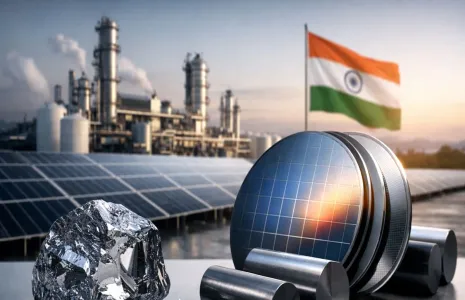
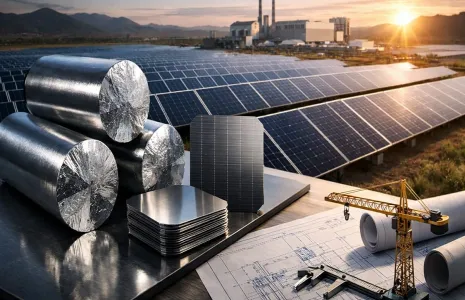
NITI Aayog said India's photovoltaic (PV) module and cell manufacturing capacity has grown significantly in recent years, yet the industry faces a shortage of upstream manufacturing capacity and remains dependent on imports for key components. The think tank highlighted the need to expand capacity across the value chain from polysilicon to cells. It underlined that strengthening upstream stages is necessary to secure supply and reduce input costs.

The report noted that the domestic photovoltaic manufacturing industry remains largely concentrated in the solar cell and module segments, with total module manufacturing capacity listed under the approved list of models and manufacturers rising sharply to 100 gigawatt (GW) in August 2025 from two point three GW in 2014. Despite this growth, India continues to import solar cells and modules while wafer and polysilicon imports are constrained by limited wafer manufacturing and relatively low cell production capacity. The imbalance has left the country exposed to external supply dynamics.

The authors recorded that China accounted for nearly 59 per cent of India’s photovoltaic cell and module imports in 2024 and held over 80 per cent of global supply capacity as of December 2024, reflecting its dominant manufacturing presence. During FY2015 and FY2025 India added 103 GW of solar capacity, implying a conservative minimum solar module demand of 103 GW. Installations pushed the country’s solar energy base to 106 GW in March 2025.

The report said the country is expected to add 174 GW to achieve the target of 280 GW by 2030, which will increase the imperative to manufacture more components domestically. It warned that China’s capacity consolidation and potential United States restrictions on foreign entities of concern could tighten global polysilicon supply and push up prices, raising input costs for Indian module makers until backward integration is achieved. The document stated that current oversupply and timely government intervention have supported Indian manufacturers and that market conditions favour integrated value chain players. It concluded that expanding from the polysilicon to the cell manufacturing stage will be critical for long term resilience.

NITI Aayog said India's photovoltaic (PV) module and cell manufacturing capacity has grown significantly in recent years, yet the industry faces a shortage of upstream manufacturing capacity and remains dependent on imports for key components. The think tank highlighted the need to expand capacity across the value chain from polysilicon to cells. It underlined that strengthening upstream stages is necessary to secure supply and reduce input costs. The report noted that the domestic photovoltaic manufacturing industry remains largely concentrated in the solar cell and module segments, with total module manufacturing capacity listed under the approved list of models and manufacturers rising sharply to 100 gigawatt (GW) in August 2025 from two point three GW in 2014. Despite this growth, India continues to import solar cells and modules while wafer and polysilicon imports are constrained by limited wafer manufacturing and relatively low cell production capacity. The imbalance has left the country exposed to external supply dynamics. The authors recorded that China accounted for nearly 59 per cent of India’s photovoltaic cell and module imports in 2024 and held over 80 per cent of global supply capacity as of December 2024, reflecting its dominant manufacturing presence. During FY2015 and FY2025 India added 103 GW of solar capacity, implying a conservative minimum solar module demand of 103 GW. Installations pushed the country’s solar energy base to 106 GW in March 2025. The report said the country is expected to add 174 GW to achieve the target of 280 GW by 2030, which will increase the imperative to manufacture more components domestically. It warned that China’s capacity consolidation and potential United States restrictions on foreign entities of concern could tighten global polysilicon supply and push up prices, raising input costs for Indian module makers until backward integration is achieved. The document stated that current oversupply and timely government intervention have supported Indian manufacturers and that market conditions favour integrated value chain players. It concluded that expanding from the polysilicon to the cell manufacturing stage will be critical for long term resilience.

Related Stories

Gold Stories

Next Story
Infrastructure Urban

Gopalan Metals Enters Building Wires Segment

Gopalan Metals (India) has recently launched Gopalan Wires and Cables, marking its entry into the building wires segment for residential, commercial and industrial applications.The product portfolio currently includes Flame Retardant (FR) and Flame Retardant Low Smoke and Halogen (FRLS-H) PVC house wires. The products are manufactured at the company’s Hoskote facility in Karnataka, which has a production capacity of around 6,000 km of building wires per month.Gopalan Wires and Cables will cater to electrical dealers, distributors, contractors, builders, infrastructure projects, OEMs and end ..
Next Story
Real Estate

KONE India Opens New Office in Jabalpur

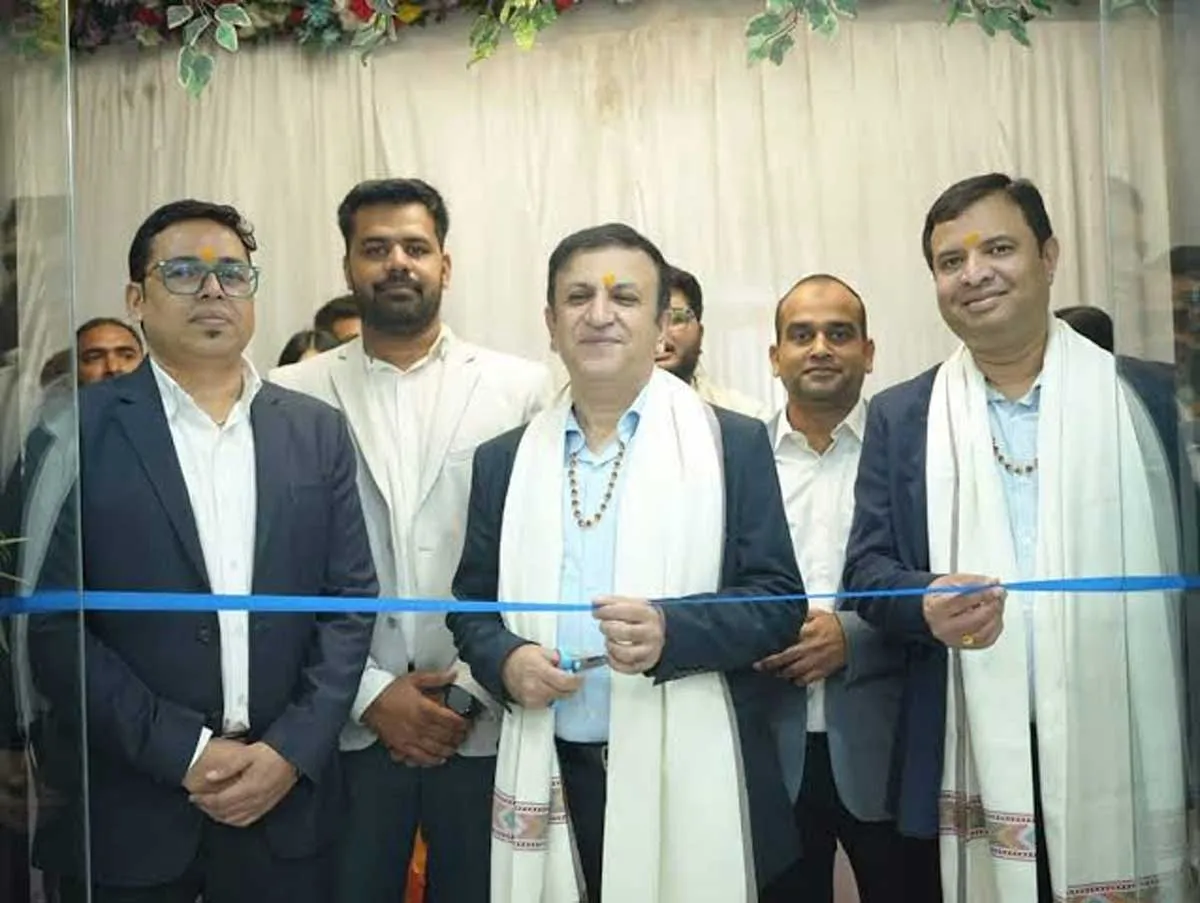
KONE India has recently inaugurated a new office in Jabalpur, strengthening its presence and customer reach across Central Madhya Pradesh.The office will serve customers in Rewa, Satna, Singrauli and Katni, while also expanding the company’s reach into emerging markets such as Shahdol and Seoni. It will provide local sales, service and installation support to address growing customer requirements across the region.Amit Gossain, Managing Director, KONE India, said, “Jabalpur is an important market for us, and this new office brings us closer to our customers in the area. As the region conti..

Next Story
Infrastructure Urban

Greenr Opens 12th Outlet at Oberoi Garden City, Goregaon

Greenr has recently opened its newest outlet at Cafés. Restaurants. Bars. within International Business Park, Oberoi Garden City, Goregaon, marking its 12th location in India and further strengthening its presence in Mumbai.The outlet brings together Greenr’s plant-forward food, specialty coffee and community-focused experiences in a format designed for professionals, residents and visitors. The space is intended to support dining, coffee meetings, informal work sessions and social interactions throughout the day.Greenr’s offering combines globally inspired vegetarian cuisine with wellnes..

Advertisement

Subscribe to Our Newsletter

Get daily newsletters around different themes from Construction world.

STAY CONNECTED

Advertisement