Industrial Parks Drive Smarter Infrastructure, Stronger Growth
ECONOMY & POLICY

Industrial Parks Drive Smarter Infrastructure, Stronger Growth

Industrial parks are increasingly emerging as a key instrument in advancing India’s industrialisation and innovation agenda, playing a vital role in strengthening the country’s manufacturing base and economic competitiveness. Developed through collaboration between the government, state authorities and the private sector, these parks are designed to attract investment, enable efficient industrial operations and promote balanced regional development.

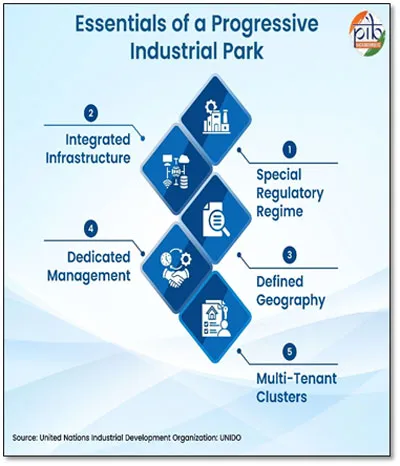
An industrial park typically comprises a planned and developed tract of land designated for industrial use, often supported by shared infrastructure, utilities and common facilities. By offering ready-to-use industrial ecosystems, these parks lower entry barriers for businesses, improve ease of doing business and accelerate project implementation. As the government progressively shifts from a regulatory role to that of a facilitator, industrial parks are becoming central to building a globally competitive industrial economy.

Beyond economic benefits, industrial parks are increasingly aligned with sustainability and responsible development goals. Park authorities ensure compliance with environmental regulations, promote awareness of environmental standards and incentivise companies to adopt eco-friendly practices. Resource efficiency is encouraged through technology upgrades, audits and advisory support aimed at reducing waste and optimising energy and water use. Continuous monitoring of air, noise and light emissions, along with safeguards against soil and groundwater contamination, helps minimise environmental impact.

Environmental planning within industrial parks also incorporates biodiversity conservation and climate resilience, ensuring efficient land use while protecting ecosystems. This integrated approach supports long-term industrial viability and reduces environmental risks.

Industrial parks further contribute to social development by providing essential infrastructure and services for workers and surrounding communities. Facilities such as secure housing, healthcare access, safety systems and gender-sensitive workplaces promote employee well-being and inclusion. Engagement with trade unions and civil society organisations enhances transparency, improves labour standards and fosters community trust.

Together, these measures position industrial parks as engines of sustainable industrial growth, employment generation and infrastructure-led economic development in India.

Industrial parks are increasingly emerging as a key instrument in advancing India’s industrialisation and innovation agenda, playing a vital role in strengthening the country’s manufacturing base and economic competitiveness. Developed through collaboration between the government, state authorities and the private sector, these parks are designed to attract investment, enable efficient industrial operations and promote balanced regional development.An industrial park typically comprises a planned and developed tract of land designated for industrial use, often supported by shared infrastructure, utilities and common facilities. By offering ready-to-use industrial ecosystems, these parks lower entry barriers for businesses, improve ease of doing business and accelerate project implementation. As the government progressively shifts from a regulatory role to that of a facilitator, industrial parks are becoming central to building a globally competitive industrial economy.Beyond economic benefits, industrial parks are increasingly aligned with sustainability and responsible development goals. Park authorities ensure compliance with environmental regulations, promote awareness of environmental standards and incentivise companies to adopt eco-friendly practices. Resource efficiency is encouraged through technology upgrades, audits and advisory support aimed at reducing waste and optimising energy and water use. Continuous monitoring of air, noise and light emissions, along with safeguards against soil and groundwater contamination, helps minimise environmental impact.Environmental planning within industrial parks also incorporates biodiversity conservation and climate resilience, ensuring efficient land use while protecting ecosystems. This integrated approach supports long-term industrial viability and reduces environmental risks.Industrial parks further contribute to social development by providing essential infrastructure and services for workers and surrounding communities. Facilities such as secure housing, healthcare access, safety systems and gender-sensitive workplaces promote employee well-being and inclusion. Engagement with trade unions and civil society organisations enhances transparency, improves labour standards and fosters community trust.Together, these measures position industrial parks as engines of sustainable industrial growth, employment generation and infrastructure-led economic development in India.

Next Story
Infrastructure Urban

Assam Poised as Act East Gateway, Sonowal tells Guwahati Dialogue

Union Minister of Ports, Shipping and Waterways Sarbananda Sonowal on Tuesday said Assam is uniquely positioned to emerge as a regional growth hub under India’s Act East Policy, calling on entrepreneurs to leverage the state’s strategic geography, improving connectivity and governance reforms to drive inclusive development across the Northeast.Delivering the keynote address at the second Guwahati Dialogue, Sonowal said Assam has the potential to cater to a market of nearly 800 million people extending from Nepal to Myanmar, as India strengthens economic and logistical integration with Sout..

Advertisement

Subscribe to Our Newsletter

Get daily newsletters around different themes from Construction world.

STAY CONNECTED

Advertisement

Advertisement

Advertisement

Advertisement

Open In App