Ludhiana Adopts Intelligent Traffic Management System
ECONOMY & POLICY

Ludhiana Adopts Intelligent Traffic Management System

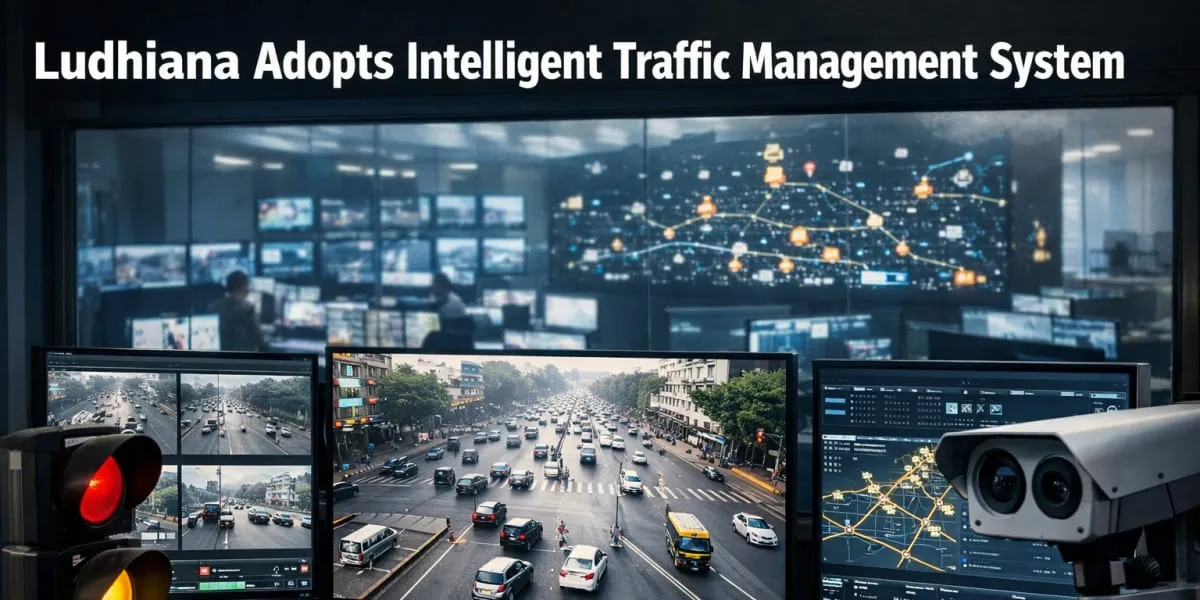
Ludhiana has become the third city in Punjab to implement the Intelligent Traffic Management System (ITMS), joining Jalandhar and Mohali in the statewide roll-out. The Director General of Police (DGP) Gaurav Yadav inaugurated the Integrated Command and Control Centre (ICCC) in the city as part of efforts to modernise the Punjab Police. Authorities described the move as a step towards preventive policing and greater use of technology in routine operations.

Officials said that under the ICCC project 1,700 high-resolution cameras have been installed at 259 locations to strengthen the city’s surveillance grid. The ITMS has been deployed at 46 locations across Ludhiana and is configured to detect nine categories of traffic violations, including red light breaches, stop line offences, riding without helmets by riders or pillions, triple riding, overspeeding, zebra crossing violations, wrong-side driving and illegal parking. Authorities noted that the system will support enforcement and road safety initiatives.

The DGP indicated that the upgraded ICCC integrates Traffic, Police Control Room (PCR), Safe City and Wireless systems to improve coordination across units. He reported that integration has reduced PCR response time from 15 minutes to just seven to eight minutes and said he had reviewed ground operations during a visit focused on technology-driven policing and swift resolution of public grievances. Senior police leadership held a comprehensive meeting with field officers to reinforce citizen-centric service delivery.

To foster camaraderie and morale, the DGP joined personnel at a communal meal attended by over 550 police staff and presented honours to high-performing officers to encourage sustained performance. The event saw the participation of Commissioner of Police (CP) Ludhiana Swapan Sharma, Deputy Inspector General of Police (DIG) Ludhiana Range Satinder Singh and other senior superintendents, who were cited as contributors to the initiative. Authorities signalled that the ITMS and ICCC form part of an ongoing effort to adopt smart, preventive approaches to urban policing.

Ludhiana has become the third city in Punjab to implement the Intelligent Traffic Management System (ITMS), joining Jalandhar and Mohali in the statewide roll-out. The Director General of Police (DGP) Gaurav Yadav inaugurated the Integrated Command and Control Centre (ICCC) in the city as part of efforts to modernise the Punjab Police. Authorities described the move as a step towards preventive policing and greater use of technology in routine operations. Officials said that under the ICCC project 1,700 high-resolution cameras have been installed at 259 locations to strengthen the city’s surveillance grid. The ITMS has been deployed at 46 locations across Ludhiana and is configured to detect nine categories of traffic violations, including red light breaches, stop line offences, riding without helmets by riders or pillions, triple riding, overspeeding, zebra crossing violations, wrong-side driving and illegal parking. Authorities noted that the system will support enforcement and road safety initiatives. The DGP indicated that the upgraded ICCC integrates Traffic, Police Control Room (PCR), Safe City and Wireless systems to improve coordination across units. He reported that integration has reduced PCR response time from 15 minutes to just seven to eight minutes and said he had reviewed ground operations during a visit focused on technology-driven policing and swift resolution of public grievances. Senior police leadership held a comprehensive meeting with field officers to reinforce citizen-centric service delivery. To foster camaraderie and morale, the DGP joined personnel at a communal meal attended by over 550 police staff and presented honours to high-performing officers to encourage sustained performance. The event saw the participation of Commissioner of Police (CP) Ludhiana Swapan Sharma, Deputy Inspector General of Police (DIG) Ludhiana Range Satinder Singh and other senior superintendents, who were cited as contributors to the initiative. Authorities signalled that the ITMS and ICCC form part of an ongoing effort to adopt smart, preventive approaches to urban policing.

Next Story
Infrastructure Urban

Centre Clears Power Distribution Upgrade for Uttar Pradesh

The Central Government has approved power distribution projects worth Rs 407.39 billion for Uttar Pradesh under the Revamped Distribution Sector Scheme (RDSS). The investment will be used to modernise the state's electricity distribution infrastructure and strengthen network capacity across urban and rural areas. The package targets one of the country's largest distribution networks as the state experiences rapid urbanisation and rising electricity consumption. Planned interventions include the strengthening of distribution lines, modernisation of substations, replacement of ageing electrical ..

Next Story
Infrastructure Energy

India Data Centres To Consume 191 TWh By 2040 Driving Renewables

A Wood Mackenzie report says India's operational data centre capacity is projected to increase more than fivefold to 12 gigawatt (GW) by 2030 from 2.2 GW in 2025 as artificial intelligence (AI) and cloud computing drive demand. It projects electricity consumption to rise from 10 terawatt-hour (TWh) in 2025 to 191 TWh by 2040. The study forecasts a compound annual growth rate of around 40 per cent and notes AI-dedicated capacity will surge nearly 24-fold from 275 megawatt (MW) in 2025 to 6,546 MW by 2030. The report places India's digital economy at Rs 32 trillion (tn) in 2025 and says it contr..

Next Story
Infrastructure Transport

Hydrogen Train Completes 1,200 Kilometres Of Trials

India's first hydrogen train was flagged off between Jind and Sonipat on July 17 and has travelled over 1,200 kilometres in trials, saving diesel consumption of more than 3,200 litres, a Railway Ministry press release said. The deployment marks the introduction of a zero-emission fuel cell train into route testing and represents a milestone in domestic rail innovation. The train generates electricity onboard through a chemical reaction between hydrogen and oxygen, producing electricity to propel the vehicle while emitting only water vapour as a by-product. There is no smoke and no tailpipe car..

Advertisement

Subscribe to Our Newsletter

Get daily newsletters around different themes from Construction world.

STAY CONNECTED

Advertisement

Advertisement

Advertisement