Maharashtra Crosses 15 Million Smart Meter Installations
ECONOMY & POLICY

Maharashtra Crosses 15 Million Smart Meter Installations

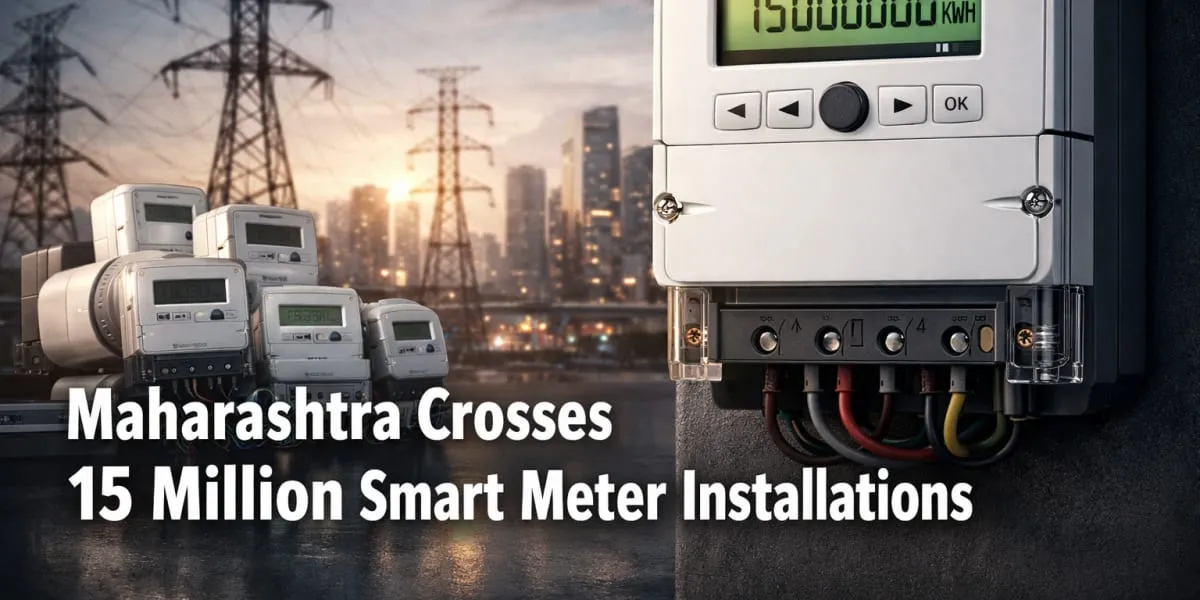
Maharashtra has completed the installation of 15 million (15 mn) smart electricity meters, covering nearly half of the meters identified for replacement across the state.

The deployment is being led by Maharashtra State Electricity Distribution Company Limited (MSEDCL) in collaboration with Brihanmumbai Electricity Supply and Transport (BEST), Adani Electricity and Tata Power.

A significant proportion of the new devices have replaced faulty or inaccurate meters, including more than 1,000 so-called zero meters that previously failed to record consumption. The replacement drive has improved billing accuracy and reduced consumer disputes over electricity usage. Authorities have presented the programme as a step towards modernising the state's power distribution infrastructure. The rollouts have shortened dispute resolution times and simplified meter maintenance schedules.

Awareness campaigns have been intensified through social media, SMS alerts and housing society outreach to improve consumer understanding of smart metering technology. Smart meters supply near real-time information on electricity consumption, enabling users to monitor hourly, daily and monthly usage patterns, estimate bills, compare trends and receive alerts about unusual spikes in use. Time-of-day tariffs have already helped some consumers lower bills by shifting consumption to off-peak hours and wider adoption of such pricing mechanisms is expected to encourage more efficient energy use across the state. Many consumers find it easier to budget monthly spend.

For utilities, the meters enable real-time network monitoring to help detect power theft, reduce distribution losses and identify faults more quickly. These capabilities are expected to improve supply reliability and reduce outages, thereby supporting operational efficiency. The programme is being positioned as part of a broader push to digitalise metering and strengthen grid resilience while delivering clearer billing for customers. Operators expect operational savings from faster fault detection and lower manual intervention in billing processes.

"Join industry leaders at RAHSTA Expo, India's premier platform for roads, highways and traffic infrastructure. Register now to explore innovations, network with experts and shape the future of mobility."

Maharashtra has completed the installation of 15 million (15 mn) smart electricity meters, covering nearly half of the meters identified for replacement across the state. The deployment is being led by Maharashtra State Electricity Distribution Company Limited (MSEDCL) in collaboration with Brihanmumbai Electricity Supply and Transport (BEST), Adani Electricity and Tata Power. A significant proportion of the new devices have replaced faulty or inaccurate meters, including more than 1,000 so-called zero meters that previously failed to record consumption. The replacement drive has improved billing accuracy and reduced consumer disputes over electricity usage. Authorities have presented the programme as a step towards modernising the state's power distribution infrastructure. The rollouts have shortened dispute resolution times and simplified meter maintenance schedules. Awareness campaigns have been intensified through social media, SMS alerts and housing society outreach to improve consumer understanding of smart metering technology. Smart meters supply near real-time information on electricity consumption, enabling users to monitor hourly, daily and monthly usage patterns, estimate bills, compare trends and receive alerts about unusual spikes in use. Time-of-day tariffs have already helped some consumers lower bills by shifting consumption to off-peak hours and wider adoption of such pricing mechanisms is expected to encourage more efficient energy use across the state. Many consumers find it easier to budget monthly spend. For utilities, the meters enable real-time network monitoring to help detect power theft, reduce distribution losses and identify faults more quickly. These capabilities are expected to improve supply reliability and reduce outages, thereby supporting operational efficiency. The programme is being positioned as part of a broader push to digitalise metering and strengthen grid resilience while delivering clearer billing for customers. Operators expect operational savings from faster fault detection and lower manual intervention in billing processes.

Next Story
Infrastructure Energy

Centre Prioritising Energy Security With Coal Gasification

Union minister for Coal and Mines G Kishan Reddy said the Centre is prioritising energy security through a strategic shift to coal gasification and has announced incentives totalling Rs 460 billion (bn) to support the effort. He said more than 35 companies will start coal gasification activities in India within two months and that the government is encouraging firms that bring technology to close the domestic technology gap. The minister described the initiative as aimed at reducing import dependence and developing indigenous capacity. India has the fifth-largest coal reserve in the world, and..

Next Story
Infrastructure Urban

BHEL and Coal India Invest Rs 250 bn in Odisha Gasification

Bharat Heavy Electricals (BHEL) and Coal India (CIL) are jointly investing Rs 250 billion in a coal gasification project in Odisha, with the Prime Minister laying the foundation stone in Jharsuguda. Union Coal and Mines Minister G Kishan Reddy described the initiative as a transformative shift in coal utilisation that will open industrial avenues for the state. The project moves coal beyond conventional power generation to industrial feedstocks. Coal gasification will convert coal into synthesis gas, a versatile feedstock for chemicals, fertilisers and synthetic fuels, and the technology is ex..

Next Story
Infrastructure Energy

BCCL Hands Over Dugdha Coal Washery To JSW Steel

Bharat Coking Coal has handed over the Dugdha Coal Washery to JSW Steel, marking the first coal washery asset monetisation under the Ministry of Coal's asset monetisation programme. The handover took place in the presence of senior officials from Bharat Coking Coal Ltd, JSW Steel and JSW Energy. The washery has a capacity of two million tonnes per annum (mn t per annum), and its transfer is intended to introduce private sector practices into coal beneficiation operations. The monetisation is aimed at modernising coal sector assets, improving operational efficiency and enhancing resource utilis..

Advertisement

Subscribe to Our Newsletter

Get daily newsletters around different themes from Construction world.

STAY CONNECTED

Advertisement

Advertisement

Advertisement