Midwest Energy Eyes Rs 10 bn Revenue With New One Point Two GWh Plant
ECONOMY & POLICY

Midwest Energy Eyes Rs 10 bn Revenue With New One Point Two GWh Plant

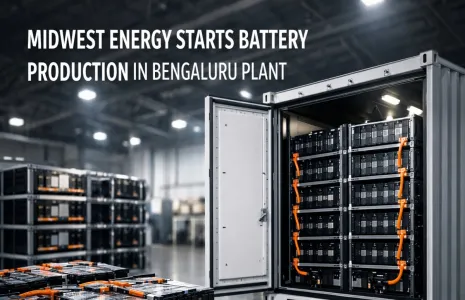
Midwest Energy has commissioned a one point two gigawatt hours (GWh) per annum battery energy storage system (BESS) manufacturing facility in Bengaluru, built with an investment of Rs one bn and targeting annual revenues of about Rs 10 bn at full capacity utilisation. The project is expected to create up to 150 to 250 jobs as production scales and is positioned to serve domestic grid storage and related commercial and industrial markets. The launch follows growing policy and market focus on energy storage to integrate intermittent renewable generation.

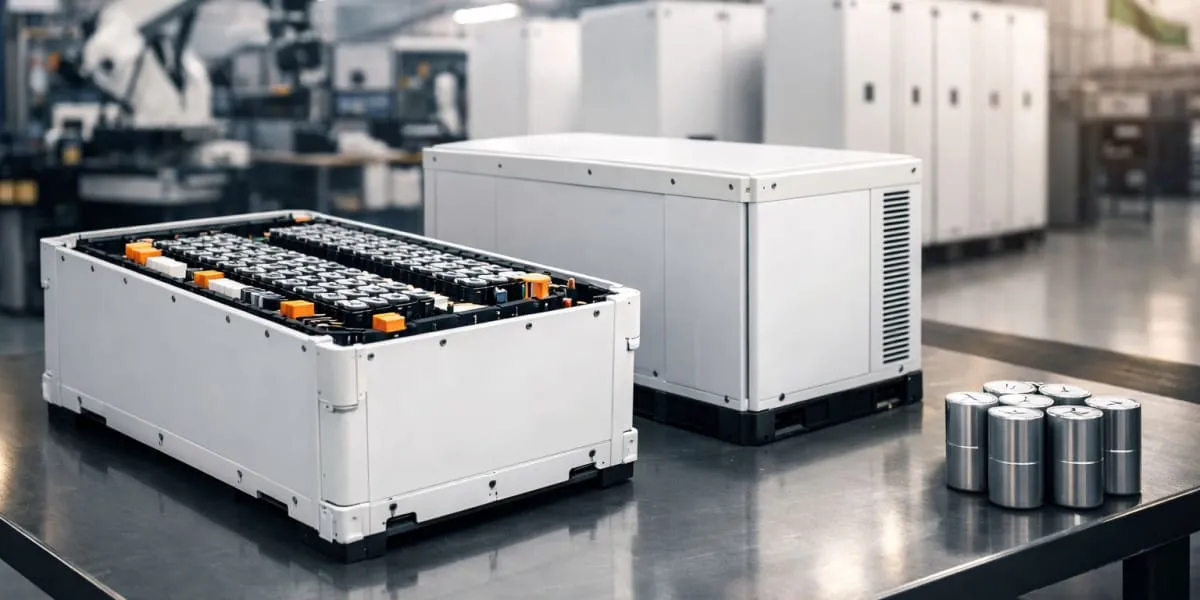
The facility manufactures battery storage systems ranging from three kWh to six MWh across voltage platforms from 48V to 1,500V for commercial, industrial, renewable energy and utility applications. Products are designed to meet UL 1973, UL 9540 and UL 9540A safety standards and the plant includes integrated cell-to-container manufacturing capabilities. The chief executive indicated strong demand is anticipated from utilities, commercial and industrial customers, data centres, hospitals and electric mobility projects.

The company plans to derive around 30 per cent of sales from exports from the next financial year, leveraging UL-certified products and pursuing rack-level certification while container-level approvals are expected over coming quarters. Management intends to automate the existing facility to raise capacity to two GWh and then expand to three GWh and six GWh over the next three years. Industry studies estimate India will require 888 GWh of energy storage capacity by 2035-36, up from about one GWh today, reinforcing the addressable market for domestic producers.

Funding for the project combined about 40 per cent bank financing with 60 per cent internal accruals. Beyond grid-scale storage, the group is developing battery systems for electric buses and plans to participate indirectly in state and government tenders through partner firms, with the same production line able to serve both stationary storage and EV applications. The chairman highlighted two structural challenges for the sector: dependence on imported lithium and insufficient investment in research and development, and noted the group is investing in rare earth minerals to reduce import reliance.

Midwest Energy has commissioned a one point two gigawatt hours (GWh) per annum battery energy storage system (BESS) manufacturing facility in Bengaluru, built with an investment of Rs one bn and targeting annual revenues of about Rs 10 bn at full capacity utilisation. The project is expected to create up to 150 to 250 jobs as production scales and is positioned to serve domestic grid storage and related commercial and industrial markets. The launch follows growing policy and market focus on energy storage to integrate intermittent renewable generation. The facility manufactures battery storage systems ranging from three kWh to six MWh across voltage platforms from 48V to 1,500V for commercial, industrial, renewable energy and utility applications. Products are designed to meet UL 1973, UL 9540 and UL 9540A safety standards and the plant includes integrated cell-to-container manufacturing capabilities. The chief executive indicated strong demand is anticipated from utilities, commercial and industrial customers, data centres, hospitals and electric mobility projects. The company plans to derive around 30 per cent of sales from exports from the next financial year, leveraging UL-certified products and pursuing rack-level certification while container-level approvals are expected over coming quarters. Management intends to automate the existing facility to raise capacity to two GWh and then expand to three GWh and six GWh over the next three years. Industry studies estimate India will require 888 GWh of energy storage capacity by 2035-36, up from about one GWh today, reinforcing the addressable market for domestic producers. Funding for the project combined about 40 per cent bank financing with 60 per cent internal accruals. Beyond grid-scale storage, the group is developing battery systems for electric buses and plans to participate indirectly in state and government tenders through partner firms, with the same production line able to serve both stationary storage and EV applications. The chairman highlighted two structural challenges for the sector: dependence on imported lithium and insufficient investment in research and development, and noted the group is investing in rare earth minerals to reduce import reliance.

Next Story
Real Estate

We will continue to invest in integrated commercial destinations: Amrita Gupta

Amrita Gupta, Director, Manglam Group and CEO, Manglam Spa and Resorts, speaks on how projects like Westin Jaipur Resort and Sheraton Jaipur are strengthening Manglam Group's integrated real estate and hospitality strategy.Manglam Group has announced a Rs 1,000 crore hospitality expansion in Rajasthan—what strategic vision is driving this next phase of growth?Hospitality has emerged as a defining pillar of Manglam Group’s long-term growth strategy, underpinned by a vision of creating destination-led experiences that transcend conventional hospitality. The genesis of this journey was The We..

Next Story
Infrastructure Energy

Batliboi Wins Rs 520 Mn Contract For Solar Cell Pollution Controls

Batliboi Limited has secured a major contract from SAEL Industries Limited to supply pollution control systems for a new solar cell manufacturing facility at Jewar in Uttar Pradesh. The order instructs Batliboi Limited's EEG Division to design, engineer, supply, install and commission a PEX system to support SAEL Industries Limited's six GW solar cell line. The contract is domestic in origin and was submitted to the stock exchanges under regulatory disclosure requirements. The contract value is Rs 520 mn, reflecting a substantial order for environmental control equipment for the manufacturing ..

Next Story
Infrastructure Urban

Delhi Approves PARIVARTAN Scheme To Replace Old Trucks And Buses

The Delhi government has approved the Programme for Accelerated Renewal and Incentivisation of Vehicle Assets for Reducing Transport Air Pollution and Network Emissions (PARIVARTAN) to cut transport-related emissions in the national capital. The scheme, supported by the Ministry of Road Transport and Highways (MoRTH), will phase out old, polluting trucks and buses and replace them with BS-VI, higher-emission-standard or electric vehicles. The initiative is intended to modernise the commercial vehicle fleet and strengthen the capital's clean transport system. Owners of Light Goods Vehicles that..

Advertisement

Subscribe to Our Newsletter

Get daily newsletters around different themes from Construction world.

STAY CONNECTED

Advertisement

Advertisement

Advertisement