Modi Lays Foundation For Rs 110bn Namrup Fertiliser Plant
ECONOMY & POLICY

Modi Lays Foundation For Rs 110bn Namrup Fertiliser Plant

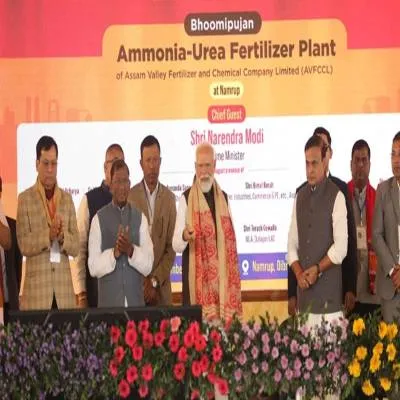
Prime Minister Narendra Modi on Tuesday laid the foundation stone for the Ammonia–Urea Fertiliser Project of Assam Valley Fertilizer and Chemical Company Limited at Namrup in Dibrugarh, calling it a historic step for Assam and the entire Northeast. Addressing the gathering, Modi said the project marks the beginning of a new chapter of industrial growth in the region and reflects the renewed pace of development across Assam.

The Prime Minister said around Rs 110 billion will be invested in the fertiliser project, which will produce more than 1.2 million metric tonnes of urea annually. Local production, he noted, will ensure faster supply to farmers while reducing logistics costs. He added that the Namrup unit will generate thousands of employment and self-employment opportunities, including permanent local jobs once operations begin, along with indirect work in repair, supply and allied services.

Highlighting the importance of farmers in building a developed India, Modi said the government is committed to ensuring uninterrupted fertiliser availability. He recalled that Namrup had once been a key fertiliser hub for the Northeast, but outdated technology and neglect by previous governments led to the shutdown of several units, hurting farmers’ incomes and agricultural productivity. He said the current Union and state governments are correcting these past lapses by reviving and expanding domestic fertiliser capacity.

Modi noted that India’s urea production has risen from 22.5 million metric tonnes in 2014 to nearly 30.6 million metric tonnes today, against an annual requirement of about 38 million metric tonnes. He said the government is working rapidly to bridge this gap and move towards self-reliance. While imported urea costs the government nearly Rs 3,000 per bag, farmers pay only Rs 300, with the balance borne through subsidies so that farmers are not burdened financially. He also urged judicious use of fertilisers to protect soil health.

The Prime Minister said the government supports farmers from seed to market, citing direct income support transfers of nearly Rs 4 trillion under the PM Kisan Samman Nidhi scheme. He added that two agriculture schemes worth Rs 350 billion were launched this year, including the PM Dhan Dhanya Krishi Yojana and the Dalhan Atmanirbharta Mission. He highlighted wider measures such as crop insurance, improved procurement systems, expanded Kisan Credit Card coverage to livestock and fisheries, assistance of over Rs 10 trillion through KCC, reduced GST on bio-fertilisers, promotion of natural farming, and the creation of 10,000 farmer producer organisations nationwide.

Modi also pointed to broader socio-economic changes in Assam, including financial inclusion of 0.75 million tea garden workers through Jan Dhan accounts, expanded infrastructure in tea garden areas, and rising living standards that have helped lift around 250 million people out of poverty nationwide over the past 11 years. He said Eastern India and the Northeast are emerging as key growth engines, with the Namrup plant set to supply fertiliser not only to Assam but also to Bihar, Jharkhand, West Bengal and eastern Uttar Pradesh.

Governor of Assam Lakshman Prasad Acharya, Chief Minister Himanta Biswa Sarma and Union Minister Sarbananda Sonowal were among the dignitaries present at the event

Prime Minister Narendra Modi on Tuesday laid the foundation stone for the Ammonia–Urea Fertiliser Project of Assam Valley Fertilizer and Chemical Company Limited at Namrup in Dibrugarh, calling it a historic step for Assam and the entire Northeast. Addressing the gathering, Modi said the project marks the beginning of a new chapter of industrial growth in the region and reflects the renewed pace of development across Assam. The Prime Minister said around Rs 110 billion will be invested in the fertiliser project, which will produce more than 1.2 million metric tonnes of urea annually. Local production, he noted, will ensure faster supply to farmers while reducing logistics costs. He added that the Namrup unit will generate thousands of employment and self-employment opportunities, including permanent local jobs once operations begin, along with indirect work in repair, supply and allied services. Highlighting the importance of farmers in building a developed India, Modi said the government is committed to ensuring uninterrupted fertiliser availability. He recalled that Namrup had once been a key fertiliser hub for the Northeast, but outdated technology and neglect by previous governments led to the shutdown of several units, hurting farmers’ incomes and agricultural productivity. He said the current Union and state governments are correcting these past lapses by reviving and expanding domestic fertiliser capacity. Modi noted that India’s urea production has risen from 22.5 million metric tonnes in 2014 to nearly 30.6 million metric tonnes today, against an annual requirement of about 38 million metric tonnes. He said the government is working rapidly to bridge this gap and move towards self-reliance. While imported urea costs the government nearly Rs 3,000 per bag, farmers pay only Rs 300, with the balance borne through subsidies so that farmers are not burdened financially. He also urged judicious use of fertilisers to protect soil health. The Prime Minister said the government supports farmers from seed to market, citing direct income support transfers of nearly Rs 4 trillion under the PM Kisan Samman Nidhi scheme. He added that two agriculture schemes worth Rs 350 billion were launched this year, including the PM Dhan Dhanya Krishi Yojana and the Dalhan Atmanirbharta Mission. He highlighted wider measures such as crop insurance, improved procurement systems, expanded Kisan Credit Card coverage to livestock and fisheries, assistance of over Rs 10 trillion through KCC, reduced GST on bio-fertilisers, promotion of natural farming, and the creation of 10,000 farmer producer organisations nationwide. Modi also pointed to broader socio-economic changes in Assam, including financial inclusion of 0.75 million tea garden workers through Jan Dhan accounts, expanded infrastructure in tea garden areas, and rising living standards that have helped lift around 250 million people out of poverty nationwide over the past 11 years. He said Eastern India and the Northeast are emerging as key growth engines, with the Namrup plant set to supply fertiliser not only to Assam but also to Bihar, Jharkhand, West Bengal and eastern Uttar Pradesh. Governor of Assam Lakshman Prasad Acharya, Chief Minister Himanta Biswa Sarma and Union Minister Sarbananda Sonowal were among the dignitaries present at the event

Next Story
Real Estate

Modon, Related, Panepinto form JV for Harborside 4 in Jersey City

Abu Dhabi-based Modon Holding PSC has formed a joint venture with US real estate major Related Companies and Jersey City-based Panepinto Properties to develop Harborside 4, a 54-storey luxury residential tower on a prime waterfront site in downtown Jersey City, New Jersey.Under the partnership, Modon will hold a majority equity stake alongside Related and Panepinto, marking another step in the group’s strategy to scale and diversify its global real estate portfolio. The project will be developed on one of the last remaining premium waterfront parcels in the city.Designed by Handel Architects..

Next Story
Infrastructure Urban

P+Ex and Post-Tensioning Institute partner to drive sustainability

P+Ex, the Center of Excellence for Concrete Preservation and Service Life Extension, has announced a strategic partnership with the Post-Tensioning Institute (PTI) aimed at advancing sustainability, durability, and resilience in the built environment.The collaboration brings together P+Ex’s expertise in concrete preservation, repair, and service life extension with PTI’s global leadership in post-tensioning technology. Through this alliance, the two organisations will work to advance best practices in durability-focused design for new structures, while also promoting effective repair, reha..

Next Story
Infrastructure Energy

India’s Largest 2,000 MW Subansiri Hydro Project Turns Operational

India’s largest hydropower project, the 2,000 MW Subansiri Lower Hydroelectric Project, has finally become operational with the commissioning of its first unit, marking a major milestone after nearly 20 years of development marked by delays, protests and cost escalation.The 250 MW Unit-2 of the project, located on the Subansiri River at Gerukamukh on the Assam–Arunachal Pradesh border, was virtually inaugurated from New Delhi by Union Minister of Power Manohar Lal Khattar. The event was attended by Pankaj Agarwal, Secretary (Power), and Bhupender Gupta, Chairman and Managing Director, Nati..

Advertisement

Subscribe to Our Newsletter

Get daily newsletters around different themes from Construction world.

STAY CONNECTED

Advertisement

Advertisement

Advertisement

Advertisement

Open In App