Pan India Test of Indigenous Cell Broadcast System Underway
ECONOMY & POLICY

Pan India Test of Indigenous Cell Broadcast System Underway

The Department of Telecommunications (DoT), Ministry of Communications, in collaboration with the National Disaster Management Authority (NDMA), is enhancing mobile based disaster communication systems to ensure timely dissemination of critical information. The Integrated Alert System (SACHET), developed by the Centre for Development of Telematics (C-DOT), is based on the Common Alerting Protocol (CAP) recommended by the International Telecommunication Union and has been operationalised for national use.

The platform is reported to be active across all 36 States and Union Territories and delivers disaster and emergency alerts via SMS to mobile users within geo targeted areas. Authorities state the system has enabled dissemination of over 134 bn SMS alerts to date in more than 19 Indian languages during natural disasters, weather warnings and cyclonic events. C-DOT has been entrusted with the indigenous development and deployment of a Cell Broadcast (CB) system to complement SMS for urgent incidents.

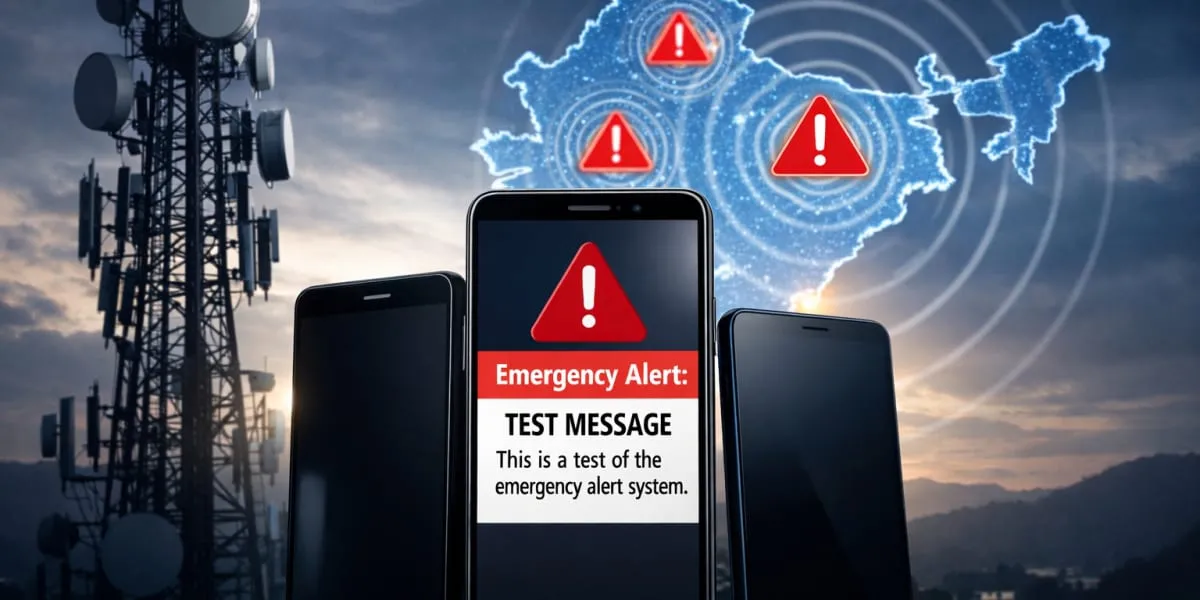
Cell Broadcast technology has been introduced to strengthen alert dissemination in time critical situations such as tsunamis, earthquakes, lightning strikes and man made emergencies including gas leaks and chemical hazards. In a CB system alerts are transmitted simultaneously to all mobile devices within a defined geographic area, ensuring near real time delivery. Nationwide testing and trials of the CB facility are under way as part of the pan India rollout to assess performance and reliability prior to formal inauguration and dedication to the nation.

During the testing phase members of the public may receive test messages in English, Hindi and regional languages on their mobile devices and recipients are requested to take no action. Test messages will be received only on devices with Cell Broadcast test channels enabled and users may enable or disable alerts via handset safety and emergency settings. Recipients may receive multiple messages as part of validation and once successfully tested the CB system will be used to disseminate alerts across all mobile handsets regardless of test channel settings to ensure wide and inclusive public reach. The DoT has requested public co operation during the validation exercise.

The Department of Telecommunications (DoT), Ministry of Communications, in collaboration with the National Disaster Management Authority (NDMA), is enhancing mobile based disaster communication systems to ensure timely dissemination of critical information. The Integrated Alert System (SACHET), developed by the Centre for Development of Telematics (C-DOT), is based on the Common Alerting Protocol (CAP) recommended by the International Telecommunication Union and has been operationalised for national use. The platform is reported to be active across all 36 States and Union Territories and delivers disaster and emergency alerts via SMS to mobile users within geo targeted areas. Authorities state the system has enabled dissemination of over 134 bn SMS alerts to date in more than 19 Indian languages during natural disasters, weather warnings and cyclonic events. C-DOT has been entrusted with the indigenous development and deployment of a Cell Broadcast (CB) system to complement SMS for urgent incidents. Cell Broadcast technology has been introduced to strengthen alert dissemination in time critical situations such as tsunamis, earthquakes, lightning strikes and man made emergencies including gas leaks and chemical hazards. In a CB system alerts are transmitted simultaneously to all mobile devices within a defined geographic area, ensuring near real time delivery. Nationwide testing and trials of the CB facility are under way as part of the pan India rollout to assess performance and reliability prior to formal inauguration and dedication to the nation. During the testing phase members of the public may receive test messages in English, Hindi and regional languages on their mobile devices and recipients are requested to take no action. Test messages will be received only on devices with Cell Broadcast test channels enabled and users may enable or disable alerts via handset safety and emergency settings. Recipients may receive multiple messages as part of validation and once successfully tested the CB system will be used to disseminate alerts across all mobile handsets regardless of test channel settings to ensure wide and inclusive public reach. The DoT has requested public co operation during the validation exercise.

Next Story
Infrastructure Urban

Meghalaya And Assam Hold Talks To End Transport Stoppages In Garo Hills

Meghalaya and Assam have opened talks aimed at ending recent stoppages of commodity transport in the Garo Hills, officials said. The deputy chief minister, in charge of home affairs, reported that both state governments are coordinating to resolve disruptions and to restore normal movement of goods. He acknowledged that misunderstandings may have contributed to the incidents and that clarification between administrative units is under way. The discussions are intended to produce practical arrangements that will allow consignments to move without hindrance while respecting local procedures. The..

Next Story
Infrastructure Transport

Kochi Metro Records 1.375 mn Rise In Passengers In FY26

Kochi Metro recorded a marginal rise in ridership in the financial year 2025-26, carrying 1.375 mn more passengers than in the previous year. The service carried 36.8 million (mn) passengers in 2025-26 compared with 35.5 mn in 2024-25, representing a year-on-year increase of 3.9 per cent. The growth was described as distributed rather than concentrated in isolated spikes. A month-wise analysis shows steady gains across quarters. In the first quarter, ridership increased from 8.57 mn to 8.84 mn, while the second quarter rose from 9.13 mn to 9.51 mn. These trends indicated broad-based improvemen..

Next Story
Infrastructure Transport

Ghaziabad Plans 16km Metro Link To Delhi Via Hindon Airport

Ghaziabad authorities are pursuing a 16 km metro link to Delhi that will run via Hindon Airport, and a detailed project report is under way. The plan is intended to improve connectivity between Ghaziabad and the national capital and to provide an interchange with the airport. Officials said the project is being studied to assess alignments, station locations and cost estimates ahead of formal approvals and tendering. The announcement follows the inauguration of the Delhi?Faridabad metro extension, which will offer hassle free travel for around 0.2 mn daily commuters between the national capita..

Advertisement

Subscribe to Our Newsletter

Get daily newsletters around different themes from Construction world.

STAY CONNECTED

Advertisement

Advertisement

Advertisement