Panel Urges Budget Push For IREL To Secure Rare Earths
ECONOMY & POLICY

Panel Urges Budget Push For IREL To Secure Rare Earths

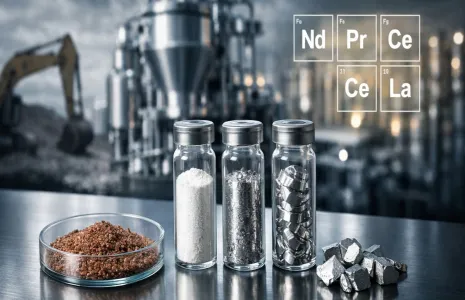
Amid rising global demand for rare earth elements, a parliamentary panel has urged the government to strengthen IREL (India) with targeted budgetary support to prioritise the exploration and mining of these critical minerals. IREL, a central public sector enterprise under the Department of Atomic Energy, is currently the only company in India engaged in mining rare earth ores and refining them into rare earth oxides.

The Standing Committee on Coal, Mines and Steel, in its latest report, called on the government to formulate strategies to improve domestic availability through identification, exploration and assessment of economic viability, with the objective of reducing India’s heavy dependence on imports. Rare earth minerals, which are difficult and costly to extract due to their low concentration in nature, are vital for clean energy technologies such as wind turbines, electric motors, hybrid vehicle batteries and solar power systems, as well as for defence applications.

Under the Mines and Minerals framework, rare earth minerals that do not contain uranium and thorium are classified as critical and strategic minerals, while those containing uranium and thorium are designated as atomic minerals and regulated by the Department of Atomic Energy. The committee said the government should consider reinforcing institutions such as IREL through focused budgetary allocations to accelerate exploration and mining of rare earth elements.

The panel also suggested that the Ministry of Mines explore international collaborations to facilitate the transfer of technological know-how and mineral processing capabilities in the rare earth sector. It noted that the Geological Survey of India has stepped up exploration efforts, having undertaken 186 rare earth exploration projects over the past three years, with 94 projects currently underway across the country in the ongoing financial year.

IREL has a mineral processing capacity of about 0.6 million tonnes per annum and produces key minerals including ilmenite, rutile, zircon, sillimanite and garnet. The company operates a rare earth extraction plant at Chatrapur in Odisha and a refining unit at Aluva in Kerala. It is also focused on expanding production capacity, supporting downstream value chain industries and advancing research and development through its facility in Kollam, Kerala.

Amid rising global demand for rare earth elements, a parliamentary panel has urged the government to strengthen IREL (India) with targeted budgetary support to prioritise the exploration and mining of these critical minerals. IREL, a central public sector enterprise under the Department of Atomic Energy, is currently the only company in India engaged in mining rare earth ores and refining them into rare earth oxides. The Standing Committee on Coal, Mines and Steel, in its latest report, called on the government to formulate strategies to improve domestic availability through identification, exploration and assessment of economic viability, with the objective of reducing India’s heavy dependence on imports. Rare earth minerals, which are difficult and costly to extract due to their low concentration in nature, are vital for clean energy technologies such as wind turbines, electric motors, hybrid vehicle batteries and solar power systems, as well as for defence applications. Under the Mines and Minerals framework, rare earth minerals that do not contain uranium and thorium are classified as critical and strategic minerals, while those containing uranium and thorium are designated as atomic minerals and regulated by the Department of Atomic Energy. The committee said the government should consider reinforcing institutions such as IREL through focused budgetary allocations to accelerate exploration and mining of rare earth elements. The panel also suggested that the Ministry of Mines explore international collaborations to facilitate the transfer of technological know-how and mineral processing capabilities in the rare earth sector. It noted that the Geological Survey of India has stepped up exploration efforts, having undertaken 186 rare earth exploration projects over the past three years, with 94 projects currently underway across the country in the ongoing financial year. IREL has a mineral processing capacity of about 0.6 million tonnes per annum and produces key minerals including ilmenite, rutile, zircon, sillimanite and garnet. The company operates a rare earth extraction plant at Chatrapur in Odisha and a refining unit at Aluva in Kerala. It is also focused on expanding production capacity, supporting downstream value chain industries and advancing research and development through its facility in Kollam, Kerala.

Related Stories

Gold Stories

Next Story
Infrastructure Urban

KONE Opens India's First Digital Experience Centre in Pune

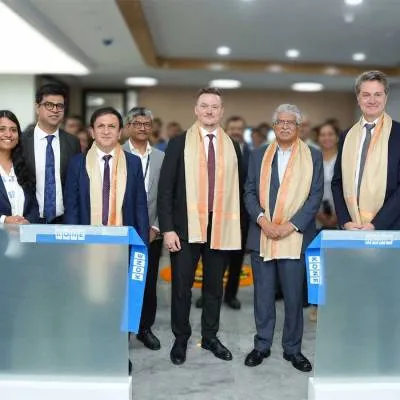
KONE, a global elevator and escalator manufacturer, has inaugurated its first Digital Experience Centre (DEC) in India, located in Pune. The facility aims to showcase how artificial intelligence (AI), connectivity and data-driven technologies can enhance customer experiences and improve building operations.The centre was inaugurated by Jussi Herlin, Executive Vice Chair, KONE Corporation; Philippe Delorme, President and CEO, KONE; and Nandan Nilekani, Co-founder and Chairman of the Board, Infosys.Designed as an interactive customer environment, the facility demonstrates digital solutions cover..

Next Story
Infrastructure Urban

CII GreenCo Launches Circularity Guidelines for Indian Industry

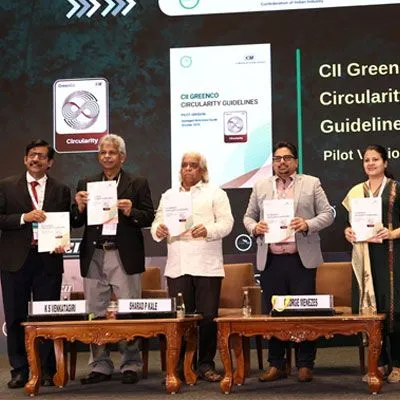
The Confederation of Indian Industry (CII) GreenCo Council has launched the CII GreenCo Circularity Guidelines – Pilot Version at the 17th CII GreenCo Waste & Resource Management Summit 2026 in Chennai. The initiative aims to strengthen resource efficiency, waste reduction and circular economy practices across Indian manufacturing and process industries.The guidelines introduce a structured framework with circularity indices covering raw materials, consumables, packaging and other resource inputs. These indicators will help industries assess existing practices, identify opportunities to ..

Next Story
Infrastructure Energy

Global Electronics Association Launches IPC-1783-CO2E Standard

The Global Electronics Association has introduced IPC-1783-CO2E, a new international standard aimed at improving consistency, transparency and comparability in product carbon footprint reporting across the electronics manufacturing industry.The standard, titled International Standard for Data Collection and Reporting of CO2 Equivalent (CO2e) Emissions for the Electronics Manufacturing Supply Chain, provides industry-specific guidance for collecting, estimating and reporting carbon emissions data.With increasing regulatory requirements and customer expectations, electronics manufacturers face c..

Advertisement

Subscribe to Our Newsletter

Get daily newsletters around different themes from Construction world.

STAY CONNECTED

Advertisement

SPECIAL OFFER
QR Code